Freshly Printed - allow 10 days lead
Couldn't load pickup availability
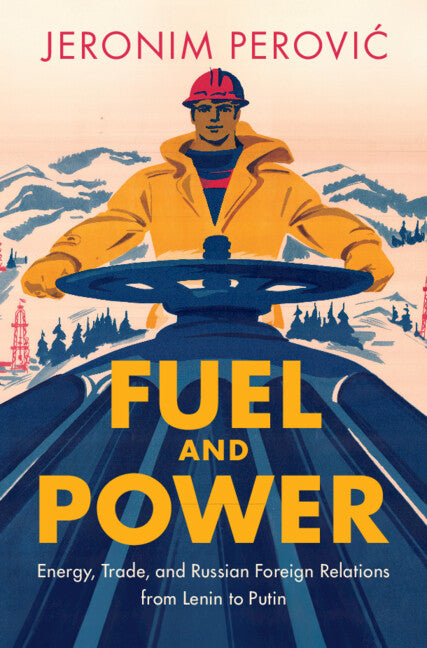
Fuel and Power
Energy, Trade, and Russian Foreign Relations from Lenin to Putin
A very timely study of Russia's emergence as a global energy power from the Russian Revolution to the present day.
Jeronim Perović (Author)
9781009449106, Cambridge University Press
Hardback, published 27 June 2024
268 pages
22.9 x 15.2 x 1.6 cm, 0.548 kg
'An important and impressive book that provides a rich synthetic account of the role of energy flows in Russia covering the twentieth century and the first quarter of the twenty-first century … Perović does an excellent job in providing the Soviet perspective on the key decisions that resulted in the intensive economic engagement with Western Europe over the exploitation of its energy resources.' Roland Dannreuther, Slavonic and East European Review
This is a very timely study of Russia's development into a global energy power from the Russian Revolution to the present day. Beginning in the late nineteenth century, Russia emerged not only as a key producer but also as one of the world's leading exporters of oil. Russia's transformation into a modern global power was connected to its ability to make use of its vast natural resources and produce energy in increasing quantities. While the development of Russia's energy industry went hand in hand with a profound socio-political and economic transformation, the book also tells the story of international cooperation and competition, transnational exchanges, and transborder interdependencies. Through energy exports, Russia shaped global energy flows and connections; at the same time, the growth of international trade impacted the views and decisions of Russian leaders, affecting the fabric of the country's foreign relations and, ultimately, the course of Russian history.
Introduction
1. Russia in the global history of oil
2. The Bolsheviks and oil
3. Energy in the Cold War
4. Path to dependence
5. Crisis, collapse, and resurgence
6. Energy, geopolitics, and war
Conclusion.
Subject Areas: European history [HBJD]