Freshly Printed - allow 10 days lead
Couldn't load pickup availability
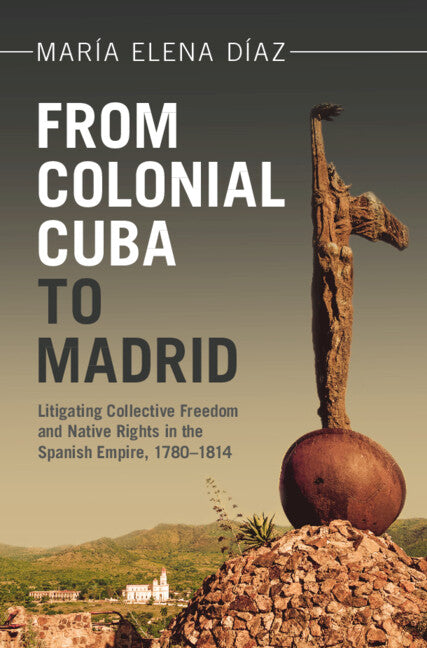
From Colonial Cuba to Madrid
Litigating Collective Freedom and Native Rights in the Spanish Empire, 1780–1814
Examines freedom rights through a unique collective suit filed by hundreds of re-enslaved Afro descendant litigants in colonial Cuba.
María Elena Díaz (Author)
9781009494199, Cambridge University Press
Hardback, published 21 November 2024
360 pages
23.5 x 15.8 x 2.6 cm, 0.66 kg
'A startlingly original study of more than a thousand freed persons, former royal slaves who were re-enslaved and then litigated for their liberty. Díaz investigates the unusual legal arguments these men and women, through their Black advisors and representatives, deployed to present themselves as a free people, native to a free Black town, within the context of the Bourbon Enlightenment. Continuing her compelling microhistory of the people of El Cobre, Díaz reminds us that there is still much to learn from enslaved and free Black litigants in the Spanish empire.' Karen Graubart, author of Republics of Difference: Religious and Racial Self-Governance in the Spanish Atlantic World
From Colonial Cuba to Madrid examines the largest and most complex freedom suit litigated in the highest court of the Spanish empire at the end of the eighteenth century. Filed by hundreds of re-enslaved Afro descendant people who had lived in quasi-freedom in eastern Cuba for more than a century, this action drew on local customary practices and broader cultural, political, and legal discourses rooted in the Spanish Atlantic world to put forward novel claims to collective freedom and native based rights at a time when questions of slavery, freedom, and citizenship were igniting in many parts of the Atlantic world. Intersecting law, society studies, and the history of slavery, María Elena Díaz offers a carefully researched study of one of the few communities of Afro descendants that managed to secure freedom and political and legal recognition from the Spanish crown during the colonial period.
Introduction
1. Imperial reform, privatization, and enslavement
2. An unorthodox pueblo and its apoderados
3. Making the case for collective freedom
4. Native bonds, native rights
5. The council's ruling and the politics of litigation
6. A 'pernicious' communication
7. Violence, marronage, and litigation
8. The final outcome of the case
9. The nineteenth-century afterlife of the freedom edict of 1800
Conclusion
References
Index.
Subject Areas: History of the Americas [HBJK]