Freshly Printed - allow 7 days lead
Couldn't load pickup availability
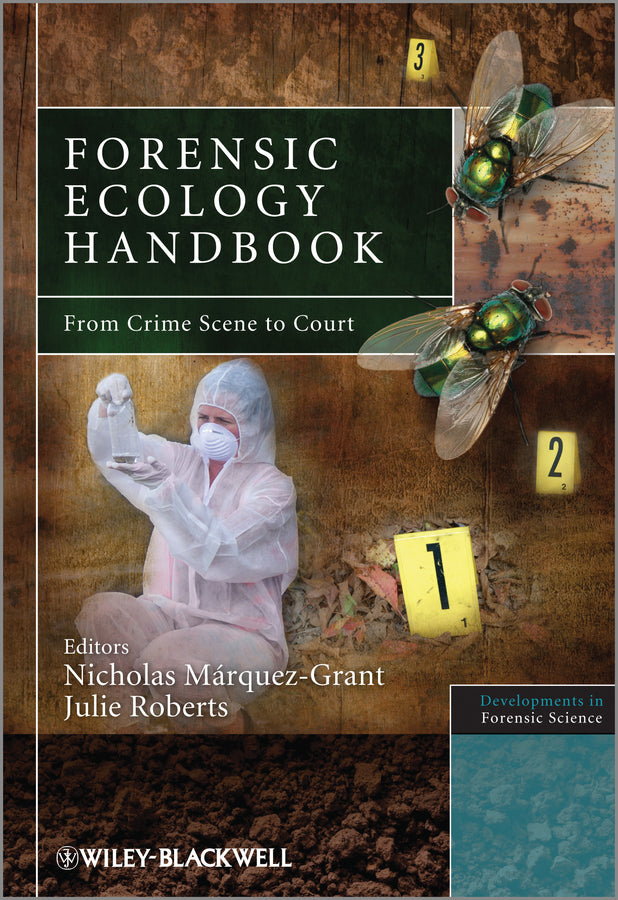
Forensic Ecology Handbook
From Crime Scene to Court
Nicholas Márquez-Grant (Edited by), Julie Roberts (Edited by)
9781119974192, Wiley
Hardback, published 30 October 2012
272 pages
25.2 x 17.5 x 1.8 cm, 0.572 kg
The analysis of plants, insects, soil and other particulates from scenes of crime can be vital in proving or excluding contact between a suspect and a scene, targeting search areas, and establishing a time and place of death. Forensic Ecology: A Practitioner’s Guide provides a complete handbook covering all aspects of forensic ecology. Bringing together the forensic applications of anthropology, archaeology, entomology, palynology and sedimentology in one volume, this book provides an essential resource for practitioners in the field of forensic science, whether crime scene investigators, forensic science students or academics involved in the recovery and analysis of evidence from crime scenes. Forensic Ecology: A Practitioner’s Guide includes information not only on the search, location, recovery and analysis of evidence, but includes sampling strategies for diatom analysis, pollen and soils samples and entomology and provides guides for good practice. Each chapter provides background information on each discipline and is structured according to pre-scene attendance (what questions should the scientist ask when receiving a call? What sort of preparation is required?), scene attendance (including protocols at the scene, sampling strategies, recording), scientific examination of analysis of the evidence up to the stages and guidelines for witness statement and presenting evidence in court. The book is written by specialists in all fields with a wealth of experience who are current forensic practitioners around the world. It provides an essential and accessible resource for students, academics, forensic practitioners and police officers everywhere.
About the Editors ix List of Contributors xi Series Foreword xiii Foreword xv Foreword xvii 1 Introduction 1 References 4 2 Aspects of crime scene management 7 2.1 Introduction 7 2.2 Professionals within the investigation 7 2.3 Crime scene principles 12 2.4 Records and documentation 14 2.5 Crime scene attendance 16 2.6 Expectations 19 2.7 Conclusion 19 Acknowledgements 20 References 20 3 Forensic archaeology 23 3.1 Introduction 23 3.2 Forensic archaeology at a crime scene 25 3.3 Pre-scene attendance 28 3.4 Scene attendance 29 3.5 Case studies 40 3.6 Reporting and court testimony 42 3.7 Conclusion 44 References 45 4 Forensic anthropology 49 4.1 Introduction 49 4.2 The role of the Forensic Anthropologist in criminal investigation 49 4.3 Pre-scene attendance 52 4.4 Scene attendance 53 4.5 In the mortuary 56 4.6 Positive identification 60 4.7 Production of an Expert Witness Statement and court attendance 61 4.8 Conclusion 64 References 65 5 Forensic radiography 69 5.1 Introduction and current state of the discipline 69 5.2 Application of radiology to the analysis and identification of human remains 70 5.3 Conclusion 79 References 80 6 DNA analysis for victim identification 85 6.1 Introduction 85 6.2 Taking DNA samples from the deceased 85 6.3 Collection of reference samples for victim identification 90 6.4 DNA laboratory analysis 91 6.5 Common DNA profiling tests 94 6.6 Conclusion 98 References 98 7 Other scientific methods related to victim identification 99 7.1 Introduction 99 7.2 Dating of human remains 100 References 105 7.3 Other analytical techniques 107 References 109 8 Forensic entomology 111 8.1 Introduction and current state of the discipline 111 8.2 Applications 114 8.3 Pre-scene attendance 115 8.4 Scene attendance 117 8.5 Mortuary attendance 125 8.6 Laboratory analysis 125 8.7 Reporting and court appearance 130 8.8 Conclusion 131 References 131 9 Diatoms and forensic science 141 9.1 Introduction 141 9.2 Applications 144 9.3 Pre-scene attendance 145 9.4 Scene attendance and sampling 145 9.5 Preparation and treatment of samples in the laboratory 146 9.6 Analysis of samples 147 9.7 Reporting and court appearance 148 References 149 10 Forensic palynology 153 10.1 Introduction and current state of the discipline 153 10.2 Pollen 154 10.3 Applications 158 10.4 Pre-scene attendance 160 10.5 Scene attendance 161 10.6 Mortuary attendance 165 10.7 Laboratory analysis 165 10.8 Reporting and court appearance 166 References 167 11 Forensic botany 169 11.1 Introduction 169 11.2 Applications 169 11.3 Pre-scene attendance 170 11.4 Scene attendance 171 11.5 Mortuary attendance 174 11.6 Laboratory analysis 175 11.7 Reporting and court appearance 177 11.8 Conclusion 179 References 179 12 Forensic geology and soils 183 12.1 Introduction and current state of the discipline 183 12.2 Applications for forensic geology 186 12.3 Pre-scene attendance 189 12.4 Scene attendance and sampling 190 12.5 Sampling and preparation in the laboratory 195 12.6 Laboratory analysis 197 12.7 Reporting and court appearance 199 Acknowledgements 200 References 200 13 Exhibits 203 13.1 Introduction 203 13.2 Exhibit principles 204 13.3 Recovery procedures 205 13.4 Labelling exhibits 206 13.5 Key exhibit principles 209 13.6 Practical guidelines for exhibit handling 213 13.7 Splitting exhibits 216 13.8 Long-term sporadic seizures of exhibits 217 13.9 Unsealing and resealing exhibits for examination 218 13.10 Conclusion 219 References 220 14 Forensic photography 221 14.1 Introduction 221 14.2 Basic elements of photography 222 14.3 Security of images 228 14.4 The forensic photographer and the crime scene 229 14.5 The forensic photographer at the mortuary 230 14.6 Conclusion 231 References 231 Index 233
Professor Niamh Nic Daéid
Jonathan Smith
Richard T. Shepherd
Nicholas Márquez-Grant and Julie Roberts
Ruth Buckley and Andy Langley
Stephen Litherland, Nicholas Márquez-Grant and Julie Roberts
Julie Roberts and Nicholas Márquez-Grant
Mark Viner
Michael Walbank and Andrew McDonald
Nicholas Márquez-Grant and Julie Roberts
Gordon Cook
Sophie Beckett
Martin Hall, Amoret Whitaker and Cameron Richards
Eileen J. Cox
Beverley Adams-Groom
Heather Miller Coyle, Peter Massey and Peter Valentin
Duncan Pirrie and Alastair Ruffell
Chris Webster
John Yoward
Subject Areas: Chemistry [PN]