Freshly Printed - allow 7 days lead
Couldn't load pickup availability
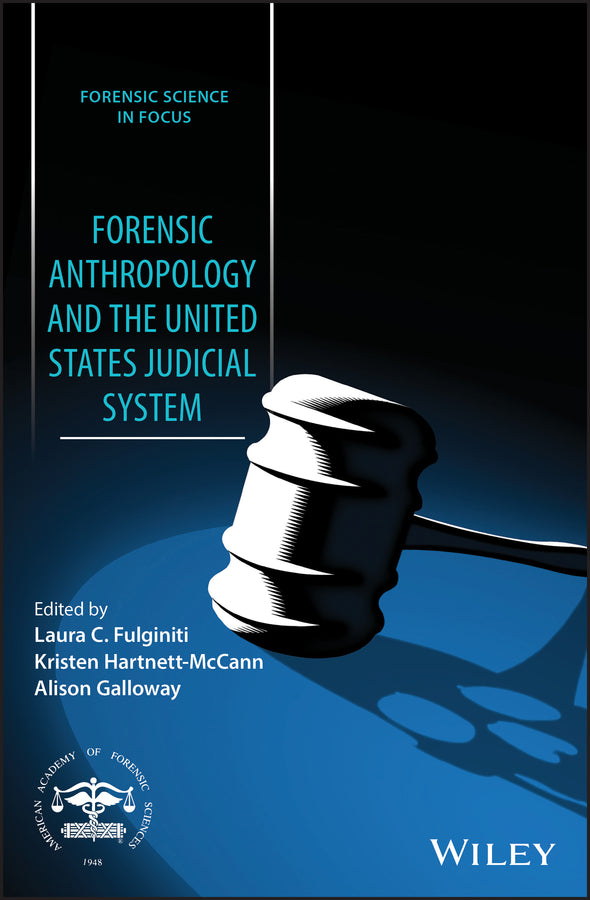
Forensic Anthropology and the United States Judicial System
Laura C. Fulginiti (Edited by), Kristen Hartnett-McCann (Edited by), Alison Galloway (Edited by)
9781119470052, Wiley
Hardback, published 30 August 2019
256 pages
24.6 x 17.3 x 1.8 cm, 0.658 kg
A guide to the interface between forensic anthropology and the United States legal system Designed for forensic anthropologists at all levels of expertise, Forensic Anthropology and the United States Judicial System offers a comprehensive examination of how to effectively present osteological analyses, research and interpretations in the courtroom. Written by noted experts, the book contains an historical perspective of the topic, a review of current legislation that affects expert testimony as well as vital information on courtroom procedure and judicial expectation of experts. A comprehensive book, Forensic Anthropology and the United States Judicial System explains how to prepare case reports and offers suggestions for getting ready for pre-trial interviews. The book also includes detailed information on affidavits, fee structures and dealing with opposing experts. This book is part of the popular Wiley – American Association for Forensic Sciences series and: Forensic Anthropology and the United States Judicial System is an information-filled guide for practitioners of the rapidly growing field that integrates forensic sciences and the judicial system.
Notes on contributors xiii Preface xix Series preface xxiii Foreword xxv Acknowledgments xxix About the editors xxxi Glossary xxxiii Part I Context 1 Confrontation: where forensic science meets the sixth amendment 3 1.1 Sixth amendment 4 1.1.1 Ohio v. Roberts, 448 U.S. 56 (1980). Argued November 26, 1979 – decided June 23, 1980, 5 1.1.2 Crawford v. Washington, 541 U.S. 36 (2004). Argued November 10, 2003 – decided March 8, 2004, 7 1.1.3 Melendez-Diaz v. Massachusetts, 557 U.S. 305 (2009). Argued November 10, 2008 – decided June 25, 2009, 8 1.1.4 Bullcoming v. New Mexico, 564 U.S. 647 (2011). Argued March 2, 2011 – decided June 23, 2011, 10 1.1.5 Williams v. Illinois, 567 U.S. 50 (2012). Argued December 6, 2011, – decided June 18, 2012, 11 1.2 Impact on forensic practitioners 12 1.A Appendix 14 1.A.1 Example of Florida application to compel testimony 16 1.A.2 Example of Arizona court order in response to Florida request 17 References 17 2 “Somewhere in this twilight”: the circumstances leading to the National Academy of Sciences’ report 19 2.1 Introduction 19 2.2 The long road to Daubert 20 2.2.1 The Frye standard of general acceptance 20 2.3 The federal rules of evidence 22 2.4 The rise of the toxic tort 24 2.5 Daubert and the supremacy of the FRE 25 2.6 The aftermath of Daubert 28 2.7 Llera Plaza and the assault on fingerprints 28 2.8 Fear, reality, and forensic anthropology 30 2.9 The gauntlet is thrown: the NAS gets involved 31 2.10 The CSI effect 31 2.11 The congressional response 32 2.12 The forensic sciences respond 33 2.13 Picking up the gauntlet 34 2.14 Conclusions 35 Notes 37 References 38 3 From the laboratory to the witness stand: research trends and method validation in forensic anthropology 41 3.1 Introduction 41 3.2 Research in forensic anthropology – a bibliometric survey 43 3.3 Court decisions and research 48 3.4 Conclusion and a path forward 49 Acknowledgments 50 References 50 4 Expertise and the expert witness: contemporary educational foundations of forensic anthropology 53 4.1 A brief historical overview of the discipline 54 4.2 The educational background of early forensic anthropologists 55 4.3 The forensic anthropologist as expert witness 57 4.4 Current educational programs and training opportunities 58 4.4.1 Contemporary educational programs for forensic anthropologists 59 4.4.2 Casework and training opportunities 63 4.5 Conclusion and future directions 65 References 67 Part II The rubber meets the road 5 Transparency in forensic anthropology through the implementation of quality assurance practices 71 5.1 Introduction 71 5.2 Overview of laboratory quality assurance and management 74 5.2.1 Corrective and preventive actions 74 5.3 Training and continuous education 74 5.4 Importance of QA for anthropologists 76 5.5 Quality assurance for forensic anthropology methods and equipment 77 5.5.1 Establishing laboratory SOPs 77 5.6 Various measures of quality 79 5.7 Implications of QA in the courtroom 85 5.7.1 Legal rulings affecting anthropology 85 5.8 Accreditation 86 5.9 Conclusions 86 References 87 6 Report writing and case documentation in forensic anthropology 89 6.1 The audience(s) 90 6.2 The report begins with documentation of workflow 91 6.3 Chain of custody 94 6.4 Managing the information flow 94 6.5 Processing the remains and storage considerations 96 6.6 Contemporaneous bench notes and standard forms 96 6.7 Casting radiography and other methods of documentation 98 6.8 The report 98 6.8.1 Format of the case report 98 6.8.2 Background 99 6.8.3 Condition of the remains 100 6.8.4 Biological profile 101 6.8.5 Trauma analysis 102 6.8.6 Postmortem interval and the time since death 105 6.8.7 Report summary and disposition 106 6.9 Appendices 106 6.10 Final steps 107 6.11 Conclusion 108 References 108 7 Skull shots: forensic photography for anthropologists 109 7.1 Equipment 110 7.2 Taking photographs with an eye to courtroom presentation 110 7.3 Labeling photographs 117 7.4 Photomicroscopy and Videography 118 7.5 Image processing 119 7.6 Conclusion 120 References 121 8 The peer review process: expectations and responsibilities 123 8.1 Introduction 123 8.2 Historical use of peer review 124 8.3 Principles underlying peer review in Forensic Anthropology 125 8.4 Available guidance on peer review 126 8.5 Considerations 128 8.6 Current status of peer review in forensic anthropological casework 130 8.7 Recommendations on peer review of forensic anthropology case work 131 8.8 Conclusions 136 Acknowledgments 136 8.A Example of a peer review form (modified from Dana Austin, personal communication) 137 8.B Example of a peer review form (modified from Lauren Zephro, personal communication) 138 References 138 9 The United States justice system and forensic anthropology: preparing for court 141 9.1 The United States court system 141 9.1.1 Types of cases 142 9.2 Understanding the judicial process 143 9.2.1 The criminal process 144 9.2.2 The civil process 148 9.3 The role of the forensic anthropologist 151 9.3.1 Criminal cases 151 9.3.2 Civil cases 160 9.4 The courtroom: etiquette and pitfalls 162 References 165 10 Litigation graphics in the courtroom presentation of forensic anthropology 167 10.1 Color 169 10.2 Font 170 10.3 Layout 170 10.4 Clarity of purpose 172 10.5 The problem-solution approach to visual aids 172 10.6 Case study 174 10.7 Conclusion 180 References 181 11 Maintaining independence in an adversarial system: expert witness testimony in forensic anthropology 183 11.1 Criminal vs. civil cases 185 11.2 Courtroom roles and rules 187 11.3 Case studies 189 11.3.1 Case study 1 189 11.3.2 Case study 2 191 11.3.3 Case study 3 193 11.3.4 Case study 4 195 11.4 Conclusion 196 References 197 12 Valuing your time: appropriate calculation of fees and expenses as an expert witness 199 12.1 History of expert witnesses and compensation 200 12.2 Models of compensation 200 12.2.1 Retainers 201 12.2.2 Fee for service 201 12.2.3 Fee for service considerations 203 12.2.4 Pro bono 205 12.2.5 Reasonable expenses 206 12.3 Unethical billing practices 207 12.4 Invoicing 208 12.5 The professional expert 209 12.6 Conclusions 210 12.A Appendix 211 References 212 Index 213
Jennifer C. Love and Laura C. Fulginiti
Thomas Holland and Christian Crowder
Jonathan D. Bethard and Elizabeth A. DiGangi
Katelyn L. Bolhofner and Andrew C. Seidel
Julie M. Fleischman, Michal L. Pierce, and Christian M. Crowder
Lauren Zephro and Alison Galloway
Lauren Zephro and Alison Galloway
Kristen Hartnett-McCann, Laura C. Fulginiti, Alison Galloway, and Katherine M. Taylor
Daniel G. Martin and Laura C. Fulginiti
Gary Hodges
Eric J. Bartelink, Laura C. Fulginiti, Alison Galloway, and Katherine M. Taylor
Alison Galloway, Eric J. Bartelink, and Kristen Hartnett-McCann
Subject Areas: Chemistry [PN]