Freshly Printed - allow 7 days lead
Couldn't load pickup availability
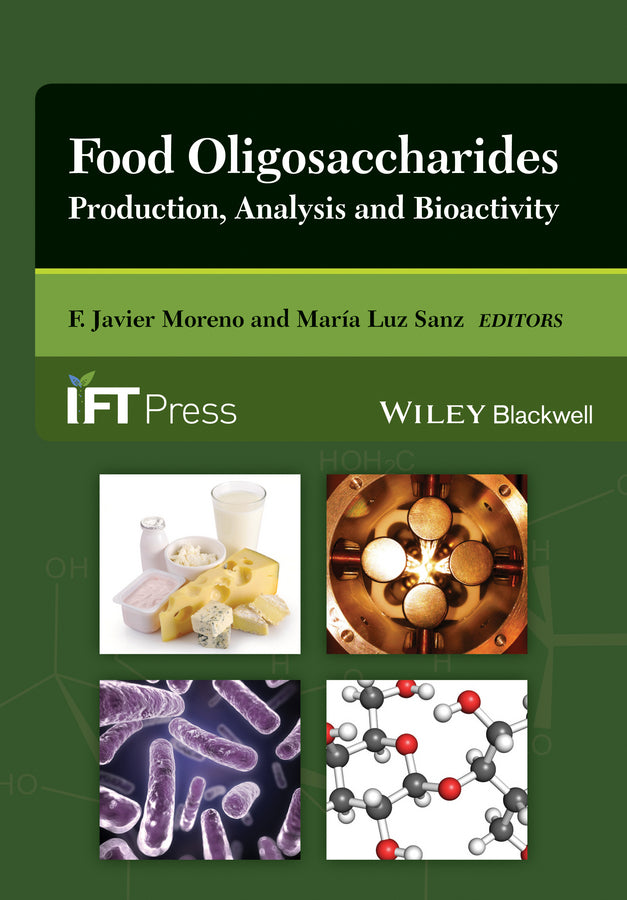
Food Oligosaccharides
Production, Analysis and Bioactivity
F. Javier Moreno (Edited by), María Luz Sanz (Edited by)
9781118426494, Wiley
Hardback, published 16 May 2014
552 pages
25.4 x 19.8 x 2.8 cm, 1.261 kg
A growing awareness of the relationship between diet and health has led to an increasing demand for food Food Oligosaccharides: Production, Analysis and Bioactivityis a comprehensive reference on the
products that support health beyond simply providing basic nutrition. Digestive
health is the largest segment of the burgeoning functional food market worldwide. Incorporation of bioactive
oligosaccharides into foods can yield health benefits in the gastrointestinal
tract and other parts of the body that are linked via the immune system.
Because oligosaccharides can be added to a wide variety of foodstuffs, there is
much interest within the food industry in incorporating these functional
ingredients into healthy food products. Moreover, other areas such as
pharmaceuticals, bioenergy and environmental science can exploit the
physicochemical and physiological properties of bioactive oligosaccharides too.
There is therefore a considerable demand for a concentrated source of
information on the development and characterization of new oligosaccharides
with novel and/or improved bioactivities.
naturally occurring and synthesised oligosaccharides, which will enable food
professionals to select and use these components in their products. It is
divided into three sections: (i) Production and bioactivity of
oligosaccharides, (ii) Analysis and (iii) Prebiotics in Food Formulation. The
book addresses classical and advanced techniques to structurally characterize and
quantitatively analyse food bioactive oligosaccharides. It also looks at practical
issues faced by food industry professionals seeking to incorporate prebiotic
oligosaccharides into food products, including the effects of processing on
prebiotic bioavailability. This book is essential reading for food researchers
and professionals, nutritionists and product developers working in the food
industry, and students of Food Science with an interest in functional foods.
Contributors, xiv Preface, xix Part I Production and Bioactivity of Oligosaccharides Part I.I Naturally Occurring Oligosaccharides 1 Bioactivity of Human Milk Oligosaccharides, 5 1.1 Introduction, 5 1.2 Structural uniqueness of human milk oligosaccharides, 5 1.3 Human milk oligosaccharides and their functions in the gastrointestinal tract, 8 1.4 Human milk oligosaccharides and systemic effects, 15 1.5 Human milk oligosaccharides and studies in animals and humans, 15 1.6 Conclusion and perspective, 16 Acknowledgment, 17 References, 17 2 Production and Bioactivity of Bovine Milk Oligosaccharides, 21 2.1 Introduction, 21 2.2 Bovine milk oligosaccharides’ composition, 22 2.3 Bovine milk oligosaccharides’ concentration, 27 2.4 Resistance to digestion, 27 2.5 Oligosaccharides’ biological activities, 28 2.6 Isolation approaches, 30 2.7 Conclusion, 31 Acknowledgments, 31 References, 31 3 Production and Bioactivity of Oligosaccharides in Plant Foods, 35 3.1 Introduction, 35 3.2 Chemical structure and natural occurrence of oligosaccharides in plant foods, 35 3.3 Production of naturally occurring plant oligosaccharides, 40 3.4 Scientific evidence on the bioefficacy of plant oligosaccharides and mechanisms of action, 43 3.5 Conclusions and future perspectives, 48 References, 48 4.1 Production of oligosaccharides from chicory roots, 55 4.2 Bioactivity of oligosaccharides from chicory roots, 60 4.3 Future trends, 68 4.4 Conclusions, 69 References, 69 5 Production and Bioactivity of Pectic Oligosaccharides from Fruit and Vegetable Biomass, 76 5.1 Production of pectic oligosaccharides, 76 5.2 Bioactivity of pectic oligosaccharides, 79 5.3 Conclusions, 83 References, 83 6 Production and Bioactivity of Oligosaccharides from Biomass Hemicelluloses, 88 6.1 Hemicelluloses: general aspects, 88 6.2 Manufacture of oligosaccharides from hemicellulosic polymers, 89 6.3 Properties of hemicellulose-derived oligosaccharides, 93 6.4 Conclusion, 99 References, 99 7 Starch Hydrolysis Products with Physiological Activity in Humans, 107 7.1 Introduction, 107 7.2 Starch degradation may yield minor saccharides with physiological activity, 107 7.3 Physiological activity of starch hydrolysis products, 112 7.4 Concluding remarks, 115 References, 115 8 Biosynthesis and Bioactivity of Exopolysaccharides Produced by Probiotic Bacteria, 118 8.1 Bacterial exopolysaccharides, 118 8.2 Biosynthesis of exopolysaccharides in Lactobacillus and Bifidobacterium, 120 8.3 Production and purification of exopolysaccharides, 121 8.4 Bioactivity of exopolysaccharides from probiotics, 124 8.5 Concluding remark and future trends, 128 Acknowledgments, 128 References, 128 Part I.II Non-Naturally Occurring Oligosaccharides 9 Production and Bioactivity of Oligosaccharides Derived from Lactose, 137 9.1 Introduction, 137 9.2 Mono- and disaccharides, 137 9.3 Lactosucrose, 145 9.4 Galactooligosaccharides, 146 9.5 Other oligosaccharides, 154 9.6 Purification of carbohydrates derived from lactose, 156 9.7 Conclusions, 157 Acknowledgments, 157 References, 157 10 Production and Bioactivity of Glucooligosaccharides and Glucosides Synthesized using Glucansucrases, 168 10.1 Glucooligosaccharides from lactic acid bacteria, 168 10.2 Glucan and glucooligosaccharides synthesis by glucansucrases, 169 10.3 Production of glucooligosaccharides, 171 10.4 Bioactivities of glucan and glucooligosaccharides, 174 10.5 (Oligo)glucosides synthesized by glucansucrases and their functionalities, 177 10.6 Conclusions, 178 Acknowledgments, 178 References, 178 11 Production and Bioactivity of Fructan-Type Oligosaccharides, 184 11.1 Introduction, 184 11.2 Enzymatic synthesis, 186 11.3 Functional properties of fructan-type oligosaccharides, 193 11.4 Conclusions, 196 Acknowledgments, 196 References, 196 12 Application of Immobilized Enzymes for the Synthesis of Bioactive Fructooligosaccharides, 200 12.1 Enzyme immobilization, 200 12.2 Immobilized biocatalysts for the production of fructooligosaccharides, 202 12.3 Production of fructooligosaccharides with a covalently immobilized fructosyltransferase, 204 12.4 Production of fructooligosaccharides with alginate-entrapped fructosyltransferases, 207 12.5 Conclusions and future trends, 212 Acknowledgments, 212 References, 213 Part I.III Assessment of Bioactivity 13 In Vitro Assessment of the Bioactivity of Food Oligosaccharides, 219 13.1 Introduction, 219 13.2 Gut microbiota, 220 13.3 Interaction with the host, 221 13.4 In vitro fermentation models of the gut to study bioactivity of oligosaccharides, 221 13.5 Applications of in vitro fermentation models to study the effect of oligosaccharides on the gut microbiome, 226 13.6 Mechanistic studies using 13C-labeled oligosaccharides and fibers, 227 13.7 In vitro cell culture systems, 230 13.8 Conclusions, 231 13.9 Future perspectives, 231 Acknowledgments, 233 References, 233 14 In Vivo Assessment of the Bioactivity of Food Oligosaccharides, 238 14.1 The prebiotic concept, 238 14.2 In vivo assessment of dietary oligosaccharides as prebiotics, 240 14.3 Concluding remarks, 249 Acknowledgments, 249 References, 249 Part II Analysis 15 Fractionation of Food Bioactive Oligosaccharides, 257 15.1 Introduction, 257 15.2 Membrane techniques, 258 15.3 Chromatographic techniques, 267 15.4 Fractionation techniques using solvents, 272 15.5 Microbiological and enzymatic treatments, 275 15.6 Conclusions, 276 Acknowledgments, 277 References, 277 16 Classical Methods for Food Carbohydrate Analysis, 284 16.1 Introduction, 284 16.2 Sample preparation and purification, 284 16.3 Classical methods for total sugar analysis, 285 16.4 Classical methods for monosaccharide determination, 289 16.5 Classical methods for structure characterization of polysaccharides, 291 16.6 Some physical methods for carbohydrate analysis, 294 16.7 Classical methods for dietary fiber analysis, 294 16.8 Conclusions, 296 References, 297 17 Infrared Spectroscopic Analysis of Food Carbohydrates, 300 17.1 Introduction, 300 17.2 Monosaccharides, 301 17.3 Oligosaccharides, 309 17.4 Applications, 312 17.5 Concluding remarks, 317 References, 318 18 Structural Analysis of Carbohydrates by Nuclear Magnetic Resonance Spectroscopy and Molecular Simulations: Application to Human Milk Oligosaccharides, 320 18.1 Introduction, 320 18.2 Nuclear magnetic resonance spectroscopy, 323 18.3 Molecular dynamics computer simulations, 335 18.4 Three-dimensional structures of human milk oligosaccharides, 336 18.5 Concluding remarks, 341 Acknowledgments, 341 References, 341 19 Analysis of Food Bioactive Oligosaccharides by Thin-Layer Chromatography, 350 19.1 Introduction, 350 19.2 Thin-layer chromatography, 351 19.3 Thin-layer chromatography analysis of food bioactive oligosaccharides, 353 19.4 Conclusions, 366 References, 366 20 Gas Chromatographic Analysis of Food Bioactive Oligosaccharides, 370 20.1 Introduction, 370 20.2 Sample preparation, 371 20.3 Instrumentation, 382 20.4 Advanced analysis by comprehensive two-dimensional gas chromatography (GC×GC), 392 20.5 Conclusions, 392 Acknowledgments, 394 References, 394 21 Analysis of Bioactive Food-Sourced Oligosaccharides by High-Performance Liquid Chromatography, 399 21.1 Introduction, 399 21.2 Derivatization of oligosaccharides, 400 21.3 High-performance liquid chromatography analysis of bioactive food sourced oligosaccharides, 402 21.4 Application of high-performance liquid chromatography for the separation of bioactive food sourced oligosaccharides, 407 21.5 Novel analytical methods, 412 21.6 Conclusion, 414 Acknowledgments, 415 References, 415 22 Capillary Electrophoresis and Related Techniques for the Analysis of Bioactive Oligosaccharides, 421 22.1 Introduction, 421 22.2 Capillary electrophoresis analysis of functional oligosaccharides, 423 22.3 Capillary electrophoresis analysis of glycosaminoglycan-derived oligosaccharides, 428 22.4 Capillary electrophoresis analysis of oligosaccharides derived from glycoproteins, 431 22.5 Conclusions, 434 References, 435 23 Mass Spectrometric Analysis of Food Bioactive Oligosaccharides, 439 23.1 Introduction, 439 23.2 Instrumentation for mass spectrometric analysis of oligosaccharides, 439 23.3 Fragmentation techniques, processes and nomenclature, 442 23.4 Applications to analysis of food bioactive oligosaccharides, 445 23.5 Strategies, challenges, and conclusion, 450 References, 450 Part III Prebiotics in Food Formulation 24 Nutritional and Technological Benefits of Inulin-Type Oligosaccharides, 457 24.1 Introduction, 457 24.2 Nutritional aspects of chicory inulin and oligofructose, 457 24.3 Technical properties of chicory inulin and oligofructose, 458 24.4 Technical functionality in food applications, 461 24.5 Conclusions, 468 References, 468 25 Industrial Applications of Galactooligosaccharides, 470 25.1 Introduction, 470 25.2 Global market development for galactooligosaccharides, 470 25.3 Nutritional benefits of galactooligosaccharides for infants and young children, 473 25.4 Legislative aspects and safety of galactooligosaccharides, 477 25.5 Galactooligosaccharide products, 479 25.6 Applications of galactooligosaccharides, 483 25.7 Stability of galactooligosaccharides, 485 25.8 Concluding remarks and future developments, 487 References, 487 26 Successful Product Launch: Combining Industrial Technologies with Adapted Health Ingredients, 492 26.1 Developing new foods: the health dimension, 492 26.2 A global approach to successful food conception, applied to the case of digestive health, 493 26.3 The ingredients and the formulation: practical aspects of the incorporation of nondigestible oligosaccharides, 503 26.4 Elaborating new food products with nondigestible oligosaccharides, 507 26.5 What are the key success factors? Synthesis and comments from an expert chef, 518 26.6 Conclusion, 520 References, 520 Epilogue: Concluding Thoughts on Food Bioactive Oligosaccharides, 523 Index, 527
Clemens Kunz, Sabine Kuntz, and Silvia Rudloff
David C. Dallas, Mickael Meyrand, and Daniela Barile
Cristina Martínez-Villaluenga and Juana Frías
4 Production and Bioactivity of Oligosaccharides from Chicory Roots, 55
Matthias Moser, Arnaud Agemans, and Wim Caers
Jesper Holck, Arland T. Hotchkiss, Jr., Anne S. Meyer, Jørn D. Mikkelsen, and Robert A. Rastall
Patricia Gullón, Beatriz Gullón, María Jesus Gonzalez-Munoz, Jose Luis Alonso, and Juan Carlos Parajo
Juscelino Tovar and Ana Rascon
Patricia Ruas-Madiedo
Mar Villamiel, Antonia Montilla, Agustýn Olano, and Nieves Corzo
Young-Min Kim, Hee-Kyoung Kang, Young-Hwan Moon, Thi Thanh Hanh Nguyen, Donal F. Day, and Doman Kim
Javier Arrizon, Judith E. Urias-Silvas, Georgina Sandoval, N. Alejandra Mancilla-Margalli, Anne C. Gschaedler, Sandrine Morel, and Pierre Monsan
Francisco J. Plou, Lucia Fernandez-Arrojo, Paloma Santos-Moriano, and Antonio O. Ballesteros
Koen Venema
Alfonso Clemente
F. Javier Moreno, Cipriano Carrero-Carralero, Oswaldo Hernandez-Hern´andez, and M. Luz Sanz
Qingbin Guo, Steve W. Cui, and Ji Kang
Mikihito Kanou, Atsushi Hashimoto, and Takaharu Kameoka
Arnold Maliniak and Goran Widmalm
Katarýna Reiffova
Ana Cristina Soria, Sonia Rodrýguez-Sanchez, Jesus Sanz, and Isabel Martýnez-Castro
Jonathan A. Lane and Rita M. Hickey
Yu-ki Matsuno, Kazuaki Kakehi, and Akihiko Kameyama
Oswaldo Hernandez-Hernandez and Peter Roepstorff
Matthias Moser and Rudy Wouters
Ellen van Leusen, Erik Torringa, Paul Groenink, Pieter Kortleve, Renske Geene, Margriet Schoterman, and Bert Klarenbeek
Pascal Ronfard
Subject Areas: Agriculture & farming [TV]