Freshly Printed - allow 7 days lead
Couldn't load pickup availability
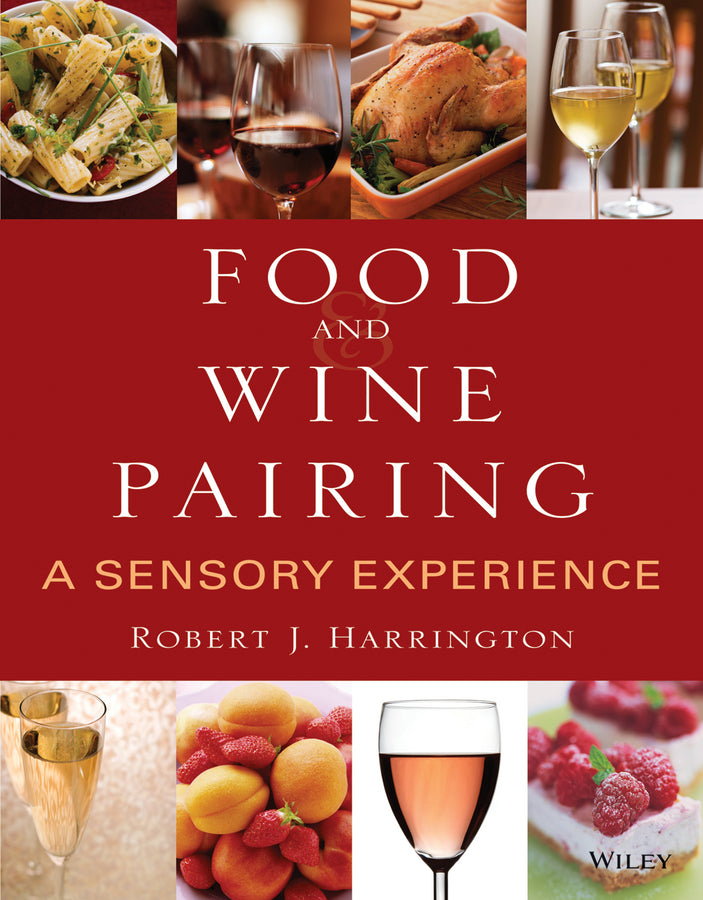
Food and Wine Pairing
A Sensory Experience
Robert J. Harrington (Author)
9780471794073, Wiley
Paperback / softback, published 27 March 2007
336 pages, Photos: 48 B&W, 0 Color; Drawings: 11 B&W, 0 Color; Maps: 0 B&W, 0 Color; Tables: 121 B&W, 0 Color
27.4 x 21.6 x 2.3 cm, 0.635 kg
Food and Wine Pairing: A Sensory Experience provides a series of discussion and exercises ranging from identifying basic wine characteristics, including visual, aroma, taste (acid, sweetness, oak, tannin, body, etc.), palate mapping (acid, sweet, sour, bitter, and tannin), basic food characteristics and anchors of each (sweet, sour, bitter, saltiness, fattiness, body, etc). It presents how these characteristics contrast and complement each other. By helping culinary professionals develop the skills necessary to identifying the key elements in food or wine that will directly impact its matching based on contrast or similarities, they will then be able to predict excellent food and wine pairings.
PREFACE xi ACKNOWLEDGMENTS xiii PART A: MASTERING THE ART AND SCIENCE OF FOOD AND WINE PAIRING 1 CHAPTER 1: THE WINE AND FOOD PYRAMID: A HIERARCHY OF TASTE 3 Introduction 4 Objectives of Food and Wine Pairing 4 Aperitif: The Italian Wine and Food Perspective 5 Food-and-Wine Pairing Mechanics: Matching Traditions 8 Overview of Book Methods 11 Key Elements of Wine and Food: A Hierarchical Perspective 11 Summary: Where Do We Go from Here? 13 Classic Italian Wine and Food Examples 14 CHAPTER 2: TASTE BASICS AND THE BASICS OF WINE EVALUATION 19 Introduction 20 Aperitif: Elements of Wine Service 20 Sensory Evaluation 22 Basics of Wine Evaluation 23 Setting Up a Tasting Session 27 The Art and Science of Wine Evaluation 28 Palate Mapping 31 Tasting Instructions 31 Summary 32 Exercises 33 CHAPTER 3: GASTRONOMIC IDENTITY: THE EFFECT OF THE ENVIRONMENT AND CULTURE ON PREVAILING COMPONENTS, TEXTURE, AND FLAVORS IN WINE AND FOOD 45 Introduction 46 Aperitif: How Should Menus and Wine Lists Be Organized? 47 The Environment 50 Wine: The Impact of Geography and Climate 50 Culture 56 History and Ethnic Diversity 56 Trial and Error, Innovations, and Capabilities 57 Gastronomic Identity 58 Old World and New World 58 Summary 61 Optional Exercises 62 CHAPTER 4: GASTRONOMIC IDENTITY II: FOOD AND CUISINE: THE EFFECT OF THE ENVIRONMENT AND CULTURE ON GASTRONOMY, WINE AND FOOD MARRIAGES, AND TOURISM 65 Introduction 66 Aperitif: Chef John Folse & Company 67 The Environment 78 Food: The Impact of Geography and Climate 79 Culture 80 History and Ethnic Diversity 81 Trial and Error, Innovations, and Capabilities 81 Gastronomic Identity 82 Old World and New World Wine and Food Marriages 83 Wine, Food, and Tourism 85 Summary 86 Exercises 87 PART B: THE FOUNDATION: WINE AND FOOD TASTE COMPONENTS 97 CHAPTER 5: THE IMPACT OF SWEETNESS AND ACIDITY LEVELS IN WINE AND FOOD 101 Introduction 102 Aperitif: Which to Choose First, Wine or Food? 102 The Impact of Sweetness Levels in Wine and Food 103 Sweetness Levels in Wine 103 Sweetness Levels in Food 104 Types of Sweeteners 105 Perceived Sweetness Levels 105 Interaction Between Wine and Food Sweetness 106 Acidity: From Flat to Tart (and Beyond) 107 Acidity Levels in Wine 107 Acidity Level Descriptions 108 Acidity Levels in Food 108 Interaction Between Wine and Food Acidity 109 Summary 111 Exercises 112 CHAPTER 6: SALT, BITTERNESS, AND BUBBLES 129 Introduction 130 Aperitif: Peller Estates Winery 130 Saltiness 131 Bitterness 132 Sparkling Wine and Pairing 133 Effervescence: The Great Equalizer? 136 Summary 137 Exercises 138 PART C: WINE AND FOOD TEXTURE CHARACTERISTICS 145 CHAPTER 7: WINE TEXTURE CHARACTERISTICS: TANNIN, OAK, AND BODY 149 Introduction 150 Aperitif: The Exemplary Nature of a Symbiosis Between Food Dishes and Cognacs 151 Texture in Wine 154 Tannin 155 Mouthfeel Wheel 155 Alcohol Level 156 The Impact of Oak 157 Overall Wine Body 157 Maturity, Micro-oxygenation, and Other Factors 159 Summary 160 Exercises 161 CHAPTER 8: FOOD TEXTURE CHARACTERISTICS: FATTINESS, COOKING METHOD, PROTEIN, AND BODY 167 Introduction 168 Aperitif: Canoe Restaurant and Bar 168 Fattiness in Food 169 Cooking Method and Protein Interactions 170 Overall Food Body 171 Interaction of Wine and Food Textures 172 Summary 172 Exercises 173 PART D: FLAVORS: ARCHITECTURAL ELEMENTS IN THE WINE AND FOOD PAIRING PROCESS 187 CHAPTER 9: THE IMPACT OF SPICE 189 Introduction 190 Aperitif: Bayou La Seine—An American Restaurant in Paris 190 Wine Varietals and Styles 193 Food Types and Styles 194 How Spice Is Assessed: Identifying Hot, Savory, or Sweet 195 Impact on Pairing Possibilities 198 Summary 200 Exercises 201 CHAPTER 10: FLAVOR INTENSITY AND FLAVOR PERSISTENCY 207 Introduction 208 Aperitif: Release Weekend Wine and Food Menu from On the Twenty 209 Identifying Flavor Types in Wine and Food 211 Food Flavor Categories 212 Wine Flavor Categories 213 Assessing Flavor Intensity 214 The Interaction of Wine and Food Flavor Intensity 215 Assessing Flavor Persistency 216 The Interaction of Wine and Food Flavor Persistency 217 Summary 218 Exercises 219 PART E: THE WHOLE ENCHILADA: PUTTING IT ALL TOGETHER 229 CHAPTER 11: MENU PLANNING: HORIZONTAL AND VERTICAL PAIRING DECISIONS 233 Introduction 234 Aperitif: Food and Wine of the Pacific Northwest 234 General Menu Planning Suggestions 237 Basic Wine Sequencing Recommendations 237 Pacific Northwest Menu 240 Wine and Food Pairing Instrument 249 Wine and Food Match Decision Tree 253 A Profiling Approach to Match Level Assessment 253 Summary 263 Exercises 264 CHAPTER 12: WINE AND CHEESE: A NATURAL AFFINITY? 269 Introduction 270 Aperitif: Cheese, an Inspiration and an Education 270 Wine and Cheese Pairing 271 Cheese Categories 273 Summary 280 Exercises 280 CHAPTER 13: THE GRAND FINALE: DESSERT AND DESSERT WINES 287 Introduction 288 Aperitif: Niagara’s Wine Region 288 Dessert Wine Categories 289 Dessert Selection and Wine Pairing 295 Dessert Categories 295 Summary 302 Exercises 303 CHAPTER 14: THE CUSTOMER EXPERIENCE: PRODUCT, SERVICE, AND TRAINING ISSUES 307 Introduction 308 Aperitif: Product-Service Considerations for a Food and Wine Program 308 The Total Experience: Creating Distinctive Food and Wine Capabilities 309 Wine and Food Training Process 310 Summary 311 Exercises 312 GLOSSARY 313 INDEX 317
Subject Areas: Cookery / food & drink etc [WB]