Freshly Printed - allow 7 days lead
Couldn't load pickup availability
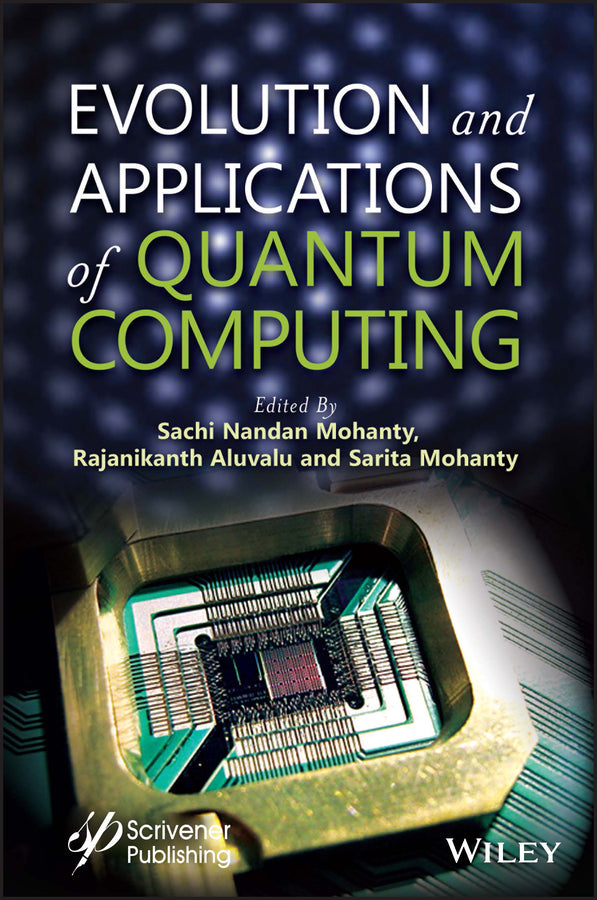
Evolution and Applications of Quantum Computing
Sachi Nandan Mohanty (Edited by), Rajanikanth Aluvalu (Edited by), Sarita Mohanty (Edited by)
9781119904861, Wiley
Hardback, published 12 June 2023
352 pages
22.9 x 15.2 x 2.2 cm, 0.739 kg
EVOLUTION and APPLICATIONS of QUANTUM COMPUTING The book is about the Quantum Model replacing traditional computing’s classical model and gives a state-of-the-art technical overview of the current efforts to develop quantum computing and applications for Industry 4.0. A holistic approach to the revolutionary world of quantum computing is presented in this book, which reveals valuable insights into this rapidly emerging technology. The book reflects the dependence of quantum computing on the physical phenomenon of superposition, entanglement, teleportation, and interference to simplify difficult mathematical problems which would have otherwise taken years to derive a definite solution for. An amalgamation of the information provided in the multiple chapters will elucidate the revolutionary and riveting research being carried out in the brand-new domain encompassing quantum computation, quantum information and quantum mechanics. Each chapter gives a concise introduction to the topic. The book comprises 18 chapters and describes the pioneering work on the interaction between artificial intelligence, machine learning, and quantum computing along with their applications and potential role in the world of big data. Subjects include: Audience The book will be very useful for researchers in computer science, artificial intelligence and quantum physics as well as students who want to understand the history of quantum computing along with its applications and have a technical state-of-the-art overview.
Preface xvii 1 Introduction to Quantum Computing 1 1.1 Quantum Computation 2 1.2 Importance of Quantum Mechanics 2 1.3 Security Options in Quantum Mechanics 2 1.4 Quantum States and Qubits 3 1.5 Quantum Mechanics Interpretation 4 1.6 Quantum Mechanics Implementation 4 1.6.1 Photon Polarization Representation 4 1.7 Quantum Computation 6 1.7.1 Quantum Gates 7 1.8 Comparison of Quantum and Classical Computation 11 1.9 Quantum Cryptography 12 1.10 Qkd 12 1.11 Conclusion 12 References 13 2 Fundamentals of Quantum Computing and Significance of Innovation 15 2.1 Quantum Reckoning Mechanism 16 2.2 Significance of Quantum Computing 16 2.3 Security Opportunities in Quantum Computing 16 2.4 Quantum States of Qubit 17 2.5 Quantum Computing Analysis 17 2.6 Quantum Computing Development Mechanism 18 2.7 Representation of Photon Polarization 18 2.8 Theory of Quantum Computing 20 2.9 Quantum Logical Gates 21 2.9.1 I-Qubit GATE 21 2.9.2 Hadamard-GATE 22 2.9.3 NOT_GATE_QUANTUM or Pauli_X-GATE 22 2.9.3.1 Pauli_Y-GATE 23 2.9.3.2 Pauli_Z-GATE 23 2.9.3.3 Pauli_S-Gate 23 2.9.4 Two-Qubit GATE 24 2.9.5 Controlled NOT(C-NOT) 24 2.9.6 The Two-Qubits are Swapped Using SWAP_GATE 24 2.9.7 C-Z-GATE (Controlled Z-GATE) 24 2.9.8 C-P-GATE (Controlled-Phase-GATE) 25 2.9.9 Three-Qubit Quantum GATE 25 2.9.9.1 GATE: Toffoli Gate 25 2.9.10 F-C-S GATE (Fredkin Controlled Swap-GATE) 26 2.10 Quantum Computation and Classical Computation Comparison 27 2.11 Quantum Cryptography 27 2.12 Quantum Key Distribution – QKD 27 2.13 Conclusion 28 References 28 3 Analysis of Design Quantum Multiplexer Using CSWAP and Controlled-R Gates 31 3.1 Introduction 32 3.2 Mathematical Background of Quantum Circuits 34 3.2.1 Hadamard Gate 34 3.2.2 CSWAP Gates 35 3.2.3 Controlled-R Gates 36 3.3 Methodology of Designing Quantum Multiplexer (QMUX) 36 3.3.1 QMUX Using CSWAP Gates 36 3.3.1.1 Generalization 37 3.3.2 QMUX Using Controlled-R Gates 37 3.4 Analysis and Synthesis of Proposed Methodology 39 3.5 Complexity and Cost of Quantum Circuits 41 3.6 Conclusion 42 References 42 4 Artificial Intelligence and Machine Learning Algorithms in Quantum Computing Domain 45 4.1 Introduction 46 4.1.1 Quantum Computing Convolutional Neural Network 51 4.2 Literature Survey 52 4.3 Quantum Algorithms Characteristics Used in Machine Learning Problems 58 4.3.1 Minimizing Quantum Algorithm 58 4.3.2 K-NN Algorithm 58 4.3.3 K-Means Algorithm 60 4.4 Tree Tensor Networking 61 4.5 TNN Implementation on IBM Quantum Processor 62 4.6 Neurotomography 62 4.7 Conclusion and Future Scope 63 References 64 5 Building a Virtual Reality-Based Framework for the Education of Autistic Kids 67 5.1 Introduction 68 5.2 Literature Review 71 5.3 Proposed Work 74 5.3.1 Methodology 74 5.3.2 Work Flow of Neural Style Transfer 75 5.3.3 A-Frame 75 5.3.3.1 Setting Up the Virtual World and Adding Components 75 5.3.3.2 Adding Interactivity Through Raycasting 76 5.3.3.3 Animating the Components 77 5.3.4 Neural Style Transfer 78 5.3.4.1 Choosing the Content and Styling Image 79 5.3.4.2 Image Preprocessing and Generation of a Random Image 79 5.3.4.3 Model Design and Extraction of Content and Style 81 5.3.4.4 Loss Calculation 81 5.3.4.5 Model Optimization 84 5.4 Evaluation Metrics 86 5.5 Results 89 5.5.1 A-Frame 89 5.5.2 Neural Style Transfer 90 5.6 Conclusion 90 References 91 6 Detection of Phishing URLs Using Machine Learning and Deep Learning Models Implementing a URL Feature Extractor 93 6.1 Introduction 94 6.2 Related Work 94 6.3 Proposed Model 95 6.3.1 URL Feature Extractor 95 6.3.2 Dataset 103 6.3.3 Methodologies 104 6.3.3.1 AdaBoost Classifier 105 6.3.3.2 Gradient Boosting Classifier 105 6.3.3.3 K-Nearest Neighbors 105 6.3.3.4 Logistic Regression 106 6.3.3.5 Artificial Neural Networks 106 6.3.3.6 Support Vector Machines (SVM) 107 6.3.3.7 Naïve Bayes Classifier 107 6.4 Results 109 6.5 Conclusions 109 References 109 7 Detection of Malicious Emails and URLs Using Text Mining 111 7.1 Introduction 112 7.2 Related Works 112 7.3 Dataset Description 114 7.4 Proposed Architecture 115 7.5 Methodology 116 7.5.1 Methodology for the URL Dataset 116 7.5.2 Methodology for the Email Dataset 118 7.5.2.1 Overcoming the Overfitting Problem 118 7.5.2.2 Tokenization 119 7.5.2.3 Applying Machine Learning Algorithms 119 7.5.3 Detecting Presence of Malicious URLs in Otherwise Non-Malicious Emails 119 7.5.3.1 Preparation of Dataset 119 7.5.3.2 Creation of Features 120 7.5.3.3 Applying Machine Learning Algorithms 120 7.6 Results 120 7.6.1 URL Dataset 120 7.6.2 Email Dataset 121 7.6.3 Final Dataset 121 7.7 Conclusion 122 References 122 8 Quantum Data Traffic Analysis for Intrusion Detection System 125 8.1 Introduction 126 8.2 Literature Overview 127 8.3 Methodology 129 8.3.1 Autoviz 129 8.3.2 Dataset 132 8.3.3 Proposed Models 132 8.3.3.1 Decision Tree 135 8.3.3.2 Random Forest Classifier Algorithm 136 8.3.3.3 AdaBoost Classifier 136 8.3.3.4 Ridge Classifier 137 8.3.3.5 Logistic Regression 137 8.3.3.6 SVM-Linear Kernel 138 8.3.3.7 Naive Bayes 138 8.3.3.8 Quadratic Discriminant Analysis 139 8.4 Results 140 8.5 Conclusion 141 References 142 9 Quantum Computing in Netnomy: A Networking Paradigm in e-Pharmaceutical Setting 145 9.1 Introduction 146 9.2 Discussion 148 9.2.1 Exploring Market Functioning via Quantum Network Economy 148 9.2.1.1 Internal Networking Marketing 149 9.2.1.2 Layered Marketing 149 9.2.1.3 Role of Marketing in Pharma Network Organizations 150 9.2.1.4 Role of Marketing in Vertical Networking Organizations 152 9.2.1.5 Generic e-Commerce Entity Model in Pharmaceutical Industry 153 9.2.2 Analyzing the Usability of Quantum Netnomics in Attending Economic Development 154 9.2.2.1 Theory of 4Ps in Pharma Marketing mix 155 9.2.2.2 Buying Behavior of the e-Consumers 156 9.2.2.3 Maintaining of Privacy and Security via Quantum Technology in e-Structure 157 9.2.2.4 Interface Influencing Sales 157 9.3 Results 158 9.4 Conclusion 159 References 159 10 Machine Learning Approach in the Indian Service Industry: A Case Study on Indian Banks 163 10.1 Introduction 163 10.2 Literature Survey 164 10.3 Experimental Results 170 10.4 Conclusion 172 References 172 11 Accelerating Drug Discovery with Quantum Computing 175 11.1 Introduction 175 11.2 Working Nature of Quantum Computers 176 11.3 Use Cases of Quantum Computing in Drug Discovery 178 11.4 Target Drug Identification and Validation 179 11.5 Drug Discovery Using Quantum Computers is Expected to Start by 2030 179 11.6 Conclusion 180 References 181 12 Problems and Demanding Situations in Traditional Cryptography: An Insistence for Quantum Computing to Secure Private Information 183 12.1 Introduction to Cryptography 184 12.1.1 Confidentiality 184 12.1.2 Authentication 185 12.1.3 Integrity 185 12.1.4 Non-Repudiation 186 12.2 Different Types of Cryptography 186 12.2.1 One-Way Processing 186 12.2.1.1 Hash Function (One-Way Processing) 186 12.2.2 Two-Way Processing 187 12.2.2.1 Symmetric Cryptography 188 12.2.2.2 Asymmetric Cryptography 189 12.2.3 Algorithms Types 190 12.2.3.1 Stream Cipher 190 12.2.3.2 Block Cipher 191 12.2.4 Modes of Algorithm 192 12.2.4.1 Cipher Feedback Mode 192 12.2.4.2 Output Feedback Mode 192 12.2.4.3 Cipher Block Chaining Mode 192 12.2.4.4 Electronic Code Book 192 12.3 Common Attacks 193 12.3.1 Passive Attacks 193 12.3.1.1 Traffic Analysis 193 12.3.1.2 Eavesdropping 194 12.3.1.3 Foot Printing 195 12.3.1.4 War Driving 195 12.3.1.5 Spying 195 12.3.2 Active Attacks 196 12.3.2.1 Denial of Service 196 12.3.2.2 Distributed Denial of Service (DDOS) 197 12.3.2.3 Message Modification 197 12.3.2.4 Masquerade 197 12.3.2.5 Trojans 198 12.3.2.6 Replay Attacks 199 12.3.3 Programming Weapons for the Attackers 199 12.3.3.1 Dormant Phase 200 12.3.3.2 Propagation Phase 200 12.3.3.3 Triggering Phase 201 12.3.3.4 Execution Phase 201 12.4 Recent Cyber Attacks 201 12.5 Drawbacks of Traditional Cryptography 203 12.5.1 Cost and Time Delay 203 12.5.2 Disclosure of Mathematical Computation 203 12.5.3 Unsalted Hashing 204 12.5.4 Attacks 204 12.6 Need of Quantum Cryptography 204 12.6.1 Quantum Mechanics 204 12.7 Evolution of Quantum Cryptography 205 12.8 Conclusion and Future Work 205 References 205 13 Identification of Bacterial Diseases in Plants Using Re-Trained Transfer Learning in Quantum Computing Environment 207 13.1 Introduction 208 13.2 Literature Review 218 13.3 Proposed Methodology 220 13.3.1 SVM Classifier 222 13.3.2 Random Forest to Classify the Rice Leaf 223 13.3.2.1 Image Pre-Processing 223 13.3.2.2 Feature Extraction 223 13.3.2.3 Classification 224 13.4 Experiment Results 226 Conclusion 230 References 230 14 Quantum Cryptography 233 14.1 Fundamentals of Cryptography 234 14.2 Principle of Quantum Cryptography 237 14.2.1 Quantum vs. Conventional Cryptography 237 14.3 Quantum Key Distribution Protocols 238 14.3.1 Overview and BB84 Protocol 238 14.3.2 The B92 Protocol 240 14.3.3 E91 Protocol 241 14.3.4 SARG04 Protocol 243 14.4 Impact of the Sifting and Distillation Steps on the Key Size 243 14.5 Cryptanalysis 246 14.6 Quantum Key Distribution in the Real World 247 References 248 15 Security Issues in Vehicular Ad Hoc Networks and Quantum Computing 249 15.1 Introduction 250 15.2 Overview of VANET Security 250 15.2.1 Security of VANET 250 15.2.2 Attacks are Classified 251 15.3 Architectural and Systematic Security Methods 252 15.3.1 Solutions for Cryptography 252 15.3.2 Framework for Trust Groups 252 15.3.3 User Privacy Security System Based on ID 253 15.4 Suggestions on Particular Security Challenges 254 15.4.1 Content Delivery Integrity Metrics 254 15.4.2 Position Detection 254 15.4.3 Protective Techniques 255 15.5 Quantum Computing in Vehicular Networks 257 15.5.1 Securing Automotive Ecosystems: A Challenge 257 15.5.2 Generation of Quantum Random Numbers (QRNG) 258 15.6 Quantum Key Transmission (QKD) 258 15.7 Quantum Internet – A Future Vision 259 15.7.1 Quantum Internet Applications 259 15.7.2 Application Usage-Based Categorization 260 15.8 Conclusions 262 References 263 16 Quantum Cryptography with an Emphasis on the Security Analysis of QKD Protocols 265 16.1 Introduction 266 16.2 Basic Terminology and Concepts of Quantum Cryptography 267 16.2.1 Quantum Cryptography and Quantum Key Distribution 267 16.2.2 Quantum Computing and Quantum Mechanics 267 16.2.3 Post-Quantum Cryptography 267 16.2.4 Quantum Entanglement 267 16.2.5 Heisenberg’s Uncertainty Principle 268 16.2.6 Qubits 268 16.2.7 Polarization 269 16.2.8 Traditional Cryptography vs. Quantum Cryptography 269 16.3 Trends in Quantum Cryptography 270 16.3.1 Global Quantum Key Distribution Links 271 16.3.2 Research Statistics on Quantum Cryptography 273 16.4 An Overview of QKD Protocols 274 16.4.1 Introduction to the Prepare-and-Measure Protocols 275 16.4.2 The BB84 Protocol 275 16.4.3 B92 Protocol 278 16.4.4 Six State Protocol (SSP) 278 16.4.5 SARG04 Protocol 279 16.4.6 Introduction to the Entanglement-Based Protocols 280 16.4.7 The E91 Protocol 280 16.4.8 The BBM92 Protocol 280 16.5 Security Concerns in QKD 282 16.6 Future Research Foresights 284 16.6.1 Increase in Bit Rate 284 16.6.2 Longer Distance Coverage 284 16.6.3 Long Distance Quantum Repeaters 285 16.6.4 Device Independent Quantum Cryptography 285 16.6.5 Development of Tools for Simulation and Measurements 285 16.6.6 Global Quantum Communication Network 285 16.6.7 Integrated Photonic Spaced QKD 285 16.6.8 Quantum Teleportation 286 References 286 17 Deep Learning-Based Quantum System for Human Activity Recognition 289 17.1 Introduction 290 17.2 Related Works 292 17.3 Proposed Scheme 293 17.3.1 Datasets Description 294 17.3.2 Pre-Processing 294 17.3.3 Feature Extraction 295 17.3.4 Preliminaries 295 17.3.4.1 Quantum Computing 296 17.3.4.2 Convolutional Neural Networks 296 17.3.5 Proposed ORQC-CNN Model 296 17.3.5.1 Quantum Convolutional Layer 297 17.3.5.2 Convolutional Layer 299 17.3.5.3 Max-Pooling Layer 299 17.3.5.4 Fully Connected Layer 299 17.3.6 Parameter Selection Using Artificial Gorilla Troops Optimization Algorithm (AGTO) 300 17.3.6.1 Exploration Phase 301 17.3.6.2 Exploitation Phase 302 17.3.6.3 Follow the Silverback 303 17.3.6.4 Competition for Adult Females 303 17.3.7 Computational Difficulty 304 17.4 Results and Discussion 304 17.4.1 Performance Measure 305 17.4.2 Performance Analysis of Dataset 1 306 17.4.3 Performance Analysis of Dataset 2 307 17.4.4 Comparison 308 17.5 Conclusion 309 References 309 18 Quantum Intelligent Systems and Deep Learning 313 18.1 Introduction 313 18.2 Quantum Support Vector Machine 315 18.3 Quantum Principal Component Analysis 318 18.4 Quantum Neural Network 319 18.5 Variational Quantum Classifier 321 18.6 Conclusion 323 References 323 Index 327
V. Padmavathi, C. N. Sujatha, V. Sitharamulu, K. Sudheer Reddy and A. Mallikarjuna Reddy
Swapna Mudrakola, Uma Maheswari V., Krishna Keerthi Chennam and MVV Prasad Kantidpudi
Virat Tara, Navneet Sharma, Pravindra Kumar and Kumar Gautam
Syed Abdul Moeed, P. Niranjan and G. Ashmitha
Kanak Pandit, Aditya Mogare, Achal Shah, Prachi Thete and Megharani Patil
Abishek Mahesh, Prithvi Seshadri, Shruti Mishra and Sandeep Kumar Satapathy
Heetakshi Fating, Aditya Narawade, Sandeep Kumar Satapathy and Shruti Mishra
Anshul Harish Khatri, Vaibhav Gadag, Simrat Singh, Sandeep Kumar Satapathy and Shruti Mishra
Sarthak Dash, Sugyanta Priyadarshini, Sachi Nandan Mohanty, Sukanya Priyadarshini and Nisrutha Dulla
Pragati Priyadarshinee
Mahesh V. and Shimil Shijo
D. DShivaprasad, Mohamed Sirajudeen Yoosuf, P. Selvaramalakshmi, Manoj A. Patil and Dasari Promod Kumar
Sri Silpa Padmanabhuni, B. Srikanth Reddy, A. Mallikarjuna Reddy and K. Sudheer Reddy
Salma Fauzia
B. Veera Jyothi, L. Suresh Kumar and B. Surya Samantha
Radhika Kavuri, Santhosh Voruganti, Sheena Mohammed, Sucharitha Inapanuri and B. Harish Goud
Shoba Rani Salvadi, Narsimhulu Pallati and Madhuri T.
Bhagaban Swain and Debasis Gountia
Subject Areas: Electronics & communications engineering [TJ]