Freshly Printed - allow 7 days lead
Couldn't load pickup availability
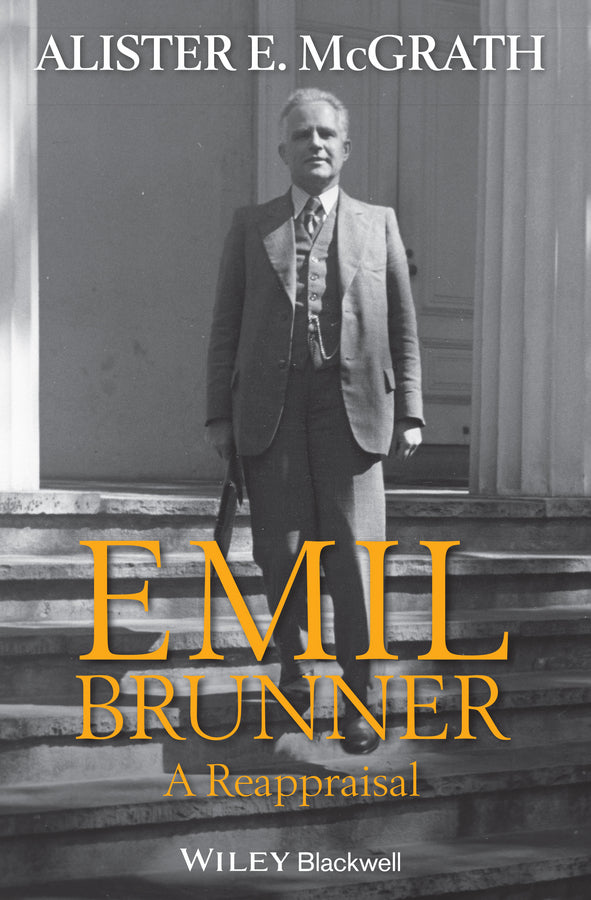
Emil Brunner
A Reappraisal
“McGrath’s consummate skills as both a theologian and an historian are masterfully at work in this penetrating and highly illuminating study arguing for the importance and continuing vital relevance to current theological and cultural debates of one of the 20th century’s largely forgotten major theological voices. Exhibiting the same sagacious understanding, balanced discernment and astute critical insight that we have come to admire and value so highly in McGrath, this intensively researched and captivating book brings together for the first time an enormous wealth of original source material yielding important new insights and contexts for a compelling reassessment and reappropriation of Brunner’s legacy. The book as such will serve not only as an inspired catalyst for renewed attention to Brunner but also as an indispensable resource base for further research, whether on Brunner himself or on the doctrinal and cultural issues that animated him and to which he continues to contribute so richly and relevantly.” “Professor McGrath offers us a brilliant reassessment of a theologian who has for long languished in the shadow of Karl Barth. It needs no less than an author with the wide-ranging skills of a theologian, intellectual historian and expert in the interface between science and religion to bring to light the neglected contribution of Emil Brunner to the theology of the twentieth century. Brunner's comprehensive vision for doctrine, theology of nature, missiology, ethics, practical theology and apologetics is exposed by an author who has himself produced formative work in all these areas. Neither simply a biography nor a mere introduction to Brunner's theology, this deeply-researched and engaging study traces the emergence of Brunner's thought in its cultural context, recognizes its flaws and yet recovers a challenge for the involvement of theology in the culture of our present time.” “McGrath’s meticulously researched and lucid exposition and assessment of Emil Brunner’s legacy is a landmark publishing event not only for the better understanding of modern Reformed theology but also of twentieth-century theology at large.”
Paul Janz, King’s College London
Paul S. Fiddes, University of Oxford
Veli-Matti Kärkkäinen, Fuller Theological Seminary and University of Helsinki
Alister E. McGrath (Author)
9781119283416, Wiley
Paperback / softback, published 5 August 2016
264 pages
22.9 x 15.2 x 1.3 cm, 0.34 kg
In Emil Brunner: A Reappraisal, renowned theologian Alister E. McGrath presents a comprehensive intellectual history of Emil Brunner, the highly influential Swiss theologian who was instrumental in shaping modern Protestant theology.
Preface ix A Note on Translations and Editions xiii 1 Emil Brunner: The Origins of a Theological Mind, 1914–1924 1 Theological Studies at Zurich 2 Pastoral Ministry and Contacts in England 4 The Swiss Crisis of Identity, 1914–1919 6 Brunner and Dialectical Theology: The Origins of an Ambivalent Relationship 9 Brunner in America, 1919–1920 12 Brunner, Barth, and Thurneysen: Continuing Debate 13 The Quest for Recognition: Erlebnis, Erkenntnis und Glaube (1921–2) 16 Brunner and American Psychology of Religion 18 The Limits of Humanity: Reflections on Revelation and Reason (1922) 22 The Critique of Schleiermacher: Die Mystik und das Wort (1924) 25 Part I The Making of a Dialectical Theologian 29 2 Brunner’s Theology of Crisis: Critique and Construction, 1924–1929 31 The 1925 Inaugural Lecture at Zurich: Revelation and Theology 32 Reason and Theology: An Ecclesial Engagement (1927) 34 The Mediator: A Manifesto for Dialectical Theology (1927) 39 The Trinity: Dogma, not Kerygma 50 The American Reception of the “Theology of Crisis” (1928) 54 3 Reflections on the Tasks of Theology, 1929–1933 61 Crisis: The Rise of Ideology in Western Europe, 1920–1935 62 Brunner’s Challenge to Ideology: The “Other Task of Theology” (1929) 66 Presenting Dialectical Theology in Britain: The Word and the World (1931) 74 A Theological Ethics: The Divine Imperative (1932) 78 A Problematic Liaison: Brunner and the Oxford Group 85 The Work of the Holy Spirit: The Copenhagen Lectures (1934) 87 4 Natural Theology? The Barth–Brunner Debate of 1934 90 Natural Theology: A Contested Notion 94 Karl Barth’s Views on Natural Theology, 1918–1933 101 A Game-Changer: The Nazi Power Grab of 1933 105 Brunner’s Public Criticism of Barth: Nature and Grace (1934) 113 Brunner’s Later Views on Natural Theology: Revelation and Reason (1941) 121 Barth’s Response: No! (1934) 127 5 Brunner’s Theological Anthropology: Man in Revolt (1937) 133 The Need for a Theological Anthropology 134 The Impossibility of an “Objective” Anthropology 136 The Dependence of Humanity on God 140 The “Contradiction” within Humanity 142 The Image of God and Human Identity 145 Humanity and Evolution: The Limits of Darwinism 148 6 Objectivity and Subjectivity in Theology: Truth as Encounter (1937) 154 Object and Subject in Theology: The Context to Brunner’s Thought 155 Objectivity and Subjectivity: Brunner’s Criticism of Existing Paradigms 161 Overcoming the Object-Subject Impasse: Brunner’s Strategy 166 The Implications of Brunner’s Notion of “Truth as Encounter” 169 America: The Call to Princeton Theological Seminary, 1937–1939 172 Part II Consolidation: Brunner’s Vision for Post-War Theological Reconstruction 179 7 Brunner’s Vision for the Christian Community: The Church, State, and Culture 181 The Ideological Origins of Totalitarianism 182 An Antidote to Totalitarianism: The Renewal of Natural Law 185 The Need for Theological Reconstruction: Revelation and Reason (1941) 190 The Christian State: A Modest Theological Proposal 195 Rediscovering the Church as Community: Brunner’s Ecclesiology 199 8 Teacher and Preacher: Brunner as a Public Intellectual 205 Rector of the University of Zurich, 1942–1943 206 The Catechist: Our Faith (1935) 207 The Fraumünster Sermons: Brunner as Preacher 210 The Public Lecturer: The Scandal of Christianity 214 Theological Education: Brunner’s Dogmatics 218 Tokyo: Brunner’s Engagement with Asia 221 Final Illness and Death 223 9 Legacy: The Contemporary Significance of Emil Brunner’s Theology 225 The Reformed Tradition: A Richer Range of Possibilities 228 A Theology of Nature: The Basis of Natural Law, Theology, and Science 229 Cultural Engagement: The Theological Foundations of Apologetics 231 Personalism: The Defence of Relational Identity 232 The Trinity: A Plea for Theological Modesty 234 Conclusion 237 Works by Emil Brunner Cited in This Study 239 Index 242
Subject Areas: Religion & beliefs [HR]