Freshly Printed - allow 10 days lead
Couldn't load pickup availability
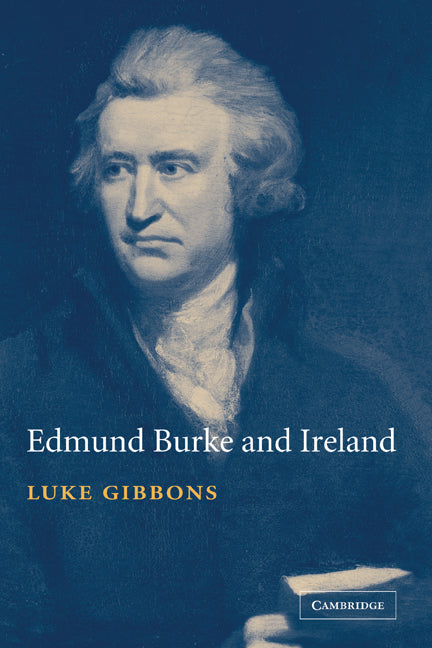
Edmund Burke and Ireland
Aesthetics, Politics and the Colonial Sublime
This study argues that Burke's influential early writings on aesthetics are intimately connected to his politics.
Luke Gibbons (Author)
9780521810609, Cambridge University Press
Hardback, published 16 October 2003
320 pages, 14 b/w illus.
23.6 x 16 x 2.3 cm, 0.577 kg
Review of the hardback: '… this dynamic pioneering account of Burk's thought puts him among the best. Where Gibbons surpasses all pre-existing studies of Burke is in his broad coverage of eighteenth-century ideas of sympathy, the sublime and aesthetics, which does justice to Burke's stature as an intellectual.' The Times Literary Supplement
This pioneering study of Burke's engagement with Irish politics and culture argues that Burke's influential early writings on aesthetics are intimately connected to his lifelong political concerns. The concept of the sublime, which lay at the heart of his aesthetics, addressed itself primarily to the experience of terror, and it is this spectre that haunts Burke's political imagination throughout his career. Luke Gibbons argues that this found expression in his preoccupation with political terror, whether in colonial Ireland and India, or revolutionary America and France. Burke's preoccupation with violence, sympathy and pain allowed him to explore the dark side of the Enlightenment, but from a position no less committed to the plight of the oppressed, and to political emancipation. This major reassessment of a key political and cultural figure will appeal to Irish studies and Post-Colonial specialists, political theorists and Romanticists.
Introduction: Edmund Burke and the colonial sublime
Part I. The Politics of Pain: 1. 'This King of Terrors'
Edmund Burke and the aesthetics of executions
2. Philoctetes and colonial Ireland: the wounded body as national narrative
Part II. Sympathy and the Sublime
3. The sympathetic sublime: Edmund Burke, Adam Smith and the politics of pain
4. Did Edmund Burke cause the great Famine? Political economy and colonialism
Part III. Colonialism and Enlightenment: 5. 'Tranquillity tinged with terror': the sublime and agrarian insurgency
6. Burke and colonialism: the enlightenment and cultural diversity
Part IV. Progress and Primitivism: 7. 'Subtilised into savages': Burke, progress and primitivism
8. 'The return of the native': The United Irishmen, culture and colonialism.
Subject Areas: Literary theory [DSA]