Freshly Printed - allow 7 days lead
Couldn't load pickup availability
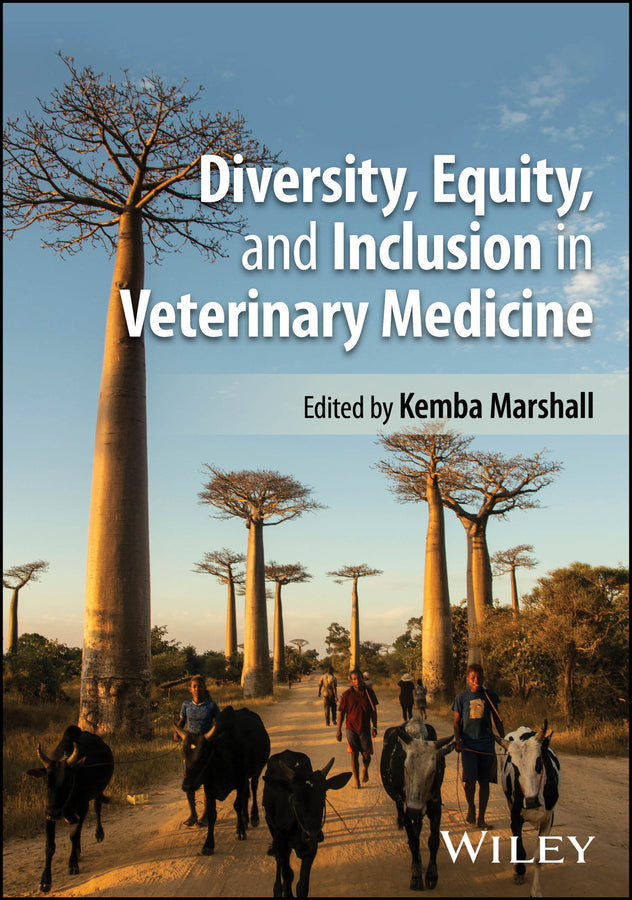
Diversity, Equity, and Inclusion in Veterinary Medicine
Kemba Marshall (Edited by)
9781394217083, Wiley
Paperback / softback, published 20 February 2025
336 pages
24.9 x 17.5 x 2 cm, 0.567 kg
An insightful discussion of DEI and its application to a wide variety of real-world veterinary settings Diversity, Equity, and Inclusion in Veterinary Medicine takes a broad approach to the concept of DEI, delivering a practical discussion of effective strategies for applying diversity, equity, and inclusion (DEI) practices within the veterinary setting. Written by a diverse set of voices, the book provides a comprehensive understanding of DEI as it relates to veterinary medicine. Arranged from A to Z, the 26 chapters discuss important concepts in DEI, with actionable advice for how to incorporate DEI into the practice of veterinary medicine. The chapters define the concepts, explain why each concept is important to veterinary medicine, and give practical examples of how to apply the concepts in the real world. Each chapter stands on its own and can be approached individually but taken together these chapters expand the boundaries of DEI into topics that are both familiar and novel. Readers will also find: Diversity, Equity, and Inclusion in Veterinary Medicine is an invaluable resource for practicing veterinarians, veterinary technicians, veterinary practice managers, other veterinary professionals, veterinary students, veterinary technician students, and anyone involved with animal health.
List of Contributors xix Preface xxi Chapter A Access to Veterinary Care: A Gateway to Family Health and Social Equity 1 Introduction 1 Access to Veterinary Care: A Family and Community Affair 3 Social Responsibility of Healthcare Professions 5 Action Steps: Building a One Health Interprofessional System 8 Summary 10 References 11 Chapter B Belonging: “Finding Home: Navigating the Landscape of Belonging” 13 What is Belonging? 14 The Power of Belonging 16 How Do We Create a Sense of Belonging in the Workplace –and within the Veterinary Workplace? 16 Unconscious Bias 17 Hiring Practices 18 Transparent and Fair Processes 18 Onboarding Practices 18 Communication and Feedback 19 Employee Resource Groups and Affinity Networks 19 Creating Safe and Inclusive Workplaces 20 Example: Reimagining the Visual Representation of Our Past Present and Future 20 References 21 Additional Resources 22 chapter c Cultural Competence and Cultural Humility in Veterinary Medicine 23 Introduction 23 Cultural Competence 24 Cultural Humility 24 Shift to Embracing Cultural Humility 25 Application of Cultural Humility in Clinical Veterinary Practice 26 Application of Cultural Humility in the Workplace 30 Conclusions 32 References 33 Chapter D Diversity 35 Introduction 35 Diversity Defined 36 So What? Why Does Diversity Matter in Veterinary Medicine and Society at Large? 36 Now What? How Do We Engage With an Increasingly Diverse Clientele and Clinical Workforce in the Interest of Improved Animal Care? 37 Cultural Humility through Critical Consciousness 37 Summary 40 References 40 Chapter E Emotional Intelligence 41 What is Emotional Intelligence? 41 Signs of Emotional Intelligence 42 Impact of Emotional Intelligence 42 The Four Es 43 Exposure 44 Experience 44 Education 44 Empathy 45 Managing Interactions 45 Pause 45 Empathize and Ask 45 Enhancing Your EI Capability 46 Working in a Diverse and Inclusive Society 47 Impact of the COVID- 19 Pandemic 48 Making the Connection Between EI and Diversity 49 Affirmative Introspection 49 Self- Governance 49 Intercultural Literacy 50 Social Architecting 50 The Responsibility in Veterinary Medicine 50 AVMA Policy on Diversity and Inclusion 50 Emotional Intelligence and Leadership 51 Protecting Your Emotional State While Engaging in Patient Care 51 Summary 53 References 53 Chapter F First Nations 55 First Nations 55 Terminology 56 How to Refer to Native American People 56 Identity and Recognition 57 Blood Quantum 57 Certificate Degree of Indian Blood 58 Tribal Enrollment 58 Natives in Education 58 Natives in Medicine 58 Indigenous Knowledge in Veterinary Education 59 Access to Care 60 Embedded Educational Initiatives 61 Native American Veterinary Association (NAVA) and Other Allyship Examples 61 Inclusivity of Native American People in Veterinary Medicine 61 Orange Shirt Day 62 Indigenous Peoples’ Day 62 National Native American Heritage Month 62 Making Your Physical Space Inviting 62 Understanding Diverse Cultural Norms 63 Cultural Sensitivity in Consultation and Collaboration 63 Representation and Visibility 63 Scenario: Event Planning and Land Acknowledgment Requests 64 Better Request Using Knowledge and Understanding 64 Best Response with Cultural Sensitivity and Engagement 65 Conclusion 65 References 65 Chapter G Gender 67 Introduction 67 Content Warning 69 Resources 69 Gender What it is and What it isn’t 69 Situation: The Veterinary Field Must Actively Support Reproductive Healthcare 73 Scenario: Institutional Hierarchy Creates Opportunities for Abuse 74 Scenario: Modeling Consent Invitation and Communication–Based Culture With Nongendered Assumptions Can Be Powerful Beyond the Immediate Situation 75 Dedication 76 Acknowledgments 76 References 76 Chapter H Historically Black Colleges and Universities 81 Introduction 81 Impact of the HBCU 82 Schools and Colleges of Veterinary Medicine: The Origin Story of Land- Grant Institutions (LGIs) 82 African Americans in Veterinary Medicine 84 Leveraging Partnerships to Develop a More Diverse and Inclusive Veterinary Profession 88 References 90 Chapter I Intersectionality 93 First a Walk in My Shoes 93 What Defines Intersectionality? 94 Why is Intersectionality Important in Veterinary Medicine? 96 Applying Intersectionality in Veterinary Establishments and Institutions 99 References 101 Chapter J Justice 103 Introduction 103 Justice and the Wage Gap 104 Lilly Ledbetter Fair Pay Act 105 The Wage Gap in Professional Tennis 106 The Wage Gap in Professional Soccer 107 Federal Law and the Wage Gap 108 The Wage Gap and Individual Practices 109 The Wage Gap and Clinical Scenarios 110 References 113 Chapter K Kindness 115 Why Kindness? 115 Kindness Defined 116 Kindness Impact 117 Improved Self- Evaluations 117 Improved Well- being 117 Increased Self- Esteem and Fulfillment 118 Cultivating Kindness – The How 119 Kindness Toolkit 120 The Time Is Now 122 Summary and Next Steps 123 References 123 Chapter L Listen 125 Introduction 125 What They Didn’t Teach in Veterinary School 125 Turns Out It Is Not Just Me 126 Controlling What I Can Control 127 My Prep Work Before the Classroom Listening Assignment 129 The Classroom Listening Assignment Begins 130 What Are Your Beliefs? 130 What Are Your Customs? 131 What Are Your Traditions? 131 What Is Your Life Like? 132 How Are You Treated in This Country? 133 What Franklin Taught Me 133 Lessons Learned 134 Final Thoughts 135 References 135 Chapter M Multiculturalism 137 What’s Culture Got to Do With Veterinary Medicine? 137 Language and Other Cultural Expressions 138 A Brief Review of Cultural Literature from Human Medicine 141 Practical Cultural Veterinary Realities 142 A Royal Bon Voyage 144 Putting It All Together in Practice 145 References 145 Chapter N Neurodiversity 147 Introduction 147 Neuro- What- Isity? 148 Neurodiversity in the Workplace 151 “Best” Practices 153 Recruiting and Interviewing 153 Bonus Tips 154 Neuroinclusive Culture 155 The Future 159 Conclusion 160 References 161 Chapter O Veterinary Medicine and One Health 163 What is One Health? 163 Historical Perspective of One Health 164 Present Momentum 165 Veterinarians and Veterinary Profession as One Health Practitioners 166 Personal Examples of Veterinary Medicine in One Health 167 Bringing One Health and Deai to Your Practice 168 Conclusion 168 References 169 Chapter P Psychological Safety 171 Introduction 171 What is Psychological Safety? 171 Medical Settings 173 Power Dynamics 174 Team Conflict 176 Mental Health Well- Being and Burnout 176 Case Example 177 Conclusion 178 References 179 Chapter Q Queer 181 Introduction (What?) 181 LGBTQ+ History in Veterinary Medicine 182 Demographics/Facts/Stats 184 What Does It Mean to Be Queer in Veterinary Medicine? (Now What?) 186 Scenarios 187 Homophobia Scenario Supervisor 187 Transphobia Scenario Transition 187 Definitions and a Clinical Ace/Aro Scenario 188 Transphobia Scenario 188 Intersex Discrimination Scenario 189 Discussion (So What Now?) 189 Conclusion 190 Acknowledgments 191 References 191 Chapter R Representation 193 Representation 193 Five Practices that Create a More Inclusive Workplace 196 Increased Diversity and Inclusion at the Executive Level 196 Examine Your Practice and Commit to Change 196 Define Your Diversity Priorities Based on What Drives Your Growth 196 Target Your Diversity Efforts to Local Circumstances 196 Advocate For Diversity Within The Veterinary Profession 197 References 199 Chapter S Systemic 201 Introduction 201 Systemic Applications in Veterinary Medicine 203 Veterinary Recruitment 203 Veterinary Admission 204 Veterinary Retention 206 Veterinary Financial Support 207 Systemic Issues in Veterinary Private Practice 208 Summary 211 References 212 Chapter T Tokenism 215 Introduction 215 Introduction: What Is Tokenism? 215 Why Diversify a Homogeneous Organization? 216 Tokenism Exploits Employees 217 Tokenism in Patient Engagement 218 The Toll of Tokenization in Medical Residencies 218 Tokenism Breeds Imposter Syndrome 220 Tokenism Cements Stereotypical Views 222 How the Tokenized Are Set Up to Fail 222 Adverse Effects of Tokenism Personal and Organization 223 How to Avoid Tokenism 223 Ways to Begin Mitigating Tokenism 224 Conclusion 225 References 226 Chapter U Unconscious Bias 229 Introduction 229 What is Unconscious Bias? 229 So What? Why is Unconscious Bias Important to Veterinary Medicine? 230 Unconscious Bias Has Ramifications on Clinical Decision- Making Process/Patient Care 231 Unconscious Bias Has Ramifications on Admission to Veterinary Schools and Colleges 231 Unconscious Bias Has Ramifications in the Workplace 232 Now What? Identifying and Understanding Unconscious Bias in Our World 232 Bias in Clinical Decision- Making and Patient Care 232 Practically Speaking How Do We Combat Biases? 233 Practically Speaking How Do We Combat Biases? 234 Now What? Addressing Bias in Veterinary School Admissions Processes 234 Fictional Veterinary Academic Setting Scenario 234 Now What? Addressing Unconscious Bias in the Workplace 236 Workplace Bias Scenario 1 236 Workplace Bias Scenario 2 238 Bias in an Veterinary Technology Educational Setting Scenario 239 Now What? Mitigating Your Own Unconscious Bias 240 Understanding Your Own Unconscious Bias 240 Acting Like a Camera to Differentiate Observation from Interpretation 240 Reflecting on How Bias Affect Us 241 Recognize People That Shape Who We Are 242 Recognize Sources That Perpetuate Bias 242 Expanding Your Community and Perspective to Disrupt Bias 243 Understanding the Impact of Unconscious Bias on Our Lives 243 References 244 Chapter V Values 245 Introduction to Values 245 Values in Action 245 Values Correlated to DEI 247 Building Trust in Order to Center Values 248 Including as an Action That Builds Trust 248 Catalyzing Change to (Re)Center Values 249 Appreciation as the Mechanism for Sustaining and Scaling 251 How Might You Create a Thoughtful Appreciation Strategy? 251 References 252 Chapter W Welcoming 253 The Receptionist/Customer Service Representative (CSR) Team 255 The Technical Team 256 The Associate Veterinarian Team 258 Practical Tips to Create a More Welcoming Experience 261 Reference 263 Chapter X Xenacious 265 Introduction 265 Defining Xenacious 267 Why is Veterinary Medicine in Need of Change? 268 The Evolution of Veterinary Medicine 268 How Do You Know When to Make a Change? 269 Being Xenacious in Vet Med 270 Scenario #1 270 Scenario #2 272 The Response 272 A Better Response 273 An Even Better Response 273 Conclusion 273 References 273 Chapter Y You 275 Introduction 275 The State of Vet Med 276 Leadership is a Choice Not a Title 277 Understanding the Dynamics of Conflict 278 Managing Conflict 280 What Can You Do Now? 282 Conclusion 283 References 284 Chapter Z Zero- Sum Game 285 Introduction – “Somebody’s Gotta Win; Somebody’s Gotta Lose” 285 Implications of Zero- Sum Game Bias 287 The State of Veterinary Medicine 289 Mitigating Zero- Sum Bias 291 Similarity 291 Expedience 291 Experience 292 Distance 292 Safety 293 Conclusion 293 References 293 Afterword 295 Index 299
Michael J. Blackwell
Sandra Dawkins Sue Knoblaugh and Rustin Moore
Zenithson Ng and Adesola Odunayo
Cristina Risco and Carlos A. Risco
Joelle A. Murchison
Evelyn Galban
Erika Lin- Hendel
Ruby Perry and Olga Bolden- Tiller
Briana D. Jones
Iran Brown
Mia Cary
Kemba L. Marshall
Odette Doest
Rob Best
Sharon L. Deem
Elizabeth Strand and Chesney Ward
Ewan Wolff Melody Martínez and Dane Whitaker
Indya Woods
Ashlee Canty and Allen Cannedy
Michael Bailey
Harold Davis and Theresa L. Cosper- Roberts
James Pritchett
Monica Dixon Perry
Tierra Price
Kemba L. Marshall
Kemba L. Marshall
Subject Areas: Veterinary medicine [MZ]