Freshly Printed - allow 10 days lead
Couldn't load pickup availability
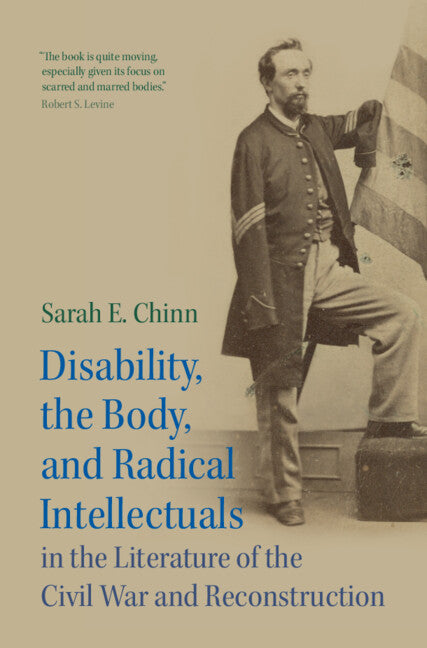
Disability, the Body, and Radical Intellectuals in the Literature of the Civil War and Reconstruction
It gives readers a new way to think about the Civil War and Reconstruction.
Sarah E. Chinn (Author)
9781009442695, Cambridge University Press
Hardback, published 4 July 2024
270 pages
23.5 x 16.1 x 2.1 cm, 0.499 kg
'Thought-provokingly written and well researched, this book offers more insights to consider to the growing historiography of Civil War disability.' Tim Talbott, Emerging Civil War blog
During the Civil War, hundreds of thousands of men were injured, and underwent amputation of hands, feet, limbs, fingers, and toes. As the war drew to a close, their disabled bodies came to represent the future of a nation that had been torn apart, and how it would be put back together again. In her authoritative and engagingly written new book, Sarah Chinn claims that amputation spoke both corporeally and metaphorically to radical white writers, ministers, and politicians about the need to attend to the losses of the Civil War by undertaking a real and actual Reconstruction that would make African Americans not just legal citizens but actual citizens of the United States. She traces this history, reviving little-known figures in the struggle for Black equality, and in so doing connecting the racial politics of 150 years ago with contemporary debates about justice and equity.
Introduction: a new kind of nation: Amputation, reconstruction, and the promise of black citizenship
1. Giving up the ghost: the dead child vs. the amputated limb
2. 'Strewn promiscuously about': limbs and what happens to them
3. 1860 or 1865? Amending the national body
4. 'I don't care a rag for the Union as it was': amputation, the past, and the work of the Freedmen's Bureau
5. Shaking hands: manual politics and the end of reconstruction
Conclusion: Eloquent Emptiness.
Subject Areas: Literary studies: general [DSB]