Freshly Printed - allow 8 days lead
Couldn't load pickup availability
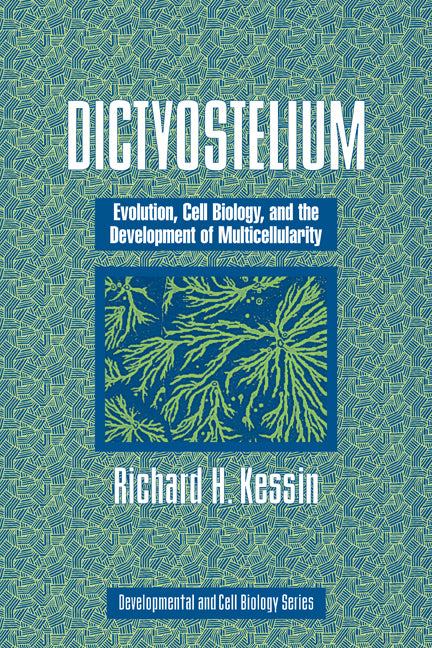
Dictyostelium
Evolution, Cell Biology, and the Development of Multicellularity
Examines the modern synthesis of the biology of Dictyostelia, including both classical methods and modern molecular findings.
Richard H. Kessin (Author)
9780521152822, Cambridge University Press
Paperback, published 5 August 2010
318 pages
22.9 x 15.2 x 1.8 cm, 0.47 kg
Review of the hardback: 'This will be the key reference work on this fascinating genus for decades, and a 'must' not only for developmental biologists but also the many mycologists who continue to dabble in and be fascinated by slime moulds.' Mycol. Research
Dictyostelia are soil amoebae capable of extraordinary feats of survival, motility, chemotaxis, and development. Characterised by their ability to transform from a single-celled organism into an elaborate assemblage of thousands of synchronously-moving cells, Dictyostelids are often referred to as 'social amoebae', and have been the subjects of serious study since the 1930s. Research in this area has been instrumental in understanding many problems in cellular biology. Beginning with the history of Dictyostelids and discussing each stage of their development, this book considers the evolution of this unique organism, analyses the special properties of the Dictyostelid genome, and presents in detail the methods available, at the time of the book's original publication in 2001, to manipulate their genes. Representing the synthesis of such material and with an emphasis on combining classical experiments with modern molecular findings, this book will be essential for researchers and graduates in developmental and cellular biology.
Preface
1. A brief introduction to Dictyostelium discoideum and its relatives
2. A history of research on Dictyostelium discoideum
3. The evolutionary biology of Dictyostelium
4. The genome and genetics
5. Membranes and organelles of Dictyostelium
6. Cell motility and the cytoskeleton
7. The transition from growth to development: from starvation to self sustaining cAMP signal relay
8. Chemotaxis and aggregation
9. Differentiation and adhesion in the aggregate
10. Behavior of cells in the slug
11. Culmination
12. Formation and germination of spores
13. Resources
References
Index.
Subject Areas: Microbiology [non-medical PSG], Cellular biology [cytology PSF], Developmental biology [PSC], Genetics [non-medical PSAK]