Freshly Printed - allow 7 days lead
Couldn't load pickup availability
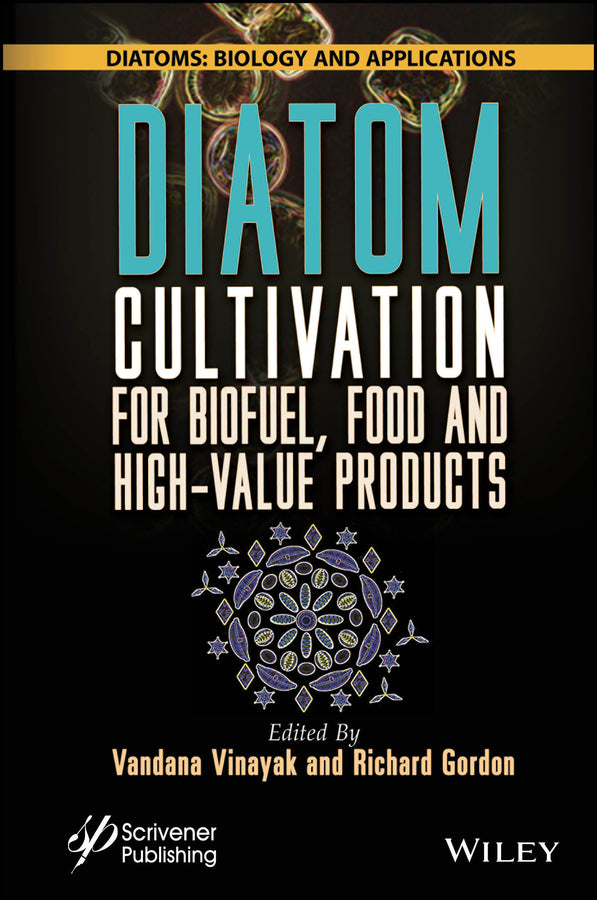
Diatom Cultivation for Biofuel, Food and High-Value Products
Vandana Vinayak (Edited by), Richard Gordon (Edited by)
9781394174485, Wiley
Hardback, published 21 March 2025
448 pages
22.9 x 15.2 x 2.4 cm, 0.936 kg
This unique book examines the techno-economic prospects of diatom cultivation, the design and implementation of algal reactors, and the potential of diatoms as a source of biofuel and other value-added products. Diatom Cultivation for Biofuel, Food and High-Value Products covers the scientific, economic, and practical aspects of using diatoms for multiple purposes. It explores an integrated approach to diatom cultivation, including discussions on techniques, harvesting methods, and innovative technologies. The book discusses the potential of these techniques for improving the efficiency and yield of diatom-based biofuels, as well as the challenges and ethical considerations associated with genetic engineering. Readers of the book will discover a wealth of information including: Audience The book serves as a guide for researchers and scientists in phycology, biology, ecology, environmental science, biofuels, bioengineering as well as nutritionists and dieticians who design functional foods and nutraceutical products.
Preface xv Acknowledgements xix Part I: Culture Methods 1 1 Adaptation of Chitosan-Based Harvesting Methods for Flocculation of Microalgae 3 1.1 Microalgae 4 1.2 Microalgae Cultivation and Challenges 4 1.3 Microalgae Harvesting: Technological Limitations and Needs 6 1.4 Harvesting Methods 7 1.5 Chitosan as Natural Flocculant 9 1.6 Chitosan in Conjunction with Other Physicochemical Methods 12 1.6.1 Electroflotation and Mechanical Stirring 12 1.6.2 Electroflocculation 13 1.6.3 Synergistic Effects of Chitosan and Inorganic Flocculants 14 1.6.4 Integrated Flocculation 14 1.7 Comparison of Different Harvesting Methods 15 1.8 Conclusion 15 References 16 2 Diatoms Cultivation: Trends, Scope and Technoeconomic Prospects 21 2.1 Introduction 22 2.2 Cultivation Strategy and Production 24 2.3 Design and Implementation of a Prototype Algal Reactor 27 2.4 Potential of Diatoms as a Source of Biofuel with Value-Added Products 29 2.4.1 Diatoms in the Biofuels Industry 30 2.4.2 Medical Applications 31 2.5 Industrial Aspects of Diatoms as a Source of Biofuel 31 2.5.1 Biomedical Industrial Aspects 32 2.6 Economic Feasibility Assessment 32 2.7 Biochemical Composition 33 2.8 Feedstock Availability Assessment 37 2.9 Scope of Diatoms in Biorefinery 38 2.10 Conclusions and Future Prospects 39 Acknowledgment 40 Human and Animal Rights and Informed Consent 40 References 40 3 Biochemical Compounds in Phaeodactylum tricornutum 51 3.1 Introduction 52 3.2 Biochemical Compounds 59 3.2.1 Pigments 59 3.2.2 Proteins 61 3.2.2.1 Hydrolysates 61 3.2.2.2 Chlorophyll Proteins: 10-Hydroxy-Phaeophorbide A and Phaeophorbide A 62 3.2.3 Carbohydrates 62 3.2.3.1 Chrysolaminarin 62 3.2.3.2 Exopolysaccharides (EPSs) 62 3.2.3.3 Sulfated Polysaccharides 63 3.2.4 Lipids 63 3.2.5 Fatty Acids 64 3.2.5.1 Omega-3 Fatty Acids 65 3.3 Demand, Valorization and Biotechnological Applications 66 3.4 Conclusion 68 References 69 Part II: High-Value Products 79 4 Diatoms: A Natural Resource of High-Valued Products and their Future Prospective 81 4.1 Introduction 82 4.1.1 Diatom Morphology 85 4.1.2 General Features of Oil Bodies in Diatoms 85 4.2 Biosilicification and Silicification as a Crucial Application in Bone Repair 89 4.3 Effect of Metals as a Therapeutic Application on Diatom Frustules 90 4.4 Successful Deposition of Metals on Diatom Frustules 91 4.4.1 Germanium 91 4.4.2 Titanium 91 4.4.3 Calcium 91 4.4.4 Strontium 92 4.5 Biomedical and Environmental Applications 92 4.5.1 Biomedical Applications 92 4.5.2 Environmental Applications 93 4.6 Deposition of Different Metal Nanoparticles for Various Applications 94 4.6.1 Iron Oxide Nanoparticles 95 4.6.2 Silver Nanoparticles 95 4.6.3 Gold Nanoparticles 98 4.6.4 Titanium Nanoparticle 99 4.6.5 Magnetite Nanoparticles 99 4.7 Interaction of Diatoms with Peptides and Their Plausible Applications 100 4.8 Diafuel: A Diatom Application with the Most Potential 101 4.9 Conclusion 102 Acknowledgments 102 References 102 5 Diatom Cell Wall: Nature Engineered Nanostructures 115 5.1 Introduction 116 5.2 Nature of Diatom Cell Wall 117 5.2.1 Biosilicification 118 5.2.2 Applications 119 5.3 Purification of Diatoms 121 5.3.1 Principle 121 5.3.2 Process 121 5.3.3 Purification of Raw DE Silica 122 5.4 Nutritive and High-End Product 122 5.5 Biofuel Industry 126 5.6 Factors of Diatom for Producing Biofuel 126 5.7 Biomedical Industry 127 5.8 DE Silica for Tissue Engineering 127 5.9 Nanotechnologically Derived Smart Drug Delivery System 128 5.10 Future Perspective 132 5.11 Conclusion 132 References 133 6 Biochemical Engineering of Diatoms for Health Benefits 139 6.1 Introduction 140 6.1.1 Diatom Pigments 140 6.1.2 Diatoms’ Nutritional Value 141 6.1.3 Diatoms as Bio-Indicators 141 6.1.4 Metal Toxicity 142 6.2 Chemical Composition of Diatom Biomass 142 6.2.1 Carbohydrate 143 6.2.2 Polyunsaturated Fatty Acid (PUFA) 144 6.2.3 Pigments 145 6.3 Microalgae as Hidden Treasure of Novel Drugs for Good Health 146 6.3.1 Drugs from Microalgae 147 6.3.2 As a Feed for Aquaculture 149 6.3.3 Diatoms in Drug Delivery 151 6.4 Microalgal Drugs in Preventing Viral Pandemics 153 6.5 Conclusions 156 References 157 7 Metabolism and Transcriptome Stress in Diatom Phaeodactylum tricornutum for Value-Added Products 167 7.1 Introduction 168 7.2 Commercial Market Value 170 7.2.1 Industrial Applications 170 7.2.2 Types of Foods with Health Benefits from Diatoms 172 7.3 Metabolic Pathways and Mechanisms for Synthesis of High Value Added Products in Diatoms 173 7.3.1 Carbon Dioxide Fixation 174 7.3.2 Photorespiration and Glyoxylate Metabolism 176 7.3.3 Reductive/Oxidative Pentose Phosphate Pathway 176 7.3.4 Glycolysis 177 7.3.5 Storage Products Synthesis and Degradation 177 7.3.6 Inositol and Propionate Pathway 178 7.3.7 Biosynthesis Production of Carotenoid in P. tricornutum Diatoms 178 7.4 Light Stress in Diatoms and Fucoxanthin Biosynthesis 179 7.5 Transcriptomics in Diatoms 186 7.5.1 Steps in Transcriptomics Sequencing 187 7.5.2 Transcriptomic Studies in Phaeodactylum tricornutum Under Various Influential Factors 187 7.6 Conclusions 189 References 190 8 Terraforming Mars with Microalgae, Especially Diatoms 203 8.1 Introduction 204 8.2 Instrumentation to Artificially Simulate Life on Mars 206 8.2.1 SpaceQ 206 8.2.2 GraviSat Platform 209 8.3 Diatoms for Long-Term Space Missions 211 8.4 Potential Diatoms for the BLSS: Taxa Tolerant to Extreme Conditions 212 8.5 Testing Diatom Growth Under Microgravity Conditions 217 8.5.1 Microgravity and Living Organisms 217 8.6 Life Support Systems for Space Missions 220 8.7 Management of the Culture Vessel and Elements 222 8.8 Conclusions 223 Acknowledgments 223 References 223 9 Diatom: Source of Biofuel and Active Green Anode Material for Advanced Energy Storage Application 231 9.1 Diatoms – Microalgae with Unique Structure and Properties 232 9.2 Biofuel Application 234 9.3 Diatom Silica: Material for Li-Ion Battery Anode 237 9.4 Conclusion 239 Acknowledgment 239 References 240 Part III: Low-Value Products 245 10 Milking of Diatoms: A Realistic Approach to Serve the Biorefinery Concept 247 10.1 Introduction 248 10.2 Cell Disruption Methods 250 10.2.1 Ultrasonication of Cells to Extract Value-Added Compounds 250 10.2.2 Microwave-Assisted Cell Wall Disruption Method 251 10.2.3 High-Pressure Homogenization 251 10.2.4 Chemical Methods 252 10.2.5 Pulsed Electric Field 252 10.2.6 Milking of Diatoms 253 10.3 Concept of Milking Cells for Value-Added Compounds 254 10.3.1 Advancements in the Milking Approach 254 10.4 Economic Perspectives of Biofuels and Cell Disruption 257 10.5 Prospects and Challenges of the Milking Process 259 10.6 Conclusions 260 References 260 11 Dissection of Gene Expression Pattern and Metabolic Profile Under Enhanced Oil Production Conditions in Diatoms 267 Abbreviations 268 11.1 Introduction 269 11.1.1 Why Algae Over Other Sources? 270 11.1.2 Basic Cell Structure of Diatoms 270 11.1.3 Why Diatoms? 271 11.1.4 Percentage Lipid Extraction as Per Dry Cell Weight 274 11.1.5 Aquatic Species Programme (ASP) 275 11.2 Generalized Pathway for Lipid Biosynthesis in Diatoms 276 11.3 Stress Conditions (Metabolites) Helping to Increase Oil Production 278 11.3.1 Salt Stress 284 11.3.2 Urea as a Nitrogen Source 285 11.3.3 Nutrient Stress 285 11.3.4 Light Stress 286 11.3.5 Nanoparticle Stress 286 11.3.6 Nitrogen Stress 287 11.3.7 Phosphorus Stress 288 11.3.8 Silicon Stress 288 11.3.9 Temperature Stress 289 11.3.10 POME-Based Biofuel 289 11.4 Changes in Gene Expression in Diatoms During Stress Conditions 290 11.5 Structural and Functional Aspect of Candidate Genes/ Enzymes of Lipid Biosynthesis Pathway 294 11.6 Role of rDNA Technology in Improving Diatom Strains for Enhanced Lipid Production 297 References 301 12 Implications of Diatoms for Heavy Metal Bioremediation 323 12.1 Introduction 324 12.2 Mechanism for Heavy Metal Removal by Diatoms 326 12.3 Bioremediation and Biosorption of Heavy Metals 326 12.4 Challenges 328 12.5 Advantage of Diatoms Over Other Techniques and Algae 329 12.6 Production of Diatoms on a Commercial Scale and Its Application 329 12.7 Future Aspects 333 12.8 Conclusion 334 References 334 13 Optimizing Bioenergy from Diatoms through Biofilms 341 13.1 Introduction 342 13.2 Different Configurations of Biofilm Cultivation Systems 344 13.3 Surface Materials for Biofilm Cultivation 345 13.3.1 Biofilm Bioreactor Design 346 13.3.2 Lab-Scale Biofilm Bioreactor 346 13.3.3 Operating Conditions for Diatom Cultivation 347 13.3.4 Field Biofilm Bioreactor 347 13.3.5 Evaluation of Algal Growth in Biofilms Grown under Field Conditions 348 13.3.6 Growth Dynamics of Lab-Cultivated Diatom and In-Field Bioreactor 349 13.3.7 Isolation and Identification of Bacteria in Biofilm 350 13.3.8 Bacterial Morphology Studies using DAPI 351 13.3.9 Species Interaction during Biofilm Cultivation 352 13.3.10 Biofilm Bacteria Identification through Molecular Sequencing 352 13.3.11 Diatom Sampling and Analysis 353 13.3.12 Biomass Yield and Productivity 354 13.3.13 Statistical Analysis 356 13.3.14 Optimization of Reaction Parameters for Direct Transesterification 357 13.3.15 Direct Transesterification of the Field Harvested Biomass 362 13.3.16 Biodiesel Extraction and Determination of Its Quality 363 13.4 Microalgal Biorefinery 365 13.4.1 Material Balance 365 13.5 Conclusion and Future Perspectives 366 Acknowledgments 367 Funding 367 Research Ethics 367 Animal Ethics 368 References 368 14 Diatoms Characteristics and Mass Processing of Lipids for Biofuel Production 377 14.1 Diatoms 378 14.2 Reproduction 379 14.3 Ecology and Distribution 379 14.4 Morphology and Identification 381 14.5 Diatom Age, Diversity and Ecological Functions 381 14.6 Biofuel Production and Types of Biofuels 383 14.6.1 First-Generation Biofuels 384 14.6.2 Second-Generation Biofuels 384 14.6.3 Third-Generation Biofuels 384 14.6.4 Diatoms Mass and Lipids for Biofuel 385 14.6.5 Growth, Biomass and Lipid Extraction 388 14.7 Different Methods of Lipid Extraction for Biofuel 390 14.7.1 Plastic Bubble Wrap for Diatom Cultivation 390 14.7.2 Spontaneous Oozing 391 14.7.3 Mechanical Pressure 391 14.7.4 High-Pressure Homogenization 391 14.7.5 Ball Milling 392 14.7.6 Microwave Oven 392 14.7.7 Transesterification 392 14.8 Benefits of Diatoms 393 14.9 Genetic Engineering and Metabolic Pathway Engineering 393 14.10 Future Prospects 394 14.11 Conclusion 395 Acknowledgment and Funding 396 Data Availability 396 References 396 Index 399
Mainavi Patel, Hirak Parikh and Gayatri Dave
Anshuman Rai, Nirmala Sehrawat, Mukesh Yadav, Varruchi Sharma, Vikas Kumar and Anil K. Sharma
Vandana Sirotiya and Vandana Vinayak
Khushboo Kesharwani, Shruti Sharma, Aanand Kautu, Satyendra Kumar Tripathi, Vikas Kumar and Khashti Ballabh Joshi
Sakshi Phogat, Rashi Tyagi, Abhishek Saxena, Pankaj Kumar Singh and Archana Tiwari
Rishabh Rathore, Pragati Verma, Sonali Raghdale, Avishek Kumar, Mohd Jahir Khan and Vandana Vinayak
Urvashi Soni, Sonali Rahangdale, Megha Mourya and Vandana Vinayak
Ira Rai, Jackson Achankunju, Richard Gordon and Vandana Vinayak
Vivek Dalvi, Sumit Dhali and Anushree Malik
Mrinal Kashyap
Geetanjali Kumawat, Pallavi Vyas, Sandhya Deora, Sneha Sabu, Amit Kumar Gupta, Mukesh Meena, Ashwani Kumar, Vandana Vinayak and Harish
Varad Nagar, Vinay Aseri, Rushikesh Chopade, Pritam P. Pandit, Badal Mavry, Apoorva Singh, Garima Awasthi, Kumud Kant Awasthi and Mahipal Singh Sankhla
G. Saranya and T.V. Ramachandra
Tawaf Ali Shah, Zhihe Li, Zhiyu Li and Andong Zhang
Subject Areas: Science: general issues [PD]