Freshly Printed - allow 10 days lead
Couldn't load pickup availability
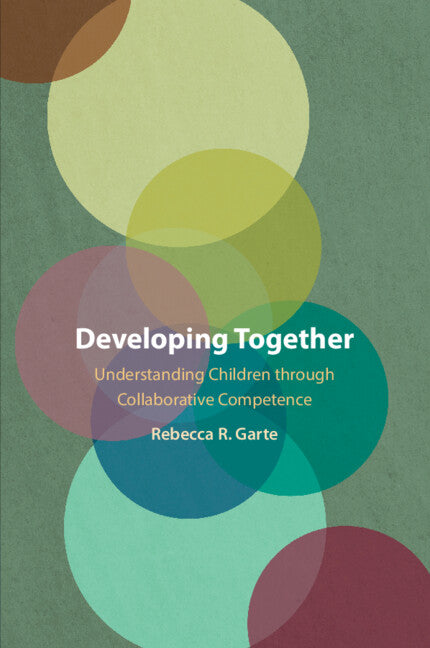
Developing Together
Understanding Children through Collaborative Competence
By advocating for a focus on interactions rather than individuals, this book critiques traditional child development theory and methods.
Rebecca R. Garte (Author)
9781009446662, Cambridge University Press
Paperback / softback, published 12 June 2025
278 pages
22.9 x 15.2 x 1.6 cm, 0.42 kg
Developing Together challenges systematic biases that have long plagued research with marginalized populations of children. It traces the unexamined assumptions guiding such research to definitions of subjectivity and the psyche based in Western cultural norms. The book provides alternative paradigms, applying a comprehensive methodology to two unique schooling contexts. Through this new approach children's development can be seen as an interactive, collaborative process. The chapters highlight how theoretical assumptions directly influence research methods and, in turn, affect educational practices. Unique in its provision of a detailed alternative method for conducting research with children, the book explains how the study of collaborative competence would influence education and applied fields. It is an essential resource for researchers in developmental psychology, educators, and policymakers alike.
Part I. Collaborative Competence in Pursuit of a Culturally Valid Account of Social Development: 1. Why a new direction is necessary
2. Can the self be relational? Culture at the root of psychology
Part II. Elements of Collaborative Competence: Expanding on Prior Research: 3. Redefining subjectivity and intersubjectivity for a new method
4. Framing intersubjectivity during children's interactions: a critical examination of theories and methods
5. What makes for 'high quality' interactions at home and school
6. Collaborative competence: A new model of development
Part III. A New Theory and Method for Assessing Development via Collaborative Competence: 7. Capturing the complexity of collaborations in varied settings
8. Principles for a developmentally and culturally valid methodology
9. Analyzing components of collaborative competence during preschooler free play
10. Collaborative competence during early elementary playful learning activities
Part IV. Implications for Theory, Research and Practice: 11. Making the shift to interactivity in education and psychology
12. A theoretical home for the role of collaborative competence in education.
Subject Areas: Child & developmental psychology [JMC]