Freshly Printed - allow 7 days lead
Couldn't load pickup availability
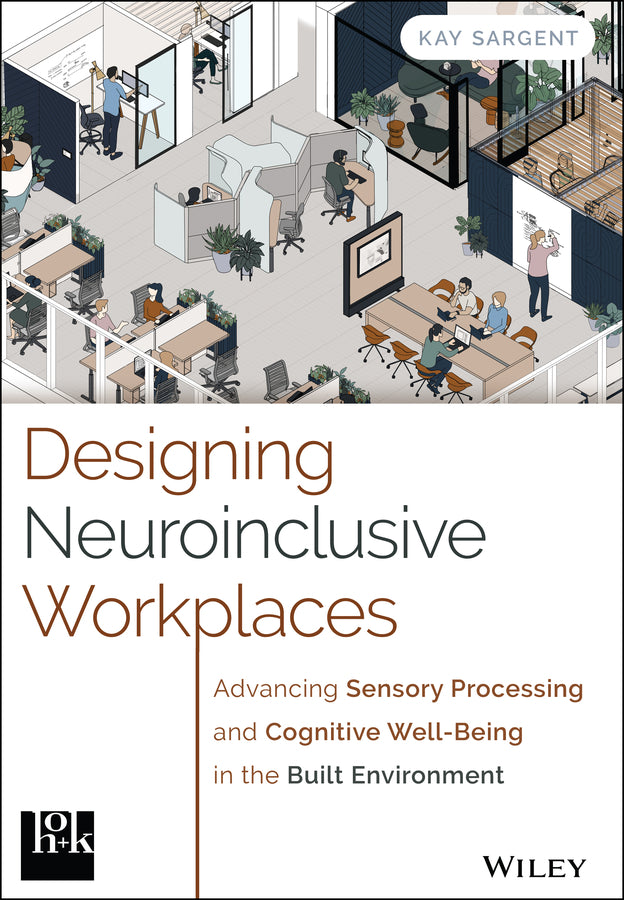
Designing Neuroinclusive Workplaces
Advancing Sensory Processing and Cognitive Well-Being in the Built Environment
“The needs of the future workforce are not neurotypical, but will include wide ranging neurotypes, so the link between the design of workplaces, health, and wellbeing is critical to address. Kay Sargent has been a passionate advocate shining a light on this critical issue in the industry highlighting why designing for neurotypes is good for people and good for business. Combining the insights of neuroscience, research, evidence, and the expertise of design, this book sets out considerations and recommendations for those who are building, designing, and operating offices—a holistic approach and must-read for the creation of enabling work environments, where all people can feel supported to thrive.” “This book could not be more timely and important—a practical and progressive guide to designing workplaces for a neurodiverse workforce, written by one of the world’s leading experts in the field. Kay Sargent demonstrates how neuroinclusive design can make a real difference, going beyond a duty of compliance to creating a sense of belonging.” “As we envision the workplace of tomorrow, it's imperative that we prioritize the sensory elements within these spaces, recognizing their profound impact on the well-being, productivity, and engagement of our teams. The sensory environment—encompassing factors like lighting, acoustics, textures, and overall ambiance—can significantly influence how individuals feel and perform in their daily tasks. HOK’s pioneering research on neuroinclusive design offers a robust foundation for creating environments that are not only functional but also attuned to the diverse sensory needs of all employees. By integrating scientific principles and evidence-based strategies, we can craft spaces that are not just visually appealing but also supportive of mental and emotional well-being, ultimately fostering a more inclusive and effective workplace for everyone.” “Taking up the challenge to understand how to design for neuroinclusion, this book takes the readers on a journey to explore what neurodivergence means; how it presents itself as a series of dynamic preferences for certain spaces and settings; and what designers of workplace environments should consider in order to create inclusive solutions that work for everyone.” —Kerstin Sailer, Buildings & Cities Journal
—Despina Katsikakis, Executive Partner & Global Head, Total Workplace Consulting, Cushman & Wakefield
—Jeremy Myerson, Professor Emeritus, Royal College of Art; Director, Worktech Academy
“The time has come to understand the importance of neuroinclusive workspaces. As founder of the International Well Building Institute, I am thrilled to see cognitive well-being get such detailed exposure, and to earn its due attention as a critical component of indoor health. This amazing body of work is a true benchmark, and will help advance Industry understanding and awareness for years to come.”
—Paul Scialla, Founder and CEO, Delos; Founder, International Well Building Institute
—Reniér André Saayman, Head of Global Corporate Real Estate Services, The World Bank
“The information covered in this book is relevant and timely in addressing the need to design workplaces that foster innovation, productivity, and comfort for all users. Addressing the environmental needs of people with neurological and sensory differences is often overlooked and misunderstood. This book helps bridge this gap through thoughtful and practical recommendations.”
—Dr. Kristi Gaines, Associate Dean in the Graduate School and Professor and Chair in the Department of Design, Texas Tech University
“Kay Sargent and HOK bring a much-needed and innovative perspective into designing workplaces for the future. For too long a one-size-fits-all approach has been the go-to for workplace decision-makers, grouping all humans in a singular category and increasing performance and wellbeing risks. Environments matter, mean different things to different people and either enhance or reduce brain capacity and function. Designing around personal sensory thresholds and needs adds a level of intelligence to increase productivity and well-being to change the lives of employees. For the neurodiverse population, their unique skills and competencies will be allowed to surface and flourish, at last! With this book, HOK and Kay Sargent offer insights and tools to grow businesses and make the world a better place.”
—Dr. Annemarie Lombard, Founder and CEO of Sensory Intelligence® Consulting
Kay Sargent (Author)
9781394309337, Wiley
Hardback, published 20 March 2025
352 pages
23.4 x 15 x 3.6 cm, 0.544 kg
Assist the growing neurodivergent population with strategic adjustments to physical spaces Designing Neuroinclusive Workplaces: Advancing Sensory Processing and Cognitive Well-Being in the Built Environment explores how to employ strategic spatial zoning and sequencing, sensory zones, patterns, textures, colors, lighting, and soundscaping to create spaces that cater to the various sensory needs of neurodivergent individuals, who now make up 1/5 of the world's population. This group possesses unique strengths that can be harnessed if they are in environments designed to be welcoming and supportive of their needs. Written by Kay Sargent of HOK, a leader in the field of workplace design and architecture, this groundbreaking book argues that even minor adjustments to physical spaces can drive giant improvements in cognitive function, fulfillment, and belonging for both neurodivergent and neurotypical individuals. Some of the topics explored in this book include:
Filled with practical, actionable strategies for designing spaces that embrace and empower individuals across the neurodiversity spectrum, Designing Neuroinclusive Workplaces is a timely, essential read for all forward-thinking HR, DEI, and accessibility teams, as well as architects and interior designers.
Foreword xi Preface xv Chapter 1 Framing the Issue 1 Origin Story 1 The Pitfalls of Well-Intentioned Design 7 Understanding Neurodiversity 8 The Opportunities 9 A Growing Awareness 11 HOK’s Research on Designing for Inclusion 13 The Value of Neuroinclusive Design 13 Chapter 2 Defining Neurotypes 17 Types of Neurodivergence 18 Neurodiversity and Mental Health 28 Chapter 3 Great for Business 35 The Business Case for Neurodiversity 35 Cognitive Diversity: Breaking Down Groupthink 37 Impact on Business Performance 38 Challenges and Accommodations 40 Designing Inclusive Workplaces 40 Chapter 4 Human Functioning and Sensory Processing 45 Three Interconnected Systems 46 Sensory Processing: Foundation and Mechanisms 49 Sensory Thresholds and Processing Challenges 52 Coping Mechanisms and Perception Variances 56 Designing for Diverse Functioning 59 Chapter 5 Sensory Intelligence 63 The Sensory Matrix™ 63 Chapter 6 Survey Findings 79 Survey One: All Neurodivergent Populations 79 Surveys Two and Three: Mixed Neurotype Population 81 Survey Four: Mixed Neurotype Scientific Population 89 Challenges in the Built Environment 93 Survey Five: ZHAW ADD/ADHD Sensory Challenges Survey 103 Design Strategies and Recommendations 107 Chapter 7 Senses and Degree of Stimulation 109 Accommodating Sensory Needs 110 Visual 111 Auditory 115 Tactile 118 Olfactory 119 Gustatory 120 Proprioception, Interoception, and Vestibular 121 Chapter 8 Environmental Influences 127 Neuroaesthetics and the Built Environment 128 Environmental Factors Affecting Workplace Comfort 128 Principles of Design 130 Elements of Design 131 Chapter 9 Other Elements to Consider 155 Biophilia 155 Wayfinding 159 Multisensory Rooms 161 Safety and Well-Being 165 Focus Flow 168 Chapter 10 Degrees of Inclusive Design 175 Accessible Design 175 Universal Design 176 Contents ix Inclusive Design 177 Equitable Design 181 Chapter 11 HOK’s Approach to Inclusive Design 189 Organizational DNA 190 Defining Personas, Work Settings, and Gathering Profiles 193 Six Work Modes 198 Spatial Sequencing 199 Power of the 6 to the 48 201 Journey Mapping 202 Chapter 12 Steps Toward Designing for Inclusion 205 Redefining Disability 206 Creating Inclusive Workplaces 207 Chapter 13 Design Considerations 217 The Premise of Inclusive Design 217 Six Modalities of Work 223 HOK’s Design Considerations 233 Chapter 14 The Three-Legged Stool 243 Leg One: Addressing Operational Strategies 244 Leg Two: Designing an Inclusive Built Environment 247 Leg Three: Enabling Individual Adjustments 248 Chapter 15 Going Forward 255 Growing Awareness and Increasing Diagnosis 256 Technological Developments 260 Changing Landscape 261 More Comprehensive Approach 263 Afterword 265 Notes 267 Acknowledgments 305 About the Author 309 What We Do 313 Index 315
Subject Areas: Architecture [AM]