Freshly Printed - allow 7 days lead
Couldn't load pickup availability
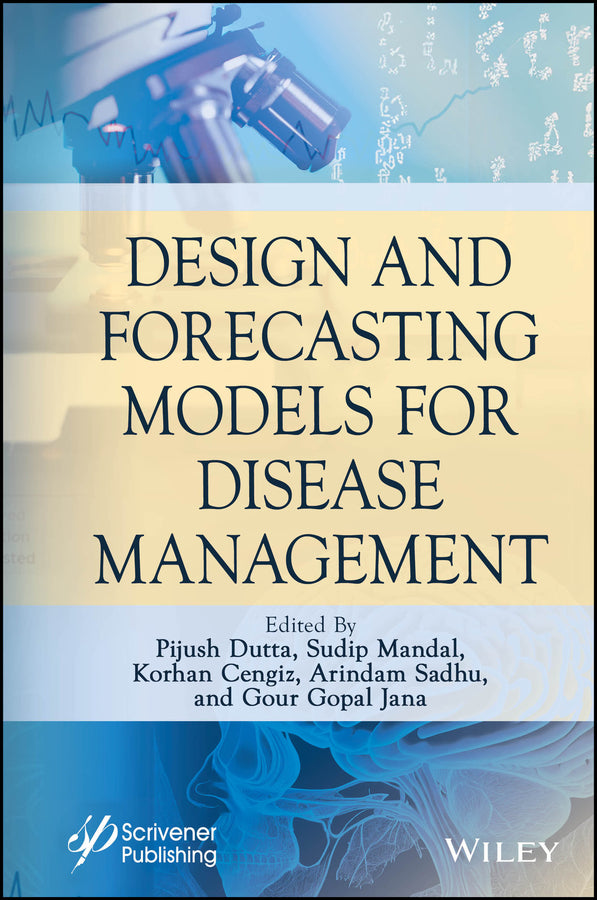
Design and Forecasting Models for Disease Management
Dutta (Author)
9781394234042, Wiley
Hardback, published 21 March 2025
336 pages
22.9 x 15.2 x 2.1 cm, 0.552 kg
The book provides an essential overview of AI techniques in disease management and how these computational methods can lead to further innovations in healthcare. Design and Forecasting Models for Disease Management is a resourceful volume of 13 chapters that elaborates on computational methods and how AI techniques can aid in smart disease management. It contains several statistical and AI techniques that can be used to acquire data on many different diseases. The main objective of this book is to demonstrate how AI techniques work for early disease detection and forecasting useful information for medical experts. As such, this volume intends to serve as a resource to elicit and elaborate on possible intelligent mechanisms for helping detect early signs of diseases. Additionally, the book examines numerous machine learning and data analysis techniques in the biomedical field that are used for detecting and forecasting disease management at the cellular level. It discusses various applications of image segmentation, data analysis techniques, and hybrid machine learning techniques for illnesses, and encompasses modeling, prediction, and diagnosis of disease data. Audience Researchers, engineers and graduate students in the fields of computational biology, information technology, bioinformatics, and epidemiology.
Preface xvii Part 1: Safety and Regulatory Aspects for Disease Pre-Screening 1 1 A Study of Possible AI Aversion in Healthcare Consumers 3 1.1 Introduction to AI in Healthcare 4 1.1.1 The Role of AI in Transforming Healthcare 5 1.1.2 The Unfolding Paradigm: Potential Benefits and Challenges of AI Implementation in Healthcare 6 1.1.3 Overview of Consumer Receptivity Towards AI in Medicine: A Comparative Analysis 7 1.2 Consumer Reluctance to Utilize AI in Healthcare: Present Scenario 8 1.2.1 Top Factors Influencing Consumer Resistance to Medical AI 10 1.2.2 Uncovering the Psychological Barriers and Concerns Associated with AI Adoption in Healthcare 11 1.2.3 Case Studies and Research Findings on Consumer Aversion to AI-Based Healthcare Services 13 1.2.4 Impact on Consumer Decision-Making 14 1.2.5 Effects of AI Aversion on Consumer Decision-Making Processes: An Analysis 15 1.2.6 Understanding How Consumer Perceptions Influence Their Choice Between Human and AI Healthcare Providers 15 1.2.7 Exploring Role of Trust, Perceived Competence and Empathy in Consumer Preferences 16 1.3 Economic Implications of AI Aversion 17 1.3.1 Investigating Influence of AI Aversion on Consumer Willingness to Pay for Healthcare Services 19 1.3.2 Influence of Patient Education on AI Aversion in Healthcare 19 1.3.3 Influence of Patient Awareness on AI Aversion in Healthcare 21 1.3.4 Influence of Age of Patient on AI Aversion in Healthcare 21 1.4 Overcoming Resistance to Medical AI 22 1.4.1 Strategies for Enhancing Consumer Trust and Acceptance of AI in Healthcare 23 1.4.2 Approaches to Alleviate Consumer Concerns and Misconceptions: Communication and Education 24 1.4.3 Cases of Successful Implementation of AI Technologies in Healthcare and Lessons Learned 25 1.5 Ethical Considerations and Governance 26 1.5.1 Regulatory Frameworks for Ethical AI Operations to Fight Aversion in Healthcare Consumers 27 1.5.2 Addressing the Potential Cost-Effectiveness and Affordability Concerns Associated with AI-Based Healthcare Solutions 28 1.5.3 Balancing Privacy, Data Protection and Need for Transparency in AI Healthcare Applications 29 1.6 Future Outlook and Opportunities 31 1.6.1 The Future of AI in Healthcare and Its Impact on Consumer Aversion 32 1.6.2 Exploring Emerging Technologies and Trends That May Alleviate Consumer Concerns 33 1.6.3 Opportunities for Collaboration Between AI Developers, Healthcare Providers, and Consumers 34 1.6.4 Summary of Key Findings on Consumer Aversion to AI in Healthcare 35 1.6.5 Implications for Healthcare Practitioners, Policymakers and Researchers 36 1.7 Conclusion 37 References 38 2 A Study of AI Application Through Integrated and Systematic Moral Cognitive Therapy in the Healthcare Sector 47 2.1 Introduction 48 2.1.1 Understanding the Role of AI in Healthcare 49 2.1.2 Advantages of AI in Healthcare 50 2.1.3 Moral Dilemmas and AI-Based Healthcare 52 2.2 What is Integrated and Systematic Moral Cognitive Therapy (ISMCT)? 54 2.2.1 Integrating Moral Cognitive Therapy with AI 55 2.2.2 Alignment of Moral Cognitive Therapy Principles with AI Applications 56 2.2.3 Benefits of Integrated and Systematic Moral Cognitive Therapy 57 2.2.4 Applications of AI-Integrated Moral Cognitive Therapy in Healthcare 58 2.3 The Role of AI in Healthcare: A Fine Balance Between Ethics and Innovation 61 2.3.1 Humanizing Healthcare: Towards an AI-ISMCT 62 2.3.2 Synergized AI and ISMCT 63 2.3.3 Case Study and Success Stories 64 2.4 Advancing Research in AI-Integrated Moral Cognitive Therapy 67 2.4.1 Collaborative Efforts Between Healthcare Professionals and AI Developers 68 2.4.2 Implications for Policy and Regulatory Frameworks 69 2.5 Conclusion 70 References 70 3 A Strategic Model to Control Non-Communicable Diseases 77 3.1 Introduction 78 3.1.1 India and NCDs 78 3.2 Survey of Literature 84 3.2.1 Factors Contributing to the Growth of NCDs 84 3.2.2 Lifestyle Modification – A Strategic Role in Mitigation of NCD 85 3.2.3 Policy to Control NCDs 86 3.3 Proposed Model 87 3.3.1 Registration and Information Centre (RIC) 88 3.3.2 Integration Centre (IIC) 88 3.3.3 Strategic Review Centre (SRC) 89 3.3.4 Expected Outcome of the Proposed Model 90 3.4 Conclusion 91 References 92 4 Image Compression Technique Using Color Filter Array (CFA) for Disease Diagnosis and Treatment 99 4.1 Introduction 100 4.1.1 Color Filter Array 100 4.1.2 Electronic Health Record (EHR) 101 4.2 Related Works 102 4.3 Proposed Model 108 4.4 Implementation 110 4.5 Results 111 4.6 Conclusion 112 References 113 5 Research in Image Processing for Medical Applications Using the Secure Smart Healthcare Technique 115 5.1 Introduction 116 5.1.1 Imaging Systems 118 5.1.2 The Digital Image Processing System 119 5.1.3 Image Enhancement 120 5.2 Classification of Digital Images 121 5.2.1 Utilizations of Digital Image Processing (DIP) 121 5.2.1.1 Medicine 121 5.2.1.2 Forensics 122 5.2.2 Medical Image Analysis 122 5.2.3 Max-Variance Automatic Cut-Off Method 122 5.2.4 Medical Imaging Segmentation 124 5.2.5 Image-Based on Edge Detection 124 5.2.5.1 Robert’s Kernel Method 125 5.2.5.2 Prewitt Kernel 125 5.2.5.3 Sobel Kernel 125 5.2.5.4 k-Means Segmentation 126 5.2.6 Images from γ-Rays 126 5.2.6.1 Non-Ionizing Radiation 127 5.2.6.2 Magnetic Resonance Imaging 128 5.2.6.3 Segmentation Using Multiple Images Acquired by Different Imaging Techniques 129 5.3 Methods 130 5.3.1 k-Means Approach 130 5.3.2 Bayesian Objective Function 132 5.4 Segmentation and Database Extraction with Neural Networks 133 5.4.1 Artificial Neural Network 133 5.4.2 Bayesian Belief Networks 134 5.5 Applications in Medical Image Analysis 135 5.5.1 Using Artificial Neural Network for Better Optimization and Detection in Medical Imaging 136 5.5.1.1 Opportunities 136 5.6 Standardize Analytics Pipeline for the Health Sector 136 5.7 Feature Extraction/Selection 138 5.7.1 Significance of Machine Learning for Medical Image Processing 138 5.7.2 Significance of Deep Learning for Medical Image Processing 139 5.8 Image-Based Forecasting Using Internet of Things (IoT) in Smart Healthcare System 141 5.9 IoT Monitoring Applications Based on Image Processing 143 5.10 Significance of Computer-aided Big Healthcare Data (BHD) for Medical Image Processing 145 5.11 Applications of Big Data 147 5.11.1 Big Data Analytics in Health Sector 147 5.11.2 Computer-Aided Diagnosis in Mammography 149 5.11.3 Tumor Imaging and Treatment 149 5.11.4 Molecular Imaging 149 5.11.5 Surgical Interventions 150 5.12 Conclusion 150 References 151 6 Comparative Study on Image Enhancement Techniques for Biomedical Images 155 6.1 Introduction 156 6.2 Literature Review 157 6.3 Theoretical Concepts 158 6.3.1 Logarithmic Transformation 159 6.3.1.1 Advantages of Log Transformation 160 6.3.1.2 Limitations of Log Transformation 160 6.3.2 Power Law Transformation or Gamma Correction 160 6.3.2.1 Advantages of Gamma Correction 161 6.3.2.2 Limitations of Gamma Correction 161 6.3.3 Piecewise Linear Transformation or Contrast Stretching 162 6.3.3.1 Advantages of Contrast Stretching 162 6.3.3.2 Limitations of Contrast Stretching 163 6.3.4 Histogram Equalization 163 6.3.4.1 Advantages of Histogram Equalization 164 6.3.4.2 Limitations of Histogram Equalization 164 6.3.5 Contrast-Limited Adaptive Histogram Equalization (clahe) 164 6.3.5.1 Advantages of CLAHE 165 6.3.5.2 Limitation of CLAHE 165 6.3.6 Adjustment Function 166 6.4 Results and Discussion 166 6.4.1 Images and Histograms for Different Images Using Different Enhancement Methods 167 6.4.2 Comparison for Different Image Enhancement Techniques 175 6.5 Conclusion 178 References 179 7 Exploring Parkinson’s Disease Progression and Patient Variability: Insights from Clinical and Molecular Data Analysis 181 7.1 Introduction 182 7.2 Literature Review 183 7.3 Data Review 184 7.3.1 Clinical Data 185 7.3.2 Peptides Data 192 7.3.3 Protein Data 194 7.4 Parkinson’s Dynamic for Patients in Train 196 7.5 Conclusion 197 References 198 8 A Survey-Based Comparative Study on Machine Learning Techniques for Early Detection of Mental Illness 201 8.1 Introduction 201 8.2 Background 202 8.3 Review of Previous Works 203 8.3.1 Standard Questionnaire 203 8.3.2 Social Media Content 206 8.4 Comparative Result 208 8.5 Discussion 212 8.6 Conclusion 213 References 213 Part 2: Clinical Decision Support System for Early Disease Detection and Management 215 9 Diagnostics and Classification of Alzheimer’s Diseases Using Improved Deep Learning Architectures 217 9.1 Introduction 218 9.2 Related Works 219 9.3 Method 222 9.3.1 Data Description 224 9.4 Result Analysis 225 9.4.1 Performance Metrics 227 9.4.2 Experimental Setup 230 9.5 Conclusion 232 Data Availability 233 References 233 10 Perform a Comparative Study Based on Conventional Machine Learning Approaches for Human Stress Level Detection 237 10.1 Introduction 238 10.2 Related Work 239 10.3 Architecture Design 242 10.3.1 Body Temperature 243 10.3.2 Humidity Analysis 243 10.3.3 Step Count Analysis 243 10.3.4 Dataset 243 10.4 Experiment 244 10.4.1 Performance Matrices 245 10.5 Result Analysis 246 10.6 Conclusion 248 References 249 11 Diabetes Prediction Using a Hybrid PCA-Based Feature Selection and Computational Machine Learning Algorithm 253 11.1 Introduction 254 11.2 Related Work 254 11.3 Proposed Workflow 256 11.3.1 Data Pre-Processing 256 11.3.2 Feature Selection 257 11.3.3 Dimensionality Reduction 258 11.3.4 Classification 259 11.4 Result Analysis 261 11.4.1 Evaluation Criteria 261 11.5 Conclusion and Future Work 265 References 266 12 A Robust IoT-Based Approach to Enhance Cybersecurity and Patient Trust in the Smart Health Care System: Zero-Trust Model 269 12.1 Introduction 270 12.2 Security Threats on Smart Healthcare 271 12.2.1 Medical Data Monitoring and Patient Privacy Information 271 12.2.2 Network Attacks on Critical Infrastructures 272 12.2.3 Malicious Data Tampering 272 12.3 Smart Healthcare Security and Four-Dimension Model 273 12.3.1 Subject 273 12.3.2 Object 274 12.3.3 Environment 275 12.3.4 Behavior 275 12.3.5 Risk Assessment and Security Checking 275 12.4 Conclusion and Future Prospects 279 Acknowledgment 280 References 280 13 Safeguarding Digital Health: A Novel Approach to Malicious Device Detection in Smart Healthcare 283 13.1 Introduction 284 13.2 Related Work 286 13.3 Our Proposed Framework 289 13.4 Overview of Our Proposed Framework 289 13.5 Evaluation Procedure 291 13.6 Performance Evaluation 292 13.7 Conclusion 293 References 294 Index 297
Tanupriya Mukherjee and Anusriya Mukherjee
Anusriya Mukherjee, Tanupriya Mukherjee and Mili Mitra Roy
Soumik Gangopadhyay, Amitava Ukil, Soma Sur and Saugat Ghosh
Indrani Dalui, Avisek Chatterjee, Surajit Goon and Pubali Das Sarkar
Debraj Modak and Chowdhury Jaminur Rahaman
Sudip Mandal, Uma Biswas, Aparna Mahato and Aurgha Karmakar
Amit Kumar, Neha Sharma and Korhan Cengiz
Prachi Majumder, Sompadma Mukherjee, Shreyashi Saha, Tamasree Biswas, Mousumi Saha, Deepanwita Das and Suchismita Maiti
Mainak Dey, Pijush Dutta and Gour Gopal Jana
Pratham Sharma, Prerana Singh, Mahe Parah, Shyamapriya Chatterjee, Anirban Bhar, Soumya Bhattacharyya and Pijush Dutta
Sumanta Dey, Pijush Dutta, Gour Gopal Jana and Arindam Sadhu
Raghunath Maji, Biswajit Gayen and Sandeepan Saha
Raghunath Maji and Biswajit Gayen
Subject Areas: Medicine: general issues [MB]