Freshly Printed - allow 10 days lead
Couldn't load pickup availability
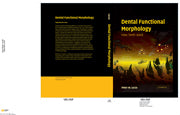
Dental Functional Morphology
How Teeth Work
Innovative theory showing how mammalian tooth form can be understood using considerations of food fracture.
Peter W. Lucas (Author)
9780521035408, Cambridge University Press
Paperback / softback, published 29 January 2007
372 pages, 104 b/w illus. 25 tables
24.4 x 17 x 2 cm, 0.595 kg
'… there is no other up-to-date single-authored book on the subject of dental functional morphology, so in this right this book is valuable. Lucas delivers a text worthy of use as a textbook and a primary source that will last for years to come. … It is clear, easy to read, with concepts explained in a sensible, logical manner that should appeal to students and researchers. His sparing use of jargon makes this an uncommonly accessible book; something that I anticipate will make this internationally cited and read. … I have rarely read such a book that has inspired me to add so much marginalia of future research ideas! If your work has any involvement of the function of dentitions or oral anatomy, you need to read this book.' www.PalArch.nl
Dental Functional Morphology offers an alternative to the received wisdom that teeth merely crush, cut, shear or grind food and shows how teeth adapt to diet. Providing an analysis of tooth action based on an understanding of how food particles break, it shows how tooth form from the earliest mammals to modern-day humans can be understood using very basic considerations about fracture. It outlines the theoretical basis step by step, explaining the factors governing tooth shape and size and provides an allometric analysis that will revolutionize attitudes to the evolution of the human face and the impact of cooked foods on our dentition. In addition, the basis of the mechanics behind the fracture of different types of food, and methods of measurement are given in an easy-to-use appendix. It will be an important sourcebook for physical anthropologists, dental and food scientists, palaeontologists and those interested in feeding ecology.
Preface
Flickart
1. How to get excited about teeth
2. The basic structure of the mammalian mouth
3. How the mouth operates
4. Tooth shape
5. Tooth size
6. Tooth wear
7. The evolution of the mammalian dentition
Appendix A. Mechanical properties and their measurement: material properties made easy
Appendix B. Properties of teeth and potential foods
Notes
References
Index.
Subject Areas: Human biology [PSX], Physical anthropology [JHMP]