Freshly Printed - allow 10 days lead
Couldn't load pickup availability
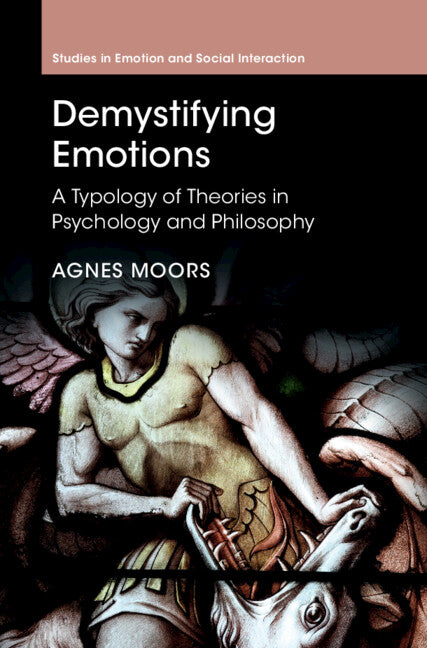
Demystifying Emotions
A Typology of Theories in Psychology and Philosophy
A detailed analysis of emotion theories in psychology and philosophy and the proposal of a new skeptical, goal-directed theory.
Agnes Moors (Author)
9781107066342, Cambridge University Press
Hardback, published 11 August 2022
400 pages
23.5 x 15.8 x 2.7 cm, 0.7 kg
'… a new way of organizing not only the dominant theories of this tradition but also theories that came before it and on which key figures of the tradition rely to formulate their theories.' Daniel Vanello, Philosophical Psychology
Demystifying Emotions provides a comprehensive typology of emotion theories in psychology (evolutionary, network, appraisal, goal-directed, psychological constructionist, and social) and philosophy (feeling, judgmental, quasi-judgmental, perceptual, embodied, and motivational) in a systematic manner with the help of tools from philosophy of science, allowing scholars in both fields to understand the commonalities and differences between these theories. Agnes Moors also proposes her own novel, skeptical theory of emotions, called the goal-directed theory, based on the central idea that all kinds of behaviors and feelings are grounded in goal-striving. Whereas most scholars of emotion do not call the notion of emotion itself into question, this review engages in a critical examination of its scientific legitimacy. This book will appeal to readers in psychology, philosophy, and related disciplines who want to gain a deeper understanding of the controversies at play in the emotion domain.
Part I. Introduction: 1. Theory development and concepts
2. Demarcation-explanation cycle applied to emotion theories
Part II. Emotion Theories One by One: 3. General precursors
4. Evolutionary theories
5. Network theories
6. Stimulus evaluation theories
7. Response evaluation theories
8. Psychological constructionist theories
9. Social theories
Part III: 10. Conclusion.
Subject Areas: Social, group or collective psychology [JMH]