Freshly Printed - allow 10 days lead
Couldn't load pickup availability
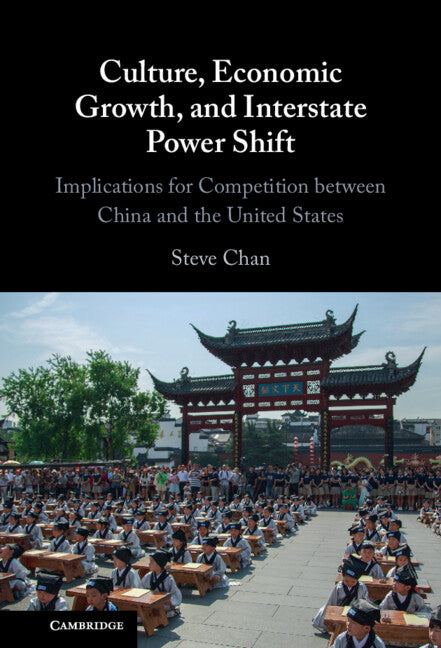
Culture, Economic Growth, and Interstate Power Shift
Implications for Competition between China and the United States
How has China's and East Asia's impressive economic growth been influenced by their Confucian heritage? And how does economic growth affect interstate competition?
Steve Chan (Author)
9781009465502, Cambridge University Press
Hardback, published 8 February 2024
252 pages
23.5 x 16 x 1.7 cm, 0.509 kg
'Chan's book provides valuable and timely insights into how culture serves as a fundamental source of economic growth and shapes the future global landscape.' Zhaojin Zeng, Chinese Studies International
A country's culture influences its economic growth, which in turn influences its international position. Confucian heritage appears to be the common factor explaining the rapid economic growth of East Asian countries, including China's meteoric rise in recent years. Ironically, Confucianism has been criticized not too long ago for hindering progress in these countries. At the same time, Protestant countries, once the vanguards of economic development, have seen weak growth., These developed economies are undergoing a cultural transformation from an emphasis on materialist concerns to postmaterialist ones. What do these trends augur for their economic growth and international competitiveness, particularly in the context of ongoing power shifts between China and the United States?
1. Introduction
2. The Origins of culture and its effects on economic development and political order. 3. The struggle between materialist and postmaterialist and China's economic growth in historical and comparative context
4. Economic growth, interstate primacy, and domestic tradeoffs
5. Innovation, leading sectors, and international competitiveness
Conclusion
References
Index.
Subject Areas: International relations [JPS]