Freshly Printed - allow 7 days lead
Couldn't load pickup availability
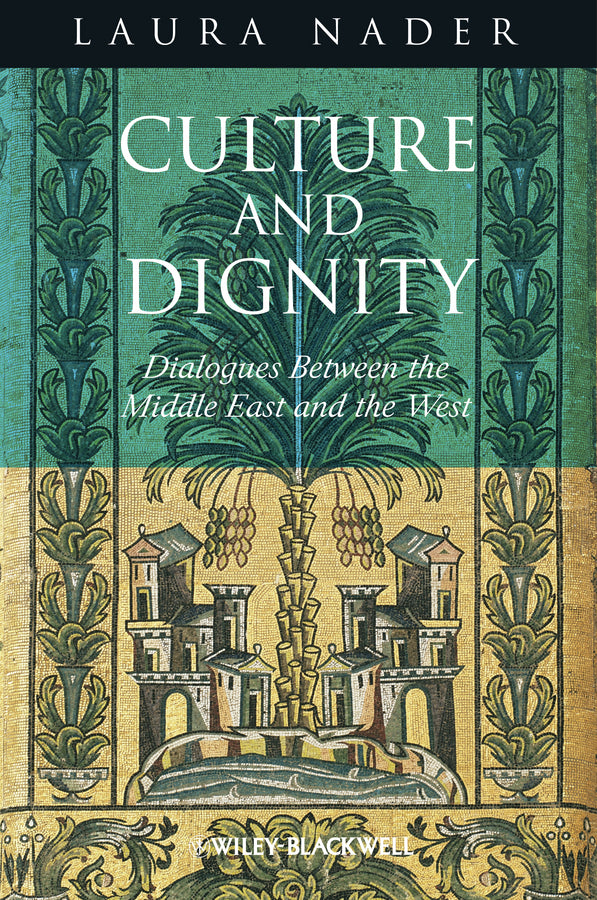
Culture and Dignity
Dialogues Between the Middle East and the West
Laura Nader (Author)
9781118319017, Wiley
Paperback / softback, published 26 October 2012
264 pages
23 x 15.2 x 1.3 cm, 0.336 kg
“This kind of work needs more deliberation in the academic world and it is a delight for practitioners who are interested in radicalising the discipline and practice of anthropology. Since the book eschews technical language of the specialist, it is equally accessible to the nonspecialist reader.” (Journal of Intercultural Studies, 1 January 2015) “The book is written in an engaging and highly accessible manner. Although it would have benefited from a deeper differentiated discussion of ‘cultural dignity’ and what it means in this world that Nader paints, Culture and dignity is a thought-provoking exercise in the kind of connections we need to make for an anthropology committed to a more honest and robust knowledge of the Middle East and the world.” (Journal of the Royal Anthropological Institute, 1 January 2014) “Drawing from an eclectic sample of literature dealing with the global connections between the Middle East and the West, the author achieves a much needed – and very timely – intellectual ‘check-up’ and warns us against cultural framings that serve to side-line serious explorations of the roots and nature of human suffering. It is crucial for all those of us who are genuinely concerned with peace to liberate our imaginations from the myths and stereotypes that work to divide us.” (Studies in Ethnicity And Nationalism, 15 October 2013) “The collection reflects the many lasting contributions Nader has made to understanding and improving the human condition. Summing Up: Recommended. All levels/libraries.” (Choice, 1 July 2013)
In Culture and Dignity - Dialogues between the Middle East and the West, renowned cultural anthropologist Laura Nader examines the historical and ethnographic roots of the complex relationship between the East and the West, revealing how cultural differences can lead to violence or a more peaceful co-existence.
Acknowledgments x Preface xii 1 Introduction 1 Indignities 5 Naturalizing Difference and the Great Transformation 14 Comparison, Ethnography, and History 17 2 From Rifaah al-Tahtawi to Edward Said: Lessons in Culture and Dignity 24 Introduction 24 Rifaah al-Tahtawi and France 26 A Hundred Years Later: Edward Said 34 Concluding Comments 45 3 Ethnography as Theory: On the Roots of Controversy in Anthropology 51 Introduction 51 Unstated Consensus 54 Defining Ethnographic Worth: 1896–2000 55 Ethnographic Audiences 64 An Outsider Looking In on Anthropology’s Ethnography 69 Concluding Comments 74 4 Orientalism, Occidentalism, and the Control of Women 80 Cultural Hierarchy and Processes of Control 83 The Specifi city of Eastern and Western Grids 85 Positional Superiority, Thought Systems, and Other Cultures 87 Ways of Seeing and Comparing – East and West 88 The Controlling Role of Ideas 96 The Use of Revolution in Gender Control 98 Multiple Systems of Female Subordination 102 Colonialism, Development, Religion, and Gender Control 107 Conclusion: The Need to Separate Identities 110 5 Corporate Fundamentalism: Constructing Childhood in the United States and Elsewhere 120 Introduction 120 Manufacturing Culture Bit by Bit 122 Fundamentalisms: Corporate and Religious 126 Marketing and Children: The United States 131 Drugs, Commercialism, and the Biomedical Paradigm: An American Example 137 When Corporate Profits and Education Meet: The Educational Testing Industry 140 Fundamentalisms: Economic, Religious, Political 141 Back to Corporate Fundamentalism: Future Directions 144 6 Culture and the Seeds of Nonviolence in the Middle East 151 Introduction 151 Disharmonic Westernization and Pilgrimage 154 Between the Stereotype and Reality 157 Little Worlds in the International Grip 161 Culture and Nonviolence: Who Stands to Gain From Peace? 165 Dignity Becomes Reality 168 7 Normative Blindness and Unresolved Human Rights Issues: The Hypocrisy of Our Age 175 Introduction 175 Early Constraints 176 Unresolved Issues 178 A Nonstate Human Rights Effort 183 Health and Human Rights 186 Human Rights and Commercialism 191 Concluding Remarks 193 8 Breaking the Silence: Politics and Professional Autonomy 197 Introduction 197 Silence and Dominant Hegemonies 198 Desensitization 204 Mistakes Repeated in the Iraq Invasion 206 9 Lessons 212 Lessons Learned 212 Strategies of Subordination – In Reverse 216 Macro-histories 221 Appendix 226 Index 230
Subject Areas: Archaeology [HD]