Freshly Printed - allow 7 days lead
Couldn't load pickup availability
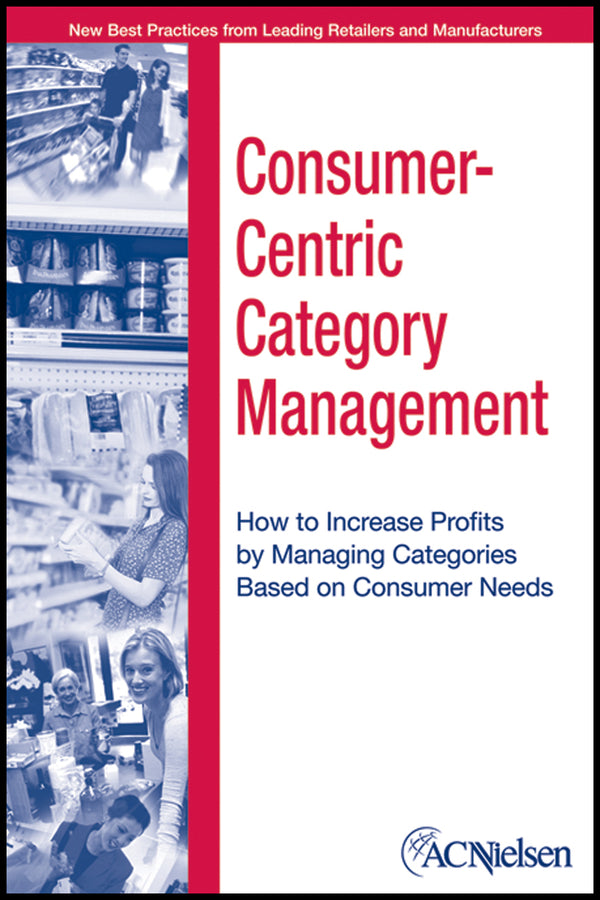
Consumer-Centric Category Management
How to Increase Profits by Managing Categories Based on Consumer Needs
(Author), John Karolefski (With), Al Heller (Author)
9780471703594, Wiley
Hardback, published 29 December 2005
368 pages
22.9 x 16.3 x 3.2 cm, 0.565 kg
"It provides an insight into how they [companies such as Hershey and Hewlett-Packard] have used category management to succeed and how to apply their methods in your own organisation." (Supply Management, April 2006)
In some parts of the world, especially in developing markets, category management today remains a stretch goal – a new idea full of untapped potential. In other areas, the original eight-step process that emerged in the late 1980’s forms the foundation of many companies’ approach to category management. In still others, particularly in developed countries like the U.S., the U.K., and others, refinements are being made – most of them designed to place consumer understanding front and center. New ideas are emerging – from "trip management" to "aisle management" to "customer management." Whether a new descriptor emerges to replace "category management" is yet to be seen. Even if that does happen, what won’t change is the overall objective – to help retailers and their manufacturer partners succeed by offering the right selection of products that are marketed and merchandised based on a complete understanding of the consumers they are committed to serving. This book, which explores both the state of and the state-of-the-art in category management, is for everyone with a vested interest in category management. It can serve such a broad audience because category management is about bringing a structured process to how executives think and make decisions about their businesses, no matter what information and information technology they have access to.
Chapter 0 Introduction—Why Category Management Is More Important Than Ever 1 Part I In the Beginning—the Purpose of Category Management Chapter 1 The Evolution of Category Management and the New State of the Art 13 Chapter 2 Category Management Begins with the Retailer’s Strategy 33 Part II The Eight Foundational Steps of Category Management Chapter 3 Step One: Define the Category Based on the Needs of Your Target Market 67 Chapter 4 Step Two: Assign a Role to the Category That Best Supports the Retailer’s Strategy 77 Chapter 5 Step Three: Assess the Category to Find Opportunities for Improvement 95 Chapter 6 Step Four: Set Performance Targets and Measure Progress with a Category Scorecard 111 Chapter 7 Step Five: Create a Marketing Strategy for the Category 123 Chapter 8 Step Six: Choose Tactics for Category Assortment, Pricing, Promotion, Merchandising, and Supply Chain Management 133 Chapter 9 Step Seven: Roll Out the Plan 165 Chapter 10 Step Eight: Review the Category’s Performance Regularly and Make Adjustments as Needed 173 Chapter 11 Bringing the Consumer into Category Management—A New Take on the Eight Steps 179 Part III Category Management Success Stories Chapter 12 General Mills—Going Beyond the Categories 201 Chapter 13 Big Y—Focusing on Implementation 207 Chapter 14 SUPERVALU—The Last Three Feet of Category Management 217 Chapter 15 CROSSMARK—Just the Facts 241 Chapter 16 Acosta—Multiplying the Impact of Category Management 251 Chapter 17 Chiquita—Extending Category Management to Perishables 259 Chapter 18 The Hershey Company—Linking Consumer Insights and Customer Strategy 275 Chapter 19 Miller Brewing—Tapping Category Management for Competitive Advantage 285 Chapter 20 Hewlett-Packard—Taking Category Management beyond Traditional CPG 295 Part IV The Way Forward Chapter 21 Lessons Learned from the Real World 303 Chapter 22 Proactive Category Management 309 Chapter 23 Linking Category Management and Loyalty Marketing 319 Chapter 24 The New Category Management Emerges 335 Acknowledgments 343 Index 347
Shan Kumar
Glenn Hausfater
Dirk Seifert
Subject Areas: Business & management [KJ]