Freshly Printed - allow 7 days lead
Couldn't load pickup availability
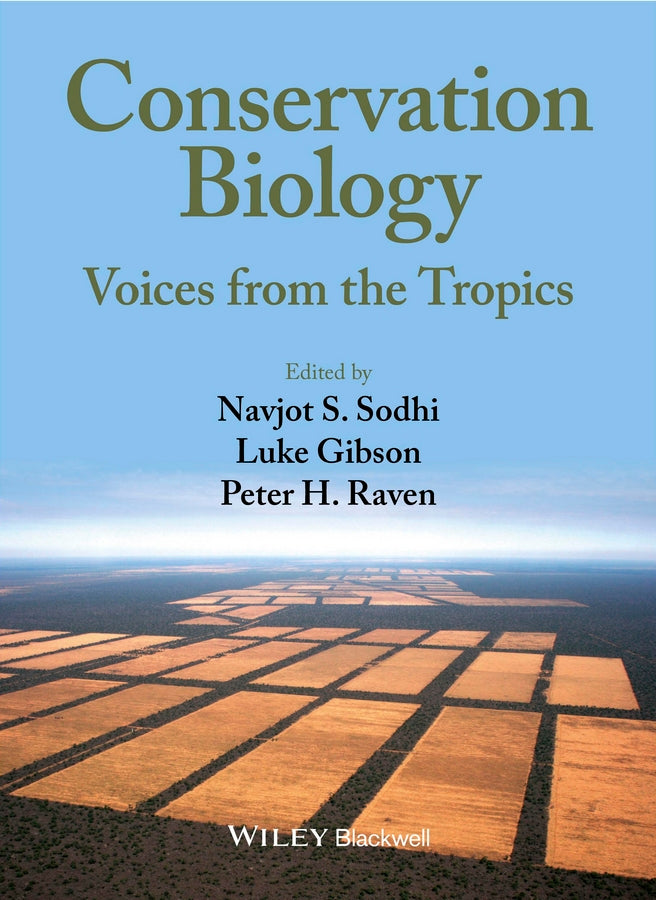
Conservation Biology
Voices from the Tropics
Navjot S. Sodhi (Edited by), Luke Gibson (Edited by), Peter H. Raven (Edited by)
9780470658635, Wiley
Hardback, published 10 September 2013
288 pages
25.4 x 19.6 x 1.9 cm, 0.812 kg
“Those involved in funding or planning programmes and projects in the tropics are sure to find this instructive.” (Biodivers Conserv, 1 October 2015) “Highly recommended. Upper-division undergraduates, graduate students, and researchers/faculty. (Choice, 1 May 2014)
The late Navjot Sodhi conceived this book as a way of bringing to the forefront of our conservation planning for the tropics the views of people who were actually working and living there. In its 31 chapters, 55 authors present their views on the conservation problems they face and how they deal with them.
Effective long term conservation in the tropics requires the full participation of local people, organizations and governments. The human population of tropical countries is expected to grow by more than 2.5 billion people over the next several decades, with expectations of increased consumption levels growing even more rapidly than population levels; clearly there will be a need for more trained conservationists and biologists. Significant levels of local involvement are essential to conservation success, with the rights of local people fully recognized, protected and fostered by governmental and international assistance. Overarching conservation plans are necessary, but cannot in themselves lead to success.
The individual experiences presented in the pages of this book will provide useful models that may serve to build better and more sustainable lives for the people who live in the tropics and lead to the continued survival of as many species and functioning ecosystems as possible.
List of Contributors vii Notes on Contributors xi Acknowledgments xx Remembering Navjot Sodhi: An Inspiring Mentor, Scholar, and Friend xxi 1 INTRODUCTION: GIVING A VOICE TO THE TROPICS, 1 PART 1: FROM WITHIN THE REGION, 5 2 CONSERVATION PARADIGMS SEEN THROUGH THE EYES OF BONOBOS IN THE DEMOCRATIC REPUBLIC OF CONGO, 7 3 GOVERNANCE FOR EFFECTIVE AND EFFICIENT CONSERVATION IN ETHIOPIA, 19 4 WILDLIFE IN JEOPARDY INSIDE AND OUTSIDE PROTECTED AREAS IN CÔTE D’IVOIRE: THE COMBINED EFFECTS OF DISORGANIZATION, LACK OF AWARENESS, AND INSTITUTIONAL WEAKNESS, 26 5 CONSERVATION CHALLENGES FOR MADAGASCAR IN THE NEXT DECADE, 33 7 DESIGN AND OUTCOMES OF COMMUNITY FOREST CONSERVATION INITIATIVES IN CROSS RIVER STATE OF NIGERIA: A FOUNDATION FOR REDD+?, 51 8 SHADES OF GREEN: CONSERVATION IN THE DEVELOPING ENVIRONMENT OF TANZANIA, 59 9 SUSTAINABLE CONSERVATION: TIME FOR AFRICA TO RETHINK THE FOUNDATION, 65 SECTION 2: AMERICAS, 75 10 CHALLENGES AND OPPORTUNITIES FOR BRIDGING THE RESEARCH–IMPLEMENTATION GAP IN ECOLOGICAL SCIENCE AND MANAGEMENT IN BRAZIL, 77 11 CONSERVING BIODIVERSITY IN A COMPLEX BIOLOGICAL AND SOCIAL SETTING: THE CASE OF COLOMBIA, 86 12 INDIGENOUS RIGHTS, CONSERVATION, AND CLIMATE CHANGE STRATEGIES IN GUYANA, 97 13 CHALLENGES AND OPPORTUNITIES FOR CONSERVATION OF MEXICAN BIODIVERSITY, 105 14 PARAGUAY’S CHALLENGE OF CONSERVING NATURAL HABITATS AND BIODIVERSITY WITH GLOBAL MARKETS DEMANDING FOR PRODUCTS, 113 SECTION 3: ASIA, 121 15 LAND-USE CHANGE AND CONSERVATION CHALLENGES IN THE INDIAN HIMALAYA: PAST, PRESENT, AND FUTURE, 123 16 CONSERVATION CHALLENGES IN INDONESIA, 134 17 SINGAPORE: HALF FULL OR HALF EMPTY?, 142 18 WANT TO AVERT EXTINCTIONS IN SRI LANKA? EMPOWER THE CITIZENRY!, 148 19 CONSERVATION OF HORNBILLS IN THAILAND, 157 SECTION 4: OCEANIA, 167 20 TIPPING POINTS AND THE VULNERABILITY OF AUSTRALIA’S TROPICAL ECOSYSTEMS, 169 21 BIODIVERSITY AND CONSERVATION IN THE PACIFIC ISLANDS: WHY ARE WE NOT SUCCEEDING?, 181 22 WHEN WORLDS COLLIDE: CHALLENGES AND OPPORTUNITIES FOR CONSERVATION OF BIODIVERSITY IN THE HAWAIIAN ISLANDS, 188 23 THE CHIMERA OF CONSERVATION IN PAPUA NEW GUINEA AND THE CHALLENGE OF CHANGING TRAJECTORIES, 197 PART 2 THOUGHTS FROM DIASPORA, 205 24 COMPLEX FORCES AFFECT CHINA’S BIODIVERSITY, 207 25 GOVERNANCE AND CONSERVATION IN THE TROPICAL DEVELOPING WORLD, 216 26 KNOWLEDGE, INSTITUTIONS, AND HUMAN RESOURCES FOR CONSERVATION OF BIODIVERSITY, 226 27 PEOPLE, PLANTS AND POLLINATORS: UNITING CONSERVATION, FOOD SECURITY, AND SUSTAINABLE AGRICULTURE IN EAST AFRICA, 232 28 BALANCING SOCIETIES’ PRIORITIES: A SCIENCE-BASED APPROACH TO SUSTAINABLE DEVELOPMENT IN THE TROPICS, 239 29 BIODIVERSITY CONSERVATION PERFORMANCE OF SUSTAINABLE-USE TROPICAL FOREST RESERVES, 245 30 CONCLUDING REMARKS: LESSONS FROM THE TROPICS, 254 Index 259
Maharaj K. Pandit
Luke Gibson and Peter H. Raven
SECTION 1: AFRICA, 5
Bila-Isia Inogwabini and Nigel Leader-Williams
Fikirte Gebresenbet, Wondmagegne Daniel, Amleset Haile and Hans Bauer
Inza Koné
Hajanirina Rakotomanana, Richard K.B. Jenkins and Jonah Ratsimbazafy
6 CONSERVATION IN MAURITIUS AND RODRIGUES: CHALLENGES AND ACHIEVEMENTS FROM TWO ECOLOGICALLY DEVASTATED OCEANIC ISLANDS, 40
F.B. Vincent Florens
Sylvanus Abua, Robert Spencer and Dimitrina Spencer
Flora I. Tibazarwa and Roy E. Gereau
Mwangi Githiru
Renata Pardini, Pedro L.B. da Rocha, Charbel El-Hani and Flavia Pardini
Carolina Murcia, Gustavo H. Kattan, and Germán Ignacio Andrade-Pérez
Michelle Kalamandeen
Gerardo Ceballos and Andrés García
Alberto Yanosky
Maharaj K. Pandit and Virendra Kumar
Dewi M. Prawiradilaga and Herwasono Soedjito
Richard T. Corlett
Rohan Pethiyagoda
Pilai Poonswad, Vijak Chimchome, Narong Mahannop and Sittichai Mudsri
William F. Laurance
Gilianne Brodie, Patrick Pikacha and Marika Tuiwawa
Carter T. Atkinson, Thane K. Pratt, Paul C. Banko, James D. Jacobi and Bethany L. Woodworth
Phil Shearman
Jianguo Liu
Kelvin S.-H. Peh
Kamaljit S. Bawa
Dino J. Martins
Lian Pin Koh
Carlos A. Peres
Luke Gibson and Peter H. Raven
Subject Areas: Earth sciences [RB]