Freshly Printed - allow 7 days lead
Couldn't load pickup availability
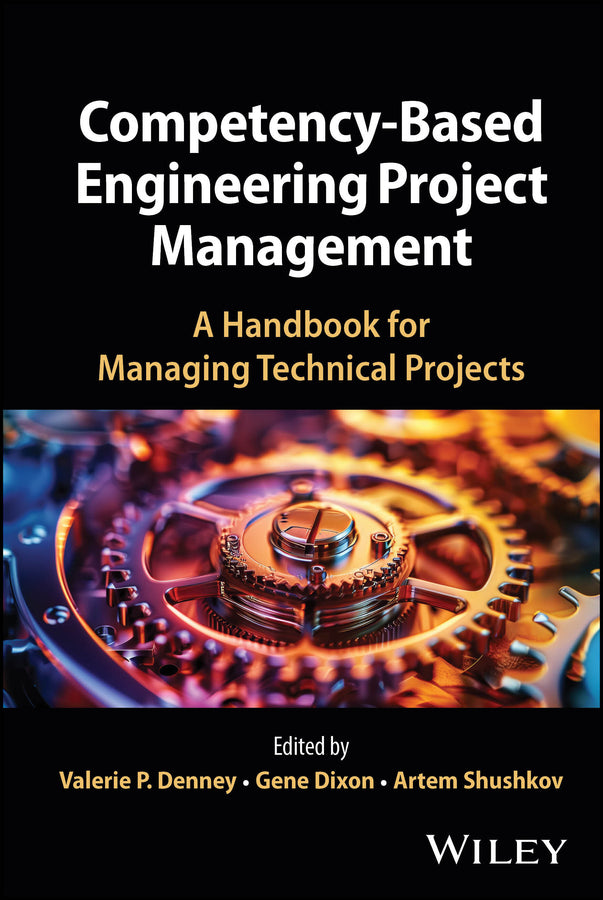
Competency-Based Engineering Project Management
A Handbook for Managing Technical Projects
Valerie P. Denney (Edited by), V Denney (Author), Gene Dixon (Edited by), Artem Shushkov (Edited by)
9781394395842, Wiley
Hardback, published 11 May 2026
448 pages
23.1 x 15.5 x 3 cm, 0.816 kg
A competency-based framework for leading complex engineering projects Engineering projects require leadership that integrates technical depth with strategic management. This handbook provides a structured, competency-based framework designed specifically for high-pressure technical environments. Unlike traditional textbooks, this guide offers a non-sequential model for practitioners to find immediate, actionable answers to complex challenges. It bridges the gap between standards and implementation, focusing on the core competencies essential for project success—from Project Controls to Knowledge Management. Whether you are an engineer transitioning into management or a veteran lead, this resource provides the technical specifics and leadership strategies needed to deliver value, manage high uncertainty, and align project outcomes with global strategic organizational goals. It is the essential reference for those seeking to enhance professional skills in a knowledge-intensive landscape. Readers will also find: Designed for engineering project managers and technical leads, this handbook connects competency-based frameworks with actionable strategies. It equips professionals to lead multidisciplinary teams through complex lifecycles while navigating the legal, ethical, and technological shifts reshaping the global landscape of modern engineering projects.
List of Figures xx List of Tables xxiv List of Contributors xxv About the Authors and Editors xxvii Preface xxix Acknowledgments xxxiii 1 Introduction 1 1.1 Purpose of This Handbook 1 1.2 EPMgrs Are Unique 1 1.3 Engineering Project 2 1.4 The Evolving Landscape of Project Management 4 1.5 Interrelations Between R&D, Technology, Engineering, and Innovation 5 1.6 Role of Technology in Corporate Competitiveness 7 1.6.1 Technology Strategy—Why It Matters for EPMgrs 7 1.6.2 Types of Technology Strategy 8 1.7 The Handbook: Competency Previews 9 1.7.1 The Handbook Competencies 9 1.8 How the Handbook Is Organized 13 Acronyms 14 Glossary 14 References 16 Recommended Reading List 16 2 Life Cycle Models and Tailoring 17 2.1 Introduction 17 2.2 Fundamental Concepts 18 2.3 Comparing Popular Life Cycle Models 19 2.3.1 Waterfall Model 20 2.3.2 V-shaped Model 21 2.3.3 Spiral Model 21 2.3.4 Iterative and Incremental Models 22 2.3.5 Agile Model 23 2.3.6 Hybrid Model 24 2.4 Selecting the Right Model: Key Factors 25 2.5 Scaling Models to Specific Project Needs 26 2.5.1 Scaling Up for Large Projects 27 2.5.2 Scaling Down for Small Projects 27 Acronyms 28 Glossary 28 References 30 Recommended Reading List 31 3 Project Controls 33 3.1 Introduction 33 3.2 Quantitative Tools and Techniques 33 3.3 Qualitative Tools and Techniques 34 3.4 Fundamental Concepts 34 3.4.1 Project Controls Concept 34 3.4.2 KPIs and Milestones 37 3.4.3 Role of an EPMgr 39 3.4.4 KPIs and Types of a Project 39 3.4.4.1 Examples of a Project and Relevant KPIs 40 3.4.5 Setting the Right KPIs 43 3.4.6 Balancing the Right KPIs 45 3.5 Artificial Intelligence in Project Controls 47 3.6 Global Considerations for Project Controls 47 3.7 Inter-competency Linkages 48 3.8 Practical Applications and/or Case Studies 49 Acronyms 51 Glossary 51 References 54 Recommended Reading List 55 4 Financial Management 57 4.1 Introduction 57 4.2 Quantitative Tools and Techniques 57 4.3 Qualitative Tools and Techniques 58 4.4 Fundamental Concepts of Project Selection 58 4.4.1 Financial Life Cycle of an Engineering Project 59 4.4.2 Forecasted Project Cash Flows 60 4.4.3 Project Cost Estimation 61 4.4.4 Valuation Techniques of an Engineering Project 61 4.4.5 Macro-parameters 64 4.4.6 Stage 1 Evaluation 65 4.4.7 Stage 2 Selection 65 4.4.7.1 Obtaining Value: High-certainty and High-uncertainty Projects 65 4.4.7.2 Technology Readiness Level and Probability of Success in High-uncertainty Projects 66 4.4.7.3 Obtaining Value: High-certainity and High-uncertainity Projects Metrics 67 4.4.7.4 Other Evaluation Techniques for High-complexity and High-uncertainty Projects 76 4.4.8 Stage 3 Definition 80 4.4.8.1 Sensitivity Analysis 81 4.4.9 Stage 4 Predevelopment Assessment 82 4.4.10 Stage 5 Development 83 4.4.11 Stage 6 Trials and Launch 83 4.4.12 Stage 7 Transfer 84 4.4.13 Stage 8.1 Maintenance and Upgrade 84 4.4.14 Stage 8.2 Termination 85 4.5 Artificial Intelligence in Financial Management 86 4.6 Global Considerations for Financial Management 87 4.7 Inter-competency Linkages 88 4.8 Practical Applications and/or Case Studies 88 4.8.1 Option “As-is” and $85,000,000 of CAPEX Invested in R&D 90 4.8.2 Option “As-to Be” and $66,000,000 of CAPEX Invested in R&D 90 4.8.3 Difference in Tax Liability 91 Acronyms 91 Glossary 92 References 95 Recommended Reading List 96 5 Requirements Management 97 5.1 Introduction 97 5.2 Quantitative Tools and Techniques 98 5.3 Qualitative Tools and Techniques 98 5.4 Fundamental Concepts 98 5.4.1 Requirement Categories 98 5.4.2 The Product Life Cycle Model 101 5.4.2.1 Initiating Process Group: The Project Begins 101 5.4.2.2 Product Development 101 5.4.3 Integrating Research and Technology into New Products—Concept to Realization 102 5.4.4 Systems Engineering Method 102 5.4.4.1 Requirements Elicitation Process 103 5.4.4.2 Requirements Documentation and Storage Process 103 5.4.4.3 Requirements Tracing Process 103 5.4.4.4 Requirements Validation Process 103 5.4.4.5 Conversion of Requirements into Specifications Process 103 5.4.5 Project Stages 103 5.4.5.1 Stage 1: Evaluation 104 5.4.5.2 Stage 2: Selection 104 5.4.5.3 Stage 3: Definition 105 5.4.5.4 Stage 4: Predevelopment Assessment 105 5.4.5.5 Stage 5: Development 105 5.4.5.6 Stage 6: Trials & Launch 105 5.4.5.7 Stage 7: Transfer 106 5.4.5.8 Stage 8.1: Maintenance & Upgrade 106 5.4.5.9 Stage 8.2: Termination 106 5.4.6 Key Skills & Processes in Requirements Management 106 5.4.7 Tools, Techniques, and Methods Used in Requirements Management 107 5.4.7.1 Project Charter 107 5.4.7.2 CROPIS Analysis 108 5.4.7.3 SIPOC Analysis 109 5.4.7.4 Quality Function Deployment and House of Quality 109 5.4.7.5 Forecasting Methods 110 5.4.7.6 Document Analysis 110 5.4.7.7 Brainstorming 111 5.4.7.8 Interviews 111 5.4.7.9 Prototyping 111 5.4.7.10 Workshops 112 5.4.7.11 Survey 112 5.4.7.12 Mind Maps 112 5.4.7.13 User Stories 112 5.4.7.14 Use Case Diagrams 113 5.4.7.15 Process Flows 113 5.4.7.16 Context Diagrams 114 5.4.7.17 Mock-ups 116 5.4.7.18 Requirements Traceability Matrix 116 5.5 Artificial Intelligence in Requirements Management 117 5.6 Global Considerations for Requirement Management 118 5.6.1 Cultural and Communication Challenges 118 5.6.2 Language Barriers 118 5.6.3 Regulatory and Legal Considerations 118 5.6.4 Time Zone and Coordination Issues 119 5.7 Inter-competency Linkages 119 5.8 Practical Applications and/or Case Studies 120 5.8.1 Case 1: Evolving Requirements in Agile Hardware Software Integration 120 5.8.1.1 Summary 120 5.8.1.2 Supporting Information 120 5.8.1.3 Challenges 121 5.8.1.4 Lessons Learned 121 5.8.2 Case 2: Balancing Engineering, Regulatory, and Environmental Requirements 121 5.8.2.1 Summary 121 5.8.2.2 Supporting Information 121 5.8.2.3 Challenges 122 5.8.2.4 Lessons Learned 122 5.8.3 Case Study 3: Managing Conflicting and Evolving Requirements 122 5.8.3.1 Summary 122 5.8.3.2 Supporting Information 122 5.8.3.3 Challenges 123 5.8.3.4 Lessons Learned 123 Acronyms 124 Glossary 124 References 125 Recommended Reading List 127 6 Value Engineering 129 6.1 Introduction 129 6.2 Quantitative Tools and Techniques 129 6.3 Qualitative Tools and Techniques 130 6.4 Fundamental Concepts 130 6.4.1 Function and Cost 131 6.4.2 Stage 2 Selection 133 6.4.3 Stage 3 Definition 133 6.4.4 Stage 4 Predevelopment Assessment 137 6.4.5 Stage 5 Development 138 6.4.6 Stage 6 Trials and Launch 140 6.4.7 Stage 7 Transfer 141 6.4.8 Stage 8.1 Maintenance and Upgrade 141 6.4.9 Stage 8.2 Termination 143 6.4.10 Sustainability 143 6.4.10.1 Life Cycle Sustainability Analysis 143 6.4.10.2 Sustainable Engineering 144 6.5 Artificial Intelligence in Value Engineering 145 6.6 Global Considerations for Value Engineering 146 6.7 Inter-competency Linkages 147 6.8 Practical Applications and/or Case Studies 147 Acronyms 148 Glossary 149 References 151 Recommended Reading List 153 7 Risk and Safety Management 155 7.1 Introduction 155 7.2 Quantitative Tools and Techniques 156 7.3 Qualitative Tools and Techniques 156 7.4 Fundamental Concepts 156 7.4.1 Elements of Risk Management 157 7.4.1.1 Elements of Success in Risk Management 157 7.4.1.2 Purpose of Risk Management 158 7.4.1.3 Risk Appetite and Risk Tolerance 159 7.4.1.4 Iterative Risk Identification 159 7.4.1.5 Distinguishing Risks, Issues, and Assumptions 159 7.4.1.6 Contingency Reserves and Management Reserves 160 7.4.1.7 Purpose of Risk Reassessment 160 7.4.2 Elements of Safety Management 161 7.4.2.1 Elements of Success in Safety Management 161 7.4.2.2 Understanding Safety Regulations 162 7.4.2.3 Incident Management 162 7.4.2.4 Emergency Preparedness 162 7.4.3 Planning: Understanding Project Scope and Objectives 163 7.4.3.1 Impact of Project Environment on Risk and Safety Management 163 7.4.3.2 Components of Risk and Safety Management Plans 163 7.4.4 Identification: Systematically Identify Potential Risks and Safety Concerns 164 7.4.4.1 Assumptions Analysis 164 7.4.4.2 Brainstorming 164 7.4.4.3 Checklists 164 7.4.4.4 Historical Information Reviews 164 7.4.4.5 Project Document Reviews 165 7.4.4.6 Risk Breakdown Structures 165 7.4.4.7 SWOT Analysis 166 7.4.4.8 Risk Register 166 7.4.4.9 Assumption Log 168 7.4.4.10 Issue Log 168 7.4.5 Qualitative Analysis and Prioritization Tools 168 7.4.5.1 Bubble Chart 169 7.4.5.2 Probability and Impact Matrix 169 7.4.5.3 Risk Categorization Assessment 171 7.4.5.4 Risk Data Quality Assessment 171 7.4.5.5 What-if Analysis 171 7.4.6 Quantitative Risk Analysis and Prioritization Tools 173 7.4.6.1 Cost Benefit Analysis 173 7.4.6.2 Critical Chain Project Management 173 7.4.6.3 Decision Tree Analysis 174 7.4.6.4 Failure Mode and Effects Analysis 175 7.4.6.5 Monte Carlo Simulation 175 7.4.6.6 Multi-criterion Selection Techniques 175 7.4.6.7 Program Evaluation and Review Technique 176 7.4.6.8 Root Cause Analysis 177 7.4.6.9 Sensitivity Analysis 178 7.4.7 Response Planning and Execution 179 7.4.7.1 Contingency Response Strategies 179 7.4.7.2 Risk Handling Techniques 179 7.4.7.3 Safety Measures 181 7.4.8 Monitoring and Control 181 7.4.8.1 Components of a Risk Report 181 7.4.8.2 Risk Control Tools and Techniques 182 7.4.8.3 Monitoring and Enforcement in Safety Management 183 7.4.9 Primary Project Stages and Application 183 7.5 Artificial Intelligence in Risk and Safety Management 183 7.6 Global Considerations for Risk and Safety Management 184 7.6.1 Cultural and Behavioral Differences in Risk Perception 184 7.6.2 Regulatory and Legal Variability 185 7.6.3 Recommendations for Global Risk and Safety Management 185 7.7 Inter-competency Linkages 185 7.8 Practical Applications and/or Case Studies 185 7.8.1 Case Study 1: Boeing 737 MAX—Engineering Risk, Oversight, and Safety Failures 186 7.8.1.1 Summary 186 7.8.1.2 Supporting Information 186 7.8.1.3 Challenges 186 7.8.1.4 Lessons Learned 187 7.8.2 Case Study 2: Nord Stream Pipeline Sabotage—Infrastructure Vulnerability and Risk Preparedness 187 7.8.2.1 Summary 187 7.8.2.2 Supporting Information 187 7.8.2.3 Challenges 187 7.8.2.4 Lessons Learned 187 7.8.3 Case Study 3: Baltimore Key Bridge Collapse—Structural Risk and Maritime Safety 187 7.8.3.1 Summary 187 7.8.3.2 Supporting Information 188 7.8.3.3 Challenges 188 7.8.3.4 Lessons Learned 188 Acronyms 188 Glossary 189 References 190 Recommended Reading List 192 8 Leadership 193 8.1 Introduction 193 8.2 Quantitative Tools and Techniques 194 8.3 Qualitative Tools and Techniques 194 8.4 Fundamental Concepts 194 8.4.1 Is Leadership Different for EPMgrs (or Should It Be Different)? 196 8.4.2 How Has Leadership Theory Evolved 198 8.4.2.1 Understanding Complexity 198 8.4.2.2 Rethinking Leadership: From Control to Collaboration 198 8.4.2.3 Essential Skills for Complexity Leadership 199 8.4.3 Leadership as a Process 201 8.4.4 EPMgr Duties 204 8.4.4.1 KPIs 205 8.4.4.2 Delegation 206 8.5 Artificial Intelligence in Leadership 207 8.6 Global Considerations in Leadership 208 8.7 Inter-competency Linkages 209 8.8 Practical Applications and/or Case Studies 210 8.8.1 Case Study: The Boeing 787 Dreamliner 210 Acronyms 211 Glossary 211 References 212 Recommended Reading List 215 9 Communications 217 9.1 Introduction 217 9.2 Qualitative Tools and Techniques 218 9.3 Fundamental Concepts 218 9.3.1 Principles of Effective Communication 221 9.3.2 Barriers to Effective Communication 223 9.3.3 Meetings and Communications 225 9.3.4 Listening 226 9.3.4.1 Advanced Listener Skills 227 9.3.5 Communication Management 228 9.3.5.1 Preventing Miscommunications 229 9.3.5.2 Efficient Project Documentation 229 9.3.6 Communications Management Planning 230 9.3.7 Laws of Project 231 9.3.8 Technical Presentations 233 9.3.9 Principles of Rhetoric 235 9.3.9.1 Principle 1: Invention 236 9.3.9.2 Principle 2: Arrangement 236 9.3.9.3 Principle 3: Style 237 9.3.9.4 Principle 4: Memory 238 9.3.9.5 Principle 5: Delivery 238 9.4 Artificial Intelligence in Communications 240 9.5 Global Considerations for Communication 241 9.5.1 Stakeholder Engagement 242 9.6 Inter-competency Linkages 244 9.7 Practical Applications and/or Case Studies 244 Acronyms 245 Glossary 245 References 247 Recommended Reading List 248 10 Configuration Management 249 10.1 Introduction 249 10.2 Quantitative Tools and Techniques 249 10.3 Qualitative Tools and Techniques 250 10.4 Fundamental Concepts 250 10.4.1 Application 251 10.4.2 cm and Information Risks 253 10.4.3 Configuration Management Plan 254 10.4.4 Configuration Identification 257 10.4.5 Configuration Control 257 10.4.6 Configuration/Change Control Board (CCB) 259 10.4.7 Security Impact Analysis (SIA) 260 10.4.8 Configuration Accounting 260 10.4.9 Configuration Quality Verification 261 10.4.10 Training 261 10.5 Artificial Intelligence in cm 261 10.6 Global Considerations for cm 262 10.7 Inter-competency Linkages 263 10.8 Practical Applications 263 10.8.1 Case 1: Remediation Without Records 263 10.8.2 Case 2: Compliance Through Configuration Audits 264 Acronyms 264 Glossary 265 References 266 Recommended Reading List 267 11 Resource Management 269 11.1 Introduction 269 11.2 Quantitative Tools and Techniques 269 11.3 Qualitative Tools and Techniques 269 11.4 Fundamental Concepts 270 11.4.1 Corporate Assets 270 11.4.2 Intangible Assets 271 11.4.3 Tangible Resource Estimation 272 11.4.4 Intangible Resource Estimation 274 11.4.5 Resource Breakdown Structure 275 11.4.6 Resource Allocation Matrix 276 11.4.7 Execution Responsibilities and Decision-making Roles 277 11.4.8 Resource Performance Report 279 11.4.9 Procurement 280 11.5 Artificial Intelligence in Resource Management 282 11.6 Global Considerations for Resource Management 283 11.7 Inter-competency Linkages 284 11.8 Practical Applications and/or Case Studies 284 Acronyms 285 Glossary 286 References 288 Recommended Reading List 290 12 Quality Management 291 12.1 Introduction 291 12.2 Quantitative Tools and Techniques 291 12.3 Qualitative Tools and Techniques 292 12.4 Fundamental Concepts 292 12.4.1 Key Principles in QM 295 12.4.2 Tools Related to QM 296 12.4.2.1 QM Plan (QMP) 296 12.4.2.2 Activity Network Diagram 297 12.4.2.3 Affinity Diagram 297 12.4.2.4 Interrelationship Diagram 297 12.4.2.5 Matrix Diagram 298 12.4.2.6 Prioritization Matrix 300 12.4.2.7 Process Decision Program Chart (PDPC) 300 12.4.2.8 Tree Diagram 300 12.4.2.9 Pareto Charts 300 12.4.2.10 Cause-and-effect Diagrams (Fishbone or Ishikawa Diagrams) 303 12.4.2.11 Scatter Charts 303 12.4.2.12 Control Charts 303 12.4.2.13 Project Reviews 304 12.4.2.14 Design Reviews 304 12.4.2.15 Engineering Project Checklists 305 12.4.2.16 Root Cause Analysis/Five Whys 305 12.4.2.17 Flow Chart 305 12.4.2.18 PDSA Cycle (Plan-do-study-act) 309 12.4.2.19 Failure Mode and Effects Analysis (FMEA) 309 12.4.2.20 Design of Experiments (DOE) 309 12.4.2.21 Quality Function Deployment (QFD) 309 12.5 Artificial Intelligence in QM 310 12.6 Global Considerations for QM 311 12.7 Inter-competency Linkages 312 12.8 Practical Applications and/or Case Studies 312 12.8.1 Interstate 95 Philadelphia Rapid Rebuild—Emergency Design-build QA Under 312 12.8.2 F-35 Modernization Delays—Software-integration and Supply-chain Quality Risks 313 12.8.3 Boeing Starliner OFT-1–End-to-end Software-testing and Integration Gaps 314 Acronyms 315 Glossary 316 References 318 Recommended Reading List 320 13 Ethics and Professional Responsibility 321 13.1 Introduction 321 13.2 Qualitative Tools and Techniques 322 13.3 Fundamental Concepts 322 13.3.1 Stakeholders and Ethics 323 13.3.2 Stages of Ethical and Moral Development 324 13.3.3 Ethical Theories 325 13.3.4 Tools and Techniques in Ethics in Professional Responsibility 326 13.3.4.1 Ethical Decision-making Framework (EDMF) 326 13.3.4.2 Giving Voice to Values (GVV) 326 13.3.4.3 Professional Codes of Conduct 327 13.3.4.4 Ethics Escalation Principles and Whistleblowing 328 13.4 Artificial Intelligence in Ethics and Professional Responsibility 328 13.5 Global Considerations Ethics and Professional Responsibility 329 13.6 Inter-competency Linkages 330 13.7 Practical Applications and/or Case Studies 330 Acronyms 332 Glossary 333 References 333 Recommended Reading List 335 14 Regulatory Responsibility and Intellectual Property Management 337 14.1 Introduction 337 14.2 Quantitative Tools and Techniques 337 14.3 Qualitative Tools and Techniques 338 14.4 Fundamental Concepts 338 14.4.1 Regulatory Responsibility 338 14.4.2 Contract Law 338 14.4.3 Regulatory Requirements, Codes, and Standards 339 14.4.4 Warranties, Liability, and Insurance Issues 340 14.4.5 Environmental and Safety Issues 341 14.4.6 USA and Europe’s AI and Data Privacy Regulations 341 14.4.7 IP Management 342 14.4.7.1 Patents 343 14.4.7.2 Trademarks 346 14.4.7.3 Copyright 349 14.4.7.4 Trade Secrets 350 14.4.8 IP Management by Stage 351 14.4.8.1 Stage 1: Evaluation 351 14.4.8.2 Stage 2: Selection 352 14.4.8.3 Stage 3: Definition 355 14.4.8.4 Stage 4: Predevelopment Assessment 355 14.4.8.5 Stage 5: Development 359 14.4.8.6 Stage 6: Trials and Launch 359 14.4.8.7 Stage 7: Transfer and IP Compliance 360 14.4.8.8 Stage 8.1: Maintenance and Upgrade 361 14.4.8.9 Stage 8.2: Termination 361 14.5 Artificial Intelligence in Regulatory Responsibility and IP Management 362 14.5.1 Artificial Intelligence in Regulatory Responsibility 362 14.5.2 Artificial Intelligence in IP Management 363 14.6 Global Considerations for Regulatory Responsibility and IP Management 364 14.6.1 Global Considerations for Regulatory Responsibility 364 14.6.2 Global Considerations for IP Management 365 14.7 Inter-competency Linkages 367 14.8 Practical Applications and/or Case Studies 367 14.8.1 Practical Applications and/or Case Studies: Regulatory Responsibility 367 14.8.2 Practical Applications and/or Case Studies: IP Management 368 14.8.2.1 New Type of Pump 368 14.8.2.2 Trademark Obstacle 368 Acronyms 369 Glossary 370 References 372 Recommended Reading List 374 15 Knowledge Management 375 15.1 Introduction 375 15.2 Quantitative Tools and Techniques 375 15.3 Qualitative Tools and Techniques 376 15.4 Fundamental Concepts 376 15.4.1 Knowledge Differentiation 376 15.4.2 Social Nature of KM 377 15.4.3 Organizational Learning 378 15.4.4 Effective KM System 378 15.4.5 KM in an Engineering Project 380 15.4.6 Sharing Tacit Knowledge in an Engineering Project 381 15.4.7 Lessons Learned in an Engineering Project 382 15.4.8 When to Perform Lessons Learned Extraction? 383 15.4.9 Lessons Learned Techniques 385 15.4.9.1 Lessons Learned Techniques: 6M 385 15.4.9.2 Lessons Learned Techniques: Five Whys 387 15.4.9.3 Lessons Learned Techniques: Peer Review 387 15.4.9.4 Lessons Learned Techniques: Gap Analysis 388 15.4.9.5 Lessons Learned Techniques: After-action Review 388 15.5 Artificial Intelligence in KM 389 15.6 Global Considerations for KM 390 15.7 Inter-competency Linkages 391 15.8 Practical Applications and/or Case Studies 392 15.8.1 Inefficiencies in Knowledge Retrieval Through the “Library Approach” 392 15.8.2 Embedding Lessons Learned into Work Processes and OL 392 Acronyms 393 Glossary 393 References 394 Recommended Reading List 395 Appendix A - Summary of Generative Artificial Intelligence Sections 397 Appendix B - Summary of Case Studies and Practical Applications 401 Appendix C - Summary of Global Considerations 405 Index 409 Figure 1.1 Figure 1.2 Figure 1.3 Figure 1.4 Figure 1.5 Figure 1.6 Figure 1.7 Figure 1.8 Figure 1.9 Figure 1.10 Figure 1.11 Figure 1.12 Figure 1.13 Figure 1.14 Figure 1.15 Figure 1.16 Figure 1.17 Figure 1.18 Figure 1.19 Figure 2.1 Generalized engineering project stages Decision-making criteria for engineering development options Example of PM adaptation across companies Interrelations between the four disciplines Types of technology strategies Key questions covered in an engineering project, project controls competency Key questions covered in an engineering project, financial management competency Key questions covered in an engineering project, requirements management competency Key questions covered in an engineering project, value engineering competency Key questions covered in an engineering project, risk and safety management competency Key questions covered in an engineering project, leadership competency Key questions covered in an engineering project, communications competency Key questions covered in an engineering project, configuration management competency Key questions covered in an engineering project, resource management competency Key questions covered in an engineering project, quality management competency Key questions covered in an engineering project, ethics and professional responsibility competency Key questions covered in an engineering project, regulatory responsibility competency Key questions covered in an engineering project, IP management competency Key questions covered in an engineering project, knowledge management competency Evolution of life cycle models Figure 2.2 Figure 2.3 Figure 2.4 Figure 2.5 Figure 2.6 Figure 2.7 Figure 2.8 Figure 3.1 Figure 3.2 Figure 3.3 Figure 3.4 Figure 3.5 Figure 3.6 Figure 4.1 Figure 4.2 Figure 4.3 Figure 4.4 Figure 4.5 Waterfall model Stage-gate model V-shaped model Spiral model Iterative and incremental models Agile model Hybrid models Key questions covered in an engineering project, “project controls” competency Example of the critical areas through classic triangle’s parameters Nature of KPIs and milestones in an engineering project The dimensions of earned value management An example of the project’s team and appropriate focus areas and KPIs The Arthur D. Little innovation metrics framework and representative metrics Key questions covered in an engineering project, financial management competency Typical financial structure of a project life cycle Examples of positive and negative cash flow drivers An example of cost estimate applicability at different stages of an engineering project Valuation techniques in relation to the level of project complexity and uncertainty Example of a TRL Example of organizing project stages, TRL, and success probability High certainty and high-uncertainty project metrics NPV: Expected cash inflows are discounted and compared to outlays An example of a decision tree Example of a Monte Carlo simulation Example of a real options valuation Figure 4.6 Figure 4.7 Figure 4.8 Figure 4.9 Figure 4.10 Figure 4.11 Figure 4.12 Figure 4.13 An example of a project EMV factor analysis, $M Figure 4.14 An example of a project cost factor analysis, $M Figure 4.15 Example of a sensitivity analysis with a class estimate +/− 15% Figure 4.16 Figure 4.17 Figure 4.18 Figure 5.1 Figure 5.2 Figure 5.3 Figure 5.4 Figure 5.5 Figure 5.6 Figure 5.7 Figure 5.8 Figure 5.9 Value dynamics of an engineering project Expenses capitalization “as-is” Expenses capitalized “as-to be” Key questions covered in an engineering project, requirements management competency Project charter example Example of CROPIS analysis SIPOC analysis example QFD example Mind map example User stories example Use case example Context diagram example Figure 5.10 RTM example Figure 6.1 Key questions covered in an engineering project, value engineering competency Figure 6.2 Total project life cycle cost Figure 6.3 Setting an appropriate cost of an outcome Figure 6.4 Setting a target cost reduction objective and cost-reduction challenge Figure 6.5 Setting a target cost for an outcome’s functions Figure 6.6 Value engineering and value analysis in an engineering life cycle Figure 7.1 Key question covered in an engineering project, risk and safety management competency Figure 7.2 Key factors of project risk and safety management Figure 7.3 RBS example Figure 7.4 Deriving threats and opportunities using SWOT analysis Figure 7.5 Risk register example-a Figure 7.6 Risk register example-b Figure 7.7 Assumption log example Figure 7.8 Issues list example Figure 7.9 Bubble chart example Figure 7.10 Probability and impact matrix showing both threats and opportunities Figure 7.11 Example of definitions for levels of probability and impact Figure 7.12 Prompt list examples used for Risk Categorization Figure 7.13 Risk data quality assessment example Figure 7.14 What-if analysis example Figure 7.15 Cost benefit analysis example Figure 7.16 CCPM example Figure 7.17 Decision Tree Analysis Example 1 Figure 7.18 Decision tree analysis example 2 Figure 7.19 FMEA example Figure 7.20 Monte Carlo histogram example Figure 7.21 Multi-criterion selection technique example Figure 7.22 PERT example Figure 7.23 Root cause analysis example Figure 7.24 Sensitivity analysis example—cost growth parameters Figure 7.25 Risk report example Figure 8.1 Key questions in an engineering project, leadership competency Figure 8.2 An all-leader organization Figure 8.3 The leadership triad Figure 9.1 Key questions in an engineering project, communication management competency Figure 9.2 Communications process Figure 9.3 Noise in the communications process Figure 10.1 Key questions covered in an engineering project, CM competency Figure 10.2 The CM process flow chart Figure 10.3 Design change package inputs Figure 11.1 Key questions covered in an engineering project, resource management competency Figure 11.2 Example assets of an organization Figure 11.3 The value of the S&P 500 companies Figure 11.4 Average royalty rate by industry Figure 11.5 An example of a resource breakdown structure (RBS) Figure 11.6 An example of a RACI matrix Figure 11.7 An example of a RAPID matrix Figure 11.8 Typical transfer pricing essence Figure 12.1 Key questions covered in an engineering project, QM competency Figure 12.2 QM plan example Figure 12.3 Activity network diagram example Figure 12.4 Affinity diagram example 1 Figure 12.5 Affinity diagram example 2 Figure 12.6 Interrelationship diagram example Figure 12.7 Y-shaped matrix diagram example Figure 12.8 Priority matrix sample Figure 12.9 PDPC example Figure 12.10 Tree diagram example Figure 12.11 Pareto chart example Figure 12.12 Fishbone diagram example Figure 12.13 Scatter chart example Figure 12.14 Control chart example Figure 12.15 Project review checklist example Figure 12.16 Design review checklist example Figure 12.17 Engineering project checklist example Figure 12.18 Five whys example Figure 12.19 Flow chart example Figure 12.20 FMEA example Figure 13.1 Key questions covered in an engineering project, ethics and professional responsibility competency Figure 14.1 Key questions covered in an engineering project, regulatory responsibility competency Figure 14.2 Key questions covered in an engineering project, IP management competency Figure 14.3 Example of a patent landscape in nanotechnology Figure 14.4 Project outcome decomposition on the example of software Figure 14.5 An example of sales coverage by a mix of IPs for sustainable protection Figure 14.6 Possible options to exploit IP Figure 14.7 Core components of a commercialization strategy Figure 14.8 Breaking-down management issues on the example of a patent Figure 15.1 Key questions covered in an engineering project, KM competency Figure 15.2 Importance of components in a KMS Figure 15.3 Types of project completions Figure 15.4 Combination of the 6M technique and the Ishikawa diagram Figure 15.5 Example of five Whys technique Figure 15.6 Peer review technique Table 3.1 Table 3.2 Table 3.3 Table 3.4 Table 4.1 Table 4.2 Table 6.1 Table 6.2 Table 8.1 Table 8.2 Table 9.1 Table 10.1 Table 11.1 Table 13.1 Table 13.2 Table 13.3 Table 14.1 Table 14.2 Table 14.3 Table 14.4 Table A. 1 Table B. 1 Table C. 1 Examples of the identified critical decision-making areas Examples of KPIs and milestones in an engineering project An example of the final goals and objectives for an EPMgr The home building EVM report for April High-uncertainty project. Example of EMV, EPVI, and J calculation High-uncertainty project. Example of EDPP calculation Miles’s cost and functionality of a proposed outcome questions Differences between value engineering and value analysis The evolution of leadership theories Complexity leadership case studies for EPMgrs 5S for efficient document control Project stage vs. CMP An example of a resource allocation matrix (RAM) Key engineering project management stakeholders and ethical decision considerations Key moral values for EPMgrs Some common ethical problems and solutions for EPMgrs The cooperative patent classification The main advantages and disadvantages of IP types Options for IP commercialization: advantages and disadvantages Global IP variations: the example of a patent Summary of GenAI applications by competency Summary of case and practical applications by competency Summary of global considerations by competency
Artem Shushkov, CPEM and Valerie P. Denney, DBA, PMP
Artem Shushkov, CPEM
Artem Shushkov, CPEM and Terry R. Collins, PhD, PE, CPEM
Artem Shushkov, CPEM
James Marion, PhD, RMP, PMP and Valerie P. Denney, DBA, PMP
Artem Shushkov, CPEM
James Marion, PhD, RMP, PMP and Valerie P. Denney, DBA, PMP
Gene Dixon, PhD, CPEM, FASEM and Daryl Watkins, DM, PMP, PCC
Gene Dixon, PhD, CPEM, FASEM
Artem Shushkov, CPEM
James Marion, PhD, PMP, PMI-RMP and Valerie P. Denney, DBA, PMP
Valerie P. Denney, DBA, PMP
Artem Shushkov, CPEM
Subject Areas: Mechanical engineering & materials [TG]