Freshly Printed - allow 10 days lead
Couldn't load pickup availability
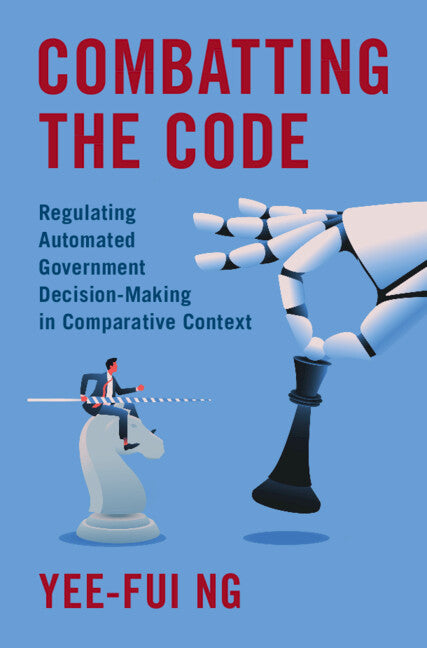
Combatting the Code
Regulating Automated Government Decision-Making in Comparative Context
This book develops a governance framework to ensure government automation is implemented safely, without harming vulnerable citizens.
Yee-Fui Ng (Author)
9781009599252, Cambridge University Press
Hardback, published 3 April 2025
253 pages
22.9 x 15.2 x 1.6 cm, 0.526 kg
'Government use of automated decision-making has inflicted widespread harm on vulnerable citizens in many countries due to inadequate regulatory, legal, administrative and ethical checks and balances. Yee-Fui Ng's rigorous comparative analysis in this book provides a sophisticated and insightful understanding of these problems and offers groundbreaking solutions.' Terry Carney, University of Sydney
Across the world, governments are grappling with the regulatory burden of managing their citizens' daily lives. Driven by cost-cutting and efficiency goals, they have turned to artificial intelligence and automation to assist in high-volume decision-making. Yet the implementation of these technologies has caused significant harm and major scandals. Combatting the Code analyzes the judicial, political, managerial, and regulatory controls for automated government decision-making in three Western liberal democracies: the United States, the United Kingdom, and Australia. Yee-Fui Ng develops a technological governance framework of ex ante and ex post controls within an interlinking network of horizontal and vertical accountability mechanisms, which aims to prevent future disasters and safeguard vulnerable individuals subject to automated technologies. Ng provides recommendations for regulators and policymakers seeking to design automated governance systems that will promote higher standards of accountability, transparency, and fairness.
Part I. Automation and the Administrative State: 1. Technology and public law
2. Automation, surveillance and the administrative state
Part II. Legal Controls: 3. Legal frameworks
4. Rationality
5. Anti-discrimination
6. Public sector privacy and data protection
7. Freedom of information
Part III. Political and Managerial Controls: Chapter 8. Scrutiny and auditing
9. Toward a framework for technological governance
10. Conclusion.
Subject Areas: IT & Communications law [LNQ]