Freshly Printed - allow 10 days lead
Couldn't load pickup availability
Colonizing Animals
A pathbreaking history of British imperialism in Myanmar from the early nineteenth century to 1942 populated by animals.
Jonathan Saha (Author)
9781108964630, Cambridge University Press
Paperback / softback, published 8 May 2025
250 pages
22.8 x 15.1 x 1.3 cm, 0.37 kg
'… a timely review and stimulating preview of possible approaches going forward. Author Jonathan Saha, who realized he had been overlooking the many animals who appear in archives as he re-read records from his earlier research on the Rangoon asylum, brings a veteran historian's able hand to the task. In clear, punchy prose, he adeptly assesses much of animal history's historical and theoretical work over the past 20 years and makes some striking theoretical interventions that go well beyond the stories of colonizing and colonized people and other creatures in British Myanmar.' Aaron Skabelund, Animal History
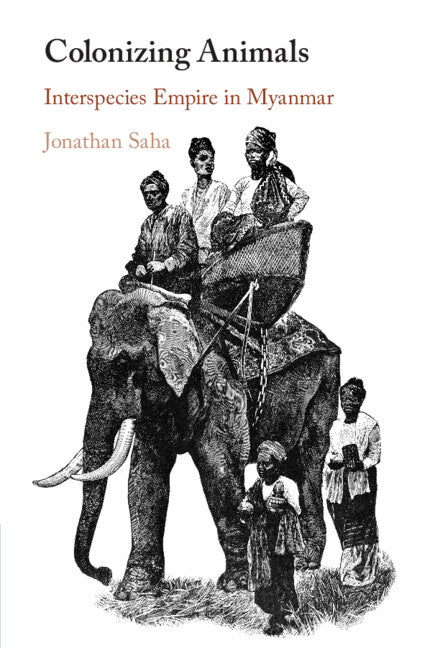
Animals were vital to the British colonization of Myanmar. In this pathbreaking history of British imperialism in Myanmar from the early nineteenth century to 1942, Jonathan Saha argues that animals were impacted and transformed by colonial subjugation. By examining the writings of Burmese nationalists and the experiences of subaltern groups, he also shows how animals were mobilized by Burmese anticolonial activists in opposition to imperial rule. In demonstrating how animals - such as elephants, crocodiles, and rats - were important actors never fully under the control of humans, Saha uncovers a history of how British colonialism transformed ecologies and fostered new relationships with animals in Myanmar. Colonizing Animals introduces the reader to an innovative historical methodology for exploring interspecies relationships in the imperial past, using innovative concepts for studying interspecies empires that draw on postcolonial theory and critical animal studies.
Introduction
1. Valuing animals
2. Vital resources
3. Regulating death
4. Imperial differentiations
5. Anticolonial affinities
6. Revolting creatures
Conclusion
Bibliography.
Subject Areas: Animals & society [JFFZ], Asian history [HBJF]