Freshly Printed - allow 10 days lead
Couldn't load pickup availability
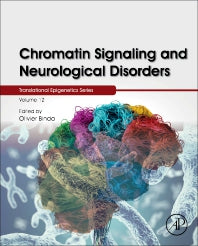
Chromatin Signaling and Neurological Disorders
Explores our current understanding of how chromatin signaling regulates gene expression and how aberrant regulation can contribute to neurological disorders
Olivier Binda (Volume editor)
9780128137963, Elsevier Science
Hardback, published 25 May 2019
378 pages
23.4 x 19 x 2.6 cm, 0.95 kg
Chromatin Signaling and Neurological Disorders, Volume Seven, explores our current understanding of how chromatin signaling regulates access to genetic information, and how their aberrant regulation can contribute to neurological disorders. Researchers, students and clinicians will not only gain a strong grounding on the relationship between chromatin signaling and neurological disorders, but they'll also discover approaches to better interpret and employ new diagnostic studies and epigenetic-based therapies. A diverse range of chapters from international experts speaks to the basis of chromatin and epigenetic signaling pathways and specific chromatin signaling factors that regulate a range of diseases. In addition to the basic science of chromatin signaling factors, each disease-specific chapter speaks to the translational or clinical significance of recent findings, along with important implications for the development of epigenetics-based therapeutics. Common themes of translational significance are also identified across disease types, as well as the future potential of chromatin signaling research.
1. Chromatin and epigenetic signaling pathways 2. Non-pathologic neurological development 3. Spinal muscular atrophy 4. Triplet-Repeat Neurological Diseases 5. Amyotrophic Lateral Sclerosis 6. Charcot-Marie-Tooth disease 7. Parkinson's disease 8. Huntington's disease 9. Multiple Sclerosis 10. Ataxia Telangiectasia 11. Cockayne Syndrome neurodevelopmental disorders 12. Angelman Syndrome and Prader-Willi Syndrome 13. Rett Syndrome 14. Rubinstein-Taybi Syndrome 15. Sotos Syndrome 16. ATRX 17. Fragile X syndrome and mental retardation 18. Autism Spectrum Disorder and Asperger Syndrome 19. Schizophrenia 20. Gilles de la Tourette Syndrome 21. Alzheimer's disease (and other dementias) 22. Mood disorders 23. Attention deficit hyperactivity disorder (ADHD) 24. Obsessive compulsive disorder (OCD)
Subject Areas: DNA & Genome [PSAK1]