Freshly Printed - allow 7 days lead
Couldn't load pickup availability
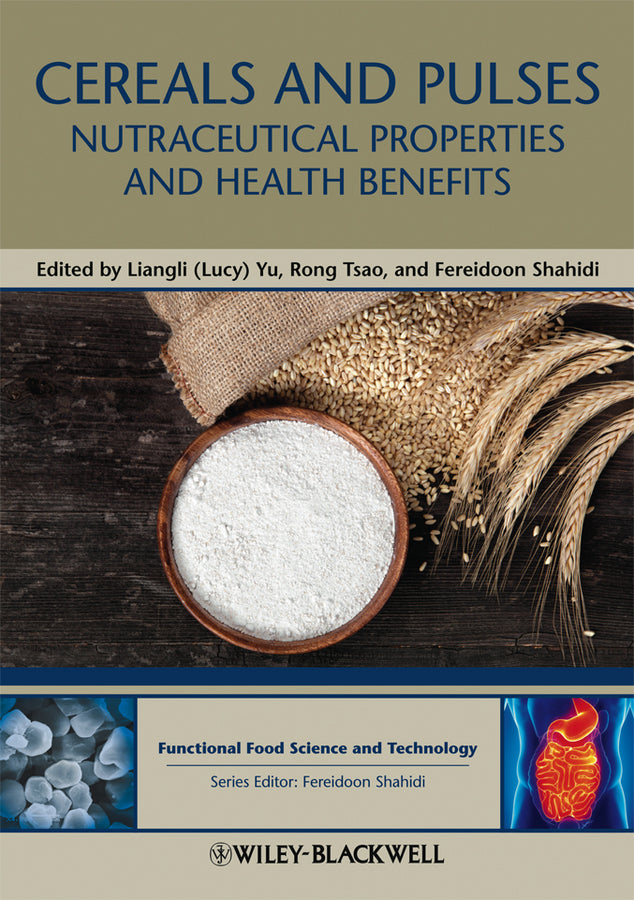
Cereals and Pulses
Nutraceutical Properties and Health Benefits
Liangli L. Yu (Edited by), Rong Tsao (Edited by), Fereidoon Shahidi (Edited by)
9780813818399, Wiley
Hardback, published 16 March 2012
328 pages
25.3 x 18.2 x 2 cm, 0.803 kg
“Recommended. Graduate students, researchers/faculty, and professionals/practitioners.” (Choice, 1 December 2012)
Cereal and pulse crops are staple foods that provide essential nutrients to many populations of the world. Traditionally, whole grains were consumed but most current foods are derived from refined fractions of cereal and pulse crops. Consumption of processed or refined products may reduce the health benefits of food. In wheat-based processed foods, for example, the removed 40% of the grain (mainly the bran and the germ of the wheat grain) contains the majority of the health beneficial components. These components, particularly non-essential phytochemicals such as carotenoids, polyphenols, phytosterols/ stanols, and dietary fibers, have been shown to reduce the risk of major chronic diseases of humans, such as cancer, cardiovascular diseases, and Parkinson’s disease. Such bioactives are therefore good candidates for ingredients of nutraceuticals and functional foods. There are many factors that can affect the bioactive content of cereal and pulse-based food ingredients, including genetics, growing and storage conditions, post-harvest treatments, food formulation and processing. All of these factors ultimately affect human health and wellness. Bioavailability is also important for these compounds for exerting their protective roles. Cereals and Pulses: Nutraceutical Properties and Health Benefits provides a summary of current research findings related to phytochemical composition and properties of cereal and pulse crops. The nutraceutical properties of each major cereal and pulse are discussed. Coverage of cereals and pulse crops includes barley, oats, rice, rye, corn, adlay, wheat, buckwheat, psyllium, sorghum, millet, common beans, field peas, faba beans, chickpea, lentil and soybeans. Chapters for each crop discuss methods to improve crop utilization, nutraceutical components and properties, bioactive compositions, antioxidant properties, beneficial health effects, disease prevention activities, and areas for future research. Also included are two chapters that examine the beneficial health properties of dietary fibers and antioxidants. Edited and written by an international team of respected researchers, this book is a reference guide for scientists working in food ingredients, food product research and development, functional foods and nutraceuticals, crop breeding and genetics, human nutrition, post-harvest treatment and processing of cereal grains and pulses. It will enable them to effect value-added food innovation for health promotion and disease risk reduction.
Contributors ix 1 Cereals and pulses – an overview 1 1.1 Introduction 1 1.2 Chemistry and nutraceutical compositions 2 1.3 Potential health beneficial effects 2 References 5 2 Effects of barley consumption on cardiovascular and diabetic risk 7 2.1 Introduction 7 2.2 Barley β-glucan and risk of cardiovascular diseases, diabetes and colon carcinogenesis 7 2.3 Other nutraceutical components and properties in barley 11 2.4 Potential of hulless barley in health promotion and disease prevention 15 2.5 Future studies 15 References 16 3 Nutraceutical properties and health benefits of oats 21 3.1 Introduction 21 3.2 Oat grain composition 22 3.3 The chemical and physical property of oat β-glucan 23 3.4 Effects of processing on oat β-glucan 25 3.5 Oat and health 26 3.6 Conclusions 31 References 31 4 Nutraceutical properties and health benefits of rice 37 4.1 Introduction 37 4.2 Rice grain structure and nutritional composition distribution 38 4.3 Nutrient compositions and their health benefits 40 4.4 Biofortification of nutrients in rice grain to improve its health benefits 53 4.5 Health benefits of rice bran 54 4.6 Health benefits of whole rice grain consumption 55 4.7 Future trends 57 References 57 5 Hypolipedemic effects of rice bran oil 65 5.1 Introduction 65 5.2 Chemical composition of rice bran oil (RBO) 65 5.3 Hypolipidemic effect of rice bran oil 66 5.4 Other beneficial effects of rice bran oil 68 5.5 Future studies 69 References 70 6 Phenolic phytochemicals from rye ( Secale Cereale L .) 71 6.1 Introduction 71 6.2 Three classes of the phenolic compounds 72 6.3 Extraction methodology 72 6.4 Analysis methods 80 6.5 Bioactivity 81 6.6 Health beneficial effects of rye intake 82 6.7 Summary 82 References 82 7 Bioactive compounds in corn 85 7.1 Introduction 85 7.2 Phytochemicals in corn and their health benefits 85 7.3 Corn resistant starch and bioactivities 96 7.4 Future studies 97 References 98 8 Nutraceutical and health properties of adlay 105 8.1 Introduction 105 8.2 Health components of adlay 105 8.3 Potential health beneficial properties 107 8.4 Summary 111 References 111 9 Antioxidant and health promoting properties of wheat ( Triticum spp .) 113 9.1 Introduction 113 9.2 Evidence of wheat’s health promoting properties 113 9.3 The antioxidant contents of wheat 114 9.4 Reported antioxidant and other health promoting properties of wheat 117 9.5 Bioavailability of phenolic acids in wheat 119 9.6 Use of post-harvest treatments to improve the bioaccessabilty of antioxidant in wheat-based ingredients 120 9.7 Effects of processing on antioxidants in wheat-based food systems 123 References 126 10 Buckwheat: A novel pseudocereal 131 10.1 Introduction of buckwheat 131 10.2 Nutritional composition of buckwheat 133 10.3 Unique health components of buckwheat 136 10.4 Allergens in buckwheat 144 10.5 Research trends of buckwheat nutritional and functional properties 145 References 146 11 Nutraceutical and health properties of psyllium 149 11.1 Introduction 149 11.2 Health beneficial effects of psyllium 150 11.3 Potential in controlled delivery of bioactives 158 11.4 Possible adverse effects 159 References 160 12 Nutraceutical and health properties of sorghum and millet 165 12.1 Introduction 165 12.2 Phytochemicals in sorghum and millet grains and fractions 167 12.3 Antioxidant properties of sorghum and millet grain and components 173 12.4 Potential beneficial effects of sorghum and millet consumption in human health 176 12.5 Perspectives 182 References 182 13 Nutraceutical and health properties of common beans ( Phaseolus vulgaris ) 187 13.1 Introduction 187 13.2 Health beneficial effects of Phaseolus vulgaris 187 13.3 Possible adverse effects 194 13.4 Conclusion 194 References 194 14 Health benefits and bioactive compounds in field peas, faba beans, and chickpeas 199 14.1 Introduction 199 14.2 Phenolic compounds in field peas, chickpeas, and faba beans 200 14.3 Health benefits of compounds in field peas, chickpeas, and faba beans 202 14.4 Antinutritional factors in peas, chickpeas, and faba beans 209 14.5 Bioactive peptides 210 References 212 15 Bioactives and health benefits of lentils (Lens culinaris L.) 217 15.1 Introduction 217 15.2 Epidemiology: pulses and chronic diseases 217 15.3 Health effects of pulse carbohydrates 221 15.4 Health promoting vitamins and minerals in lentils 222 15.5 Health promoting phenolic compounds in lentils 222 References 225 16 Soy isoflavones and bone health 229 16.1 Introduction 229 16.2 Biosynthesis and composition of isoflavones in soybeans 230 16.3 Separation, characterization, and analysis of isoflavones 231 16.4 Soy isoflavones and bone health 232 16.5 Summary 237 References 238 17 Effects of dietary soy on the prevention of cardiovascular disease 243 17.1 Introduction 243 17.2 Soy foods and serum cholesterol 243 17.3 Soy and inhibition of LDL oxidation 249 17.4 Soy and inflammation 252 17.5 Soy and hypertension 252 17.6 Soy and endothelial function 253 17.7 Conclusions 253 References 254 18 Dietary fiber and human health 261 18.1 Introduction 261 18.2 Dietary fiber and metabolic syndrome 261 18.3 Dietary fiber and cancer 264 18.4 Dietary fiber and cardiovascular diseases 267 18.5 Potential undesirable effects 268 18.6 Summary 269 References 269 19 Antioxidants and human health 273 19.1 Introduction 273 19.2 Anti-inflammatory capacity of antioxidants 274 19.3 Antioxidants and metabolic syndrome 278 19.4 Antioxidants and cancer 285 19.5 Antioxidants and cardiovascular diseases 290 19.6 Summary and conclusions 295 References 295 Index 309
Subject Areas: Agriculture & farming [TV]