Special Order - allow 2+ weeks lead
Couldn't load pickup availability
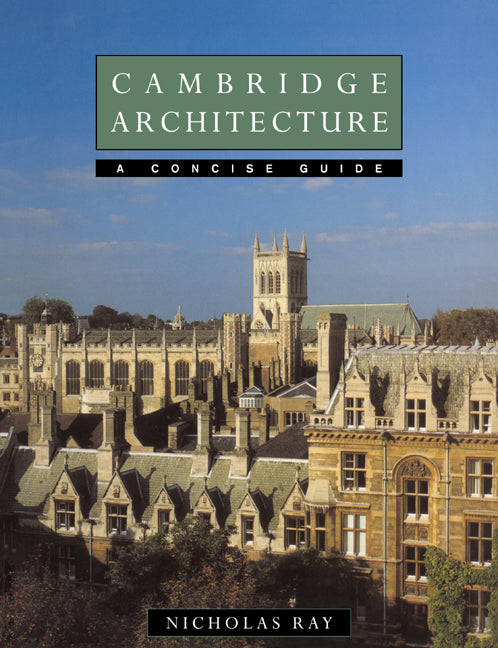
Cambridge Architecture
A Concise Guide
An illustrated introduction to the history and meaning of Cambridge architecture.
Nicholas Ray (Author)
9780521458559, Cambridge University Press
Paperback / softback, published 1 September 1994
156 pages, 31 b/w illus.
24.7 x 18.9 x 1.1 cm, 0.603 kg
"This lucid, if terse, summary of a large topic is an intelligent study by a lecturer in the Departrment of Architecture in the University of Cambridge. He clearly knows the college buildings inside out...he provides full bibliographical details and much unusual information....It is difficult to be free of prejudice when discussing post-war Cambridge buildings, many of them painful examples of the New Brutalism, but Nicholas Ray makes a valiant attempt." Times Literary Supplement
Cambridge Architecture offers a brief, illustrated introduction to the architecture of Cambridge, using selected examples of buildings from the Middle Ages to the present day as the basis for an investigation into architecture itself. The author describes the way in which buildings are composed, and how they may in turn be 'read', and introduces a number of levels of interpretation to those who may be unfamiliar with looking at buildings. Issues of iconography, questions of ethics, and the ways in which architecture may mirror society or indicate significant changes of taste are all touched upon. The examples chosen are treated chronologically, but with frequent cross-referencing. Each chapter contains a map, locating the examples discussed, and notes for further reading. The book is aimed at anyone interested in the history of architecture, and assumes no previous technical knowledge of the subject.
1. Introduction
2. Cambridge before the university (up to 1280)
3. The pattern of the colleges (1280–1515)
4. The English Renaissance in Cambridge (1515–1663)
5. Seventeenth- and eighteenth-century classicism (1663–1800)
6. Nineteenth-century revivalism 1800–1875
7. Late nineteenth- and early twentieth-century eclecticism (1875–1939)
8. Post-war buildings (1939–1970)
9. Buildings since 1970
Index.
Subject Areas: Architecture [AM]