Freshly Printed - allow 10 days lead
Couldn't load pickup availability
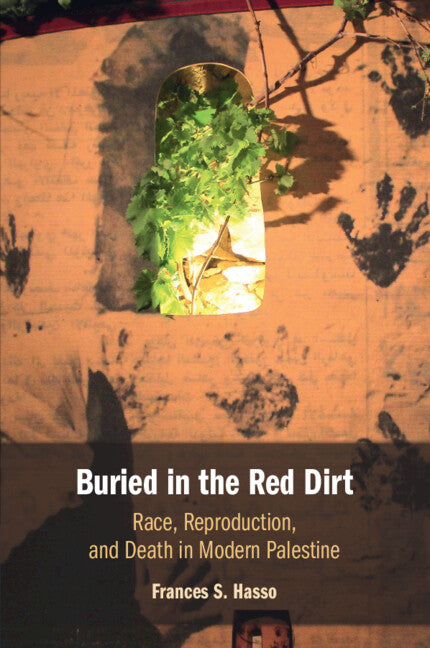
Buried in the Red Dirt
Race, Reproduction, and Death in Modern Palestine
A vivid account of Palestinian life, death, and reproduction during and since the British colonial period in Palestine.
Frances S. Hasso (Author)
9781009073981, Cambridge University Press
Paperback / softback, published 8 February 2024
302 pages
22.8 x 15.2 x 1.6 cm, 0.45 kg
'Folks professionally engaged in research on how gender and human reproduction are configured by - and resist - colonial governance will find [this book] worth their time. Be warned, however; this is a dark chronicle.' Ian McGonigle, American Journal of Sociology
Bringing together a vivid array of analog and non-traditional sources, including colonial archives, newspaper reports, literature, oral histories, and interviews, Buried in the Red Dirt tells a story of life, death, reproduction and missing bodies and experiences during and since the British colonial period in Palestine. Using transnational feminist reading practices of existing and new archives, the book moves beyond authorized frames of collective pain and heroism. Looking at their day-to-day lives, where Palestinians suffered most from poverty, illness, and high rates of infant and child mortality, Frances Hasso's book shows how ideologically and practically, racism and eugenics shaped British colonialism and Zionist settler-colonialism in Palestine in different ways, especially informing health policies. She examines Palestinian anti-reproductive desires and practices, before and after 1948, critically engaging with demographic scholarship that has seen Zionist commitments to Jewish reproduction projected onto Palestinians. This title is also available as Open Access on Cambridge Core.
Introduction: 'Buried in the red dirt': Historiography and history of missing Palestinian bodies
1. 'We are far more advanced': The politics of ill and healthy babies in colonial Palestine
2. 'Making the country pay for itself': Health, hunger, and midwives
3. 'Children are the treasure and property of the nation': Demography, eugenics, and mothercraft
4. 'Technically illegal': Birth control in religious, colonial and state legal traditions
5. 'I did not want children': Birth control in discourse and practice
6. 'The art of death in life': Palestinian futurism and reproduction after 1948
Bibliography.
Subject Areas: Middle Eastern history [HBJF1], Asian history [HBJF], Regional & national history [HBJ], History [HB], Humanities [H]