Freshly Printed - allow 10 days lead
Couldn't load pickup availability
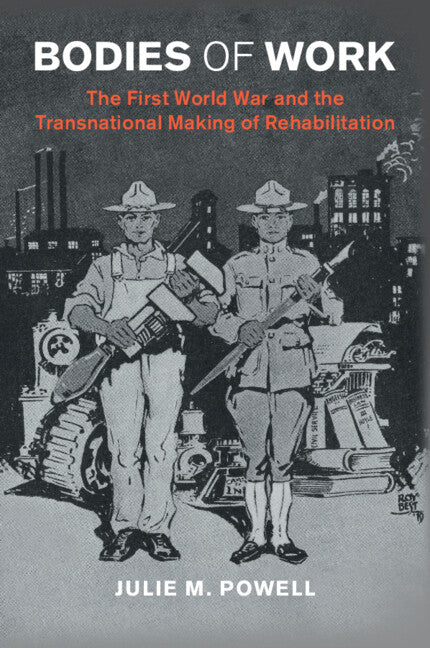
Bodies of Work
The First World War and the Transnational Making of Rehabilitation
Examines the transnational development of rehabilitation initiatives for disabled ex-servicemen of the First World War.
Julie M. Powell (Author)
9781009230254, Cambridge University Press
Paperback / softback, published 8 May 2025
270 pages
22.9 x 15.2 x 1.4 cm, 0.395 kg
'… a welcome addition to a growing scholarship in the twentieth-century history of disabled veterans and their place (or lack thereof) in society. One could also imagine “Bodies of War” serving as a useful model for a more globally minded transnational history, where the colonial ideals of rehabilitation and the lived realities of disability are taken up from places outside of the Euro-American context.' Beth Linker, Isis: A Journal of the History of Science Society
Bodies of Work examines the transnational development of large-scale national systems, international organizations, technologies, and cultural material aimed at rehabilitating Allied ex-servicemen, disabled in the First World War. When nations mobilised in August 1914, it was thought that casualties would be minimal and the war would be quickly over. Little consideration was given to what ought to be done for those men whose bodies would forever bear the marks of war's destruction. Julie M. Powell charts how rehabilitation emerged as the best means to deal with millions of disabled ex-servicemen. She considers the ways in which rehabilitation was shaped by both durable and discrete influences, including social reformism, paternalist philanthropy, the movement for workers' rights, patriotism, class tensions, cultural ideas about manliness and disability, nationalism, and internationalism. Powell sheds light on the ways in which rehabilitation systems became sites for the contestation and maintenance of boundaries of belonging.
List of figures
List of tables
Acknowledgements
Introduction. Whole nations in arms
1. The gospel of rehabilitation
2. A great army of industrial soldiers
3. A duty incumbent on all allied people
4. He marches off on an entente leg
5. A charge almost if not quite as sacred
Conclusion. The right to rehabilitation
Bibliography
Index.
Subject Areas: History of medicine [MBX], Military history [HBW]