Freshly Printed - allow 10 days lead
Couldn't load pickup availability
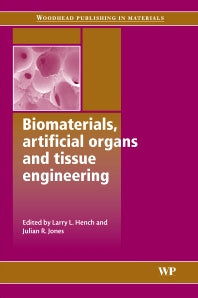
Biomaterials, Artificial Organs and Tissue Engineering
L Hench (Edited by), J. Jones (Edited by)
9781855737372, Elsevier Science
Paperback / softback, published 27 September 2005
312 pages
23.4 x 15.6 x 2 cm, 0.48 kg
"…highly useful for students of biomaterials, material science and medicine." --International Journal of Biological Macromolecules
"…provides an overview of multi-disciplinary nature and importance of biomedical materials, artificial organs and tissue engineering." --International Journal of Biological Macromolecules
"The book provides an overview, which is easily understandable to the reader. It succeeds in educating the reader about biomaterials, tissue engineering and artificial organs." --Carbohydrate Polymers
Maintaining quality of life in an ageing population is one of the great challenges of the 21st Century. This book summarises how this challenge is being met by multi-disciplinary developments of specialty biomaterials, devices, artificial organs and in-vitro growth of human cells as tissue engineered constructs.
Biomaterials, Artificial Organs and Tissue Engineering is intended for use as a textbook in a one semester course for upper level BS, MS and Meng students. The 25 chapters are organized in five parts: Part one provides an introduction to living and man-made materials for the non-specialist; Part two is an overview of clinical applications of various biomaterials and devices; Part three summarises the bioengineering principles, materials and designs used in artificial organs; Part four presents the concepts, cell techniques, scaffold materials and applications of tissue engineering; Part five provides an overview of the complex socio-economic factors involved in technology based healthcare, including regulatory controls, technology transfer processes and ethical issues.
Part 1 Introduction to materials (living and non-living): Metals
Ceramics
Polymers
Biocomposites
Cells and tissues
Inflammation and wound healing. Part 2 Clinical needs and concepts of repair: The skeletal system
The cardiovascular system
Biomedical polymers
Biomedical hydrogels. Part 3 Applications: Repair of skeletal tissues
Joint replacement
Artificial organs
Mass transport processes in artificial organs
Artificial exchange systems
Cardiovascular assist systems. Part 4 Tissue engineering: Introduction to tissue engineering
Scaffolds for tissue engineering
A guide to basic cell culture and applications in biomaterials and tissue engineering
Immunochemical techniques in tissue engineering and biomaterial science
Clinical applications of tissue engineering. Part 5 Societal, regulatory and ethical issues: Regulatory classification of biomaterials and medical devices
Technology transfer
Ethical issues.
Subject Areas: Industrial chemistry [TDC]