Freshly Printed - allow 7 days lead
Couldn't load pickup availability
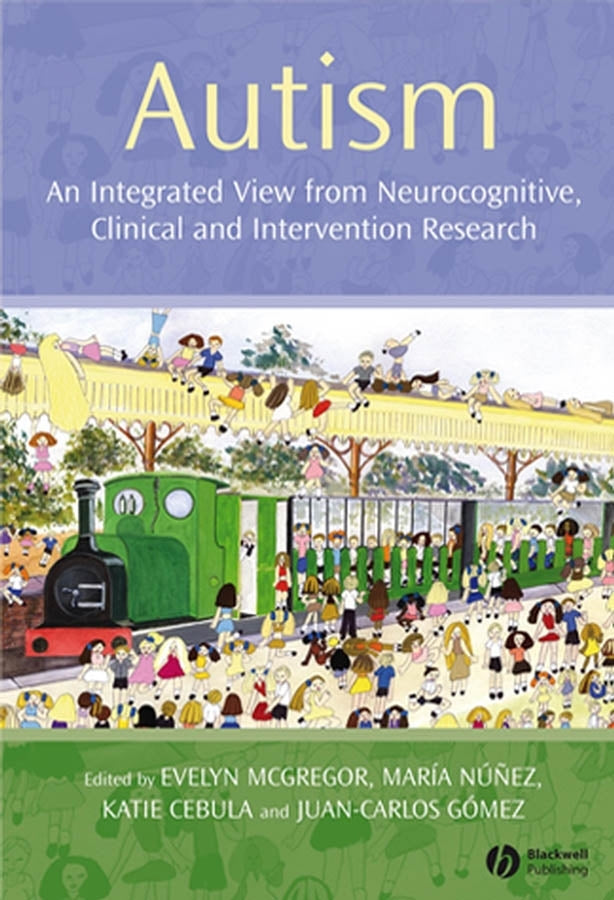
Autism
An Integrated View from Neurocognitive, Clinical, and Intervention Research
"Autism is one of the most heterogeneous conditions there is, and this is matched by a proliferation of theories that try to explain it. Can ideas about the brain derived form neuroscience and ideas about treatments derived from best practice ever speak to each other? This book proves that they can. It not only provides state of the art reviews by the leading proponents of a whole range of theories, but also tries to integrate the new knowledge. The result is an exhilarating journey through all that is best in current thinking about autism."
–Uta Frith, University College London
Evelyn McGregor (Edited by), E McGregor (Author), Maria Núñez (Edited by), Katie Cebula (Edited by), Juan Carlos Gómez (Edited by)
9781405156950, Wiley
Hardback, published 23 November 2007
352 pages
23.6 x 16 x 2.5 cm, 0.624 kg
“The book provides a highly captivating discussion of the varied set of approaches taken toward understanding persons with ASDs. The product is an engaging and highly readable effort that broadens and directs thinking about a complex developmental disorder and its manifestations.” (PsycCRITIQUES, March 2009) “Some essays do an outstanding job of reviewing past work, sharing current research, and suggesting new directions.” (Choice)
Research on autism has flourished in recent years. As a result, specialism has developed and lines of research have become specialized and isolated. This collection of research on autism spectrum disorders investigates and cross-references a wide range of neurocognitive, clinical, and interventionist perspectives on autistic spectrum disorders research – from functional Magnetic Resonance Imaging studies to naturalistic intervention.
Preface. List of Contributors. 1. Introduction: Seeking Coherence in Autism: From fMRI to Intervention: Evelyn McGregor (University of St Andrews) , María Núñez (Glasgow Caledonian University), Katie Cebula (University of Edinburgh), and Juan Carlos Gómez (University of St Andrews). Part I: Neurocognitive Research. 2. New Insights From Neuroimaging Into the Emotional Brain in Autism: Bruno Wicker (Institut de Neurosciences Cognitives de la Méditerranée, Marseille). 3. Directedness, Egocentrism, and Autism: Justin H. G. Williams (University of Aberdeen Medical School). 4. Altered Salience in Autism: Developmental Insights, Consequences, and Questions: Warren Jones (Yale University) and Ami Klin (Yale University). 5. Abnormalities in “Cultural Knowledge” in Autism Spectrum Disorders: A Link Between Behavior and Cognition?: Eva Loth (Cambridge University). 6. Building the Whole Beyond Its Parts: A Critical Examination of Current Theories of Integration Ability in Autism: Beatriz López (University of the West of England). 7. The Influence of Conceptual Knowledge on Perceptual Processing in Autism: Danielle Ropar (University of Nottingham), Peter Mitchell (University of Nottingham), and Elizabeth Sheppard (University of Nottingham). 8. Executive Functioning in Autism Spectrum Disorder: Where It Fits in the Causal Model: Elisabeth L. Hill (Goldsmiths, University of London). Part II Clinical and Intervention Research. 9. How Young Children With Autism Treat Objects and People: Some Insights into Autism in Infancy From Research on Home Movies: Sandra Maestro (University of Pisa) and Filippo Muratori (University of Pisa). 10. Screening for Autism Spectrum Disorders in Primary School Aged Children: Joanna G. Williams (Cambridge University). 11. The Prosody–Language Relationship in Children With High-Functioning Autism: Joanne McCann (Queen Margaret University College, Edinburgh), Sue Peppé (Queen Margaret University College, Edinburgh), Fiona Gibbon (Queen Margaret University College, Edinburgh), Anne O’Hare (Royal Hospital for Sick Children, Edinburgh), and Marion Rutherford (Royal Hospital for Sick Children, Edinburgh). 12. Teaching Adults With Autism Spectrum Conditions to Recognize Emotions: Systematic Training for Empathizing Difficulties: Ofer Golan (Bar-Ilan University, Israel and Cambridge University) and Simon Baron-Cohen (Cambridge University). 13. Developing Social Interaction and Understanding in High-Functioning Individuals With Autism Spectrum Disorder: Aline-Wendy Dunlop (University of Strathclyde), Fiona Knott (University of Reading), and Tommy MacKay (University of Strathclyde). 14. Research Base for Intervention in Autism Spectrum Disorders: Glenys Jones (University of Birmingham) and Rita Jordan (University of Birmingham). 15. Stress in Parents of Children With Autism: Richard P. Hastings (University of Wales, Bangor). 16. Conclusion: Integrating Neurocognitive, Diagnostic, and Intervention Perspectives in Autism: Susan Leekam (University of Durham) and Evelyn McGregor (University of St Andrews). Index
Subject Areas: Psychology [JM]