Freshly Printed - allow 10 days lead
Couldn't load pickup availability
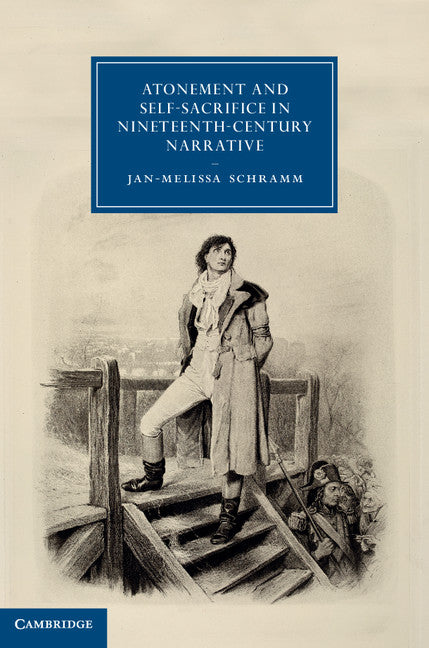
Atonement and Self-Sacrifice in Nineteenth-Century Narrative
This book explores the tensions raised by ideas of sacrifice in literature at a time of significant legal and theological change.
Jan-Melissa Schramm (Author)
9781107021266, Cambridge University Press
Hardback, published 21 June 2012
310 pages
22.9 x 15.2 x 1.9 cm, 0.59 kg
'Schramm's work is a significant work for Victorian scholars and all who wish to understand more clearly the political, legal and theological ferment of the nineteenth century and how that is reflected in attitudes to sacrifice and substitution in the Victorian novel.' Peter Stiles, The Glass
Jan-Melissa Schramm explores the conflicted attitude of the Victorian novel to sacrifice, and the act of substitution on which it depends. The Christian idea of redemption celebrated the suffering of the innocent: to embrace a life of metaphorical self-sacrifice was to follow in the footsteps of Christ's literal Passion. Moreover, the ethical agenda of fiction relied on the expansion of sympathy which imaginative substitution was seen to encourage. But Victorian criminal law sought to calibrate punishment and culpability as it repudiated archaic models of sacrifice that scapegoated the innocent. The tension between these models is registered creatively in the fiction of novelists such as Dickens, Gaskell and Eliot, at a time when acts of Chartist protest, national sacrifices made during the Crimean War, and the extension of the franchise combined to call into question what it means for one man to 'stand for', and perhaps even 'die for', another.
Introduction: (unmerited) suffering and the uses of adversity in Victorian public discourse
1. 'It is expedient that one man should die for the people': sympathy and substitution on the scaffold
2. 'Fortune takes the place of guilt': narrative reversals and the literary afterlives of Eugene Aram
3. 'Standing for' the people: Charles Dickens, Elizabeth Gaskell and professional oratory in 1848
4. Sacrifice and the sufferings of the substitute: Dickens and the atonement controversy of the 1850s
5. Substitution and imposture: George Eliot, Anthony Trollope and fictions of usurpation
Conclusion: innocence, sacrifice, and wrongful accusation in Victorian fiction.
Subject Areas: History of ideas [JFCX], Literary studies: from c 1900 - [DSBH]