Freshly Printed - allow 7 days lead
Couldn't load pickup availability
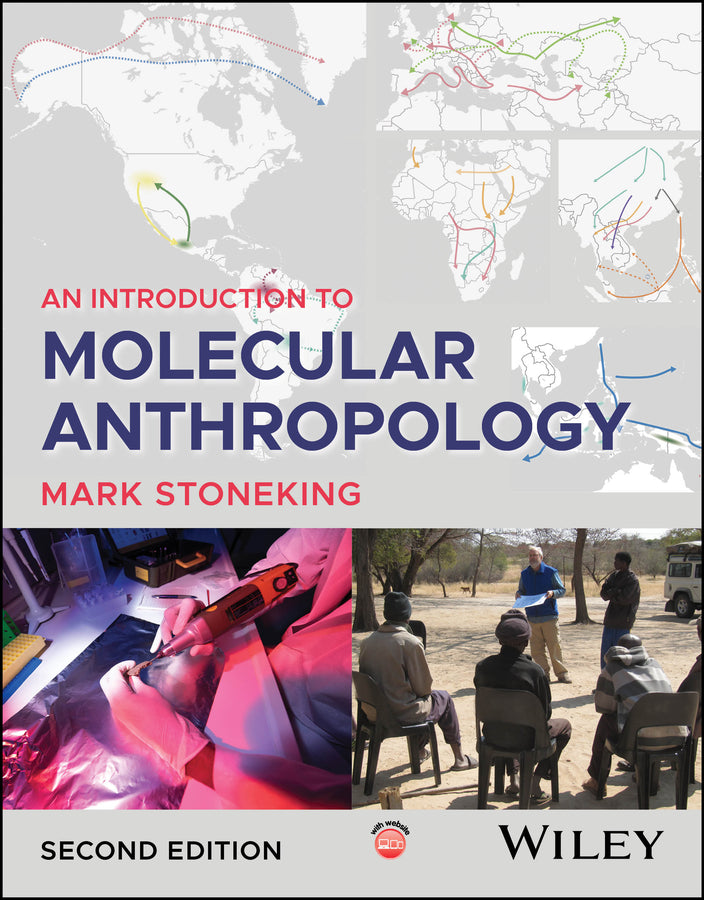
An Introduction to Molecular Anthropology
Mark Stoneking (Author)
9781394262595, Wiley
Paperback / softback, published 10 November 2025
464 pages
26.9 x 21.3 x 2.5 cm, 1.225 kg
A freshly updated discussion of the foundations of—and latest developments in—molecular anthropology In the newly revised second edition of An Introduction to Molecular Anthropology, retired researcher Dr. Mark Stoneking delivers an essential primer on genetics and molecular anthropology. The book is an accessible resource that covers key recent developments in the production and analysis of genome-wide data that highlights advances in methods and technologies, as well as the latest findings from ancient DNA. The updated chapters build on basic genetics and evolutionary concepts to demonstrate how to make inferences about human population history and human evolution in the genomics age. It explores how evolution influences genes, how genes evolve, the different kinds of genetic variation in humans and how they are analyzed, and the latest technologies and ethical issues that arise from the sampling of modern populations. Readers will also find: Perfect for anthropology students and others studying introductory human evolution, An Introduction to Molecular Anthropology will also benefit practicing anthropologists and researchers in a variety of fields that touch on this topic.
Preface to the Second Edition xi Preface to the First Edition xiii 1 Genes: How They Are Inherited 1 Blood and ABO Blood Groups 1 Inheritance of ABO Blood Groups 2 Inheritance of More than One Gene: ABO and Rhesus Blood Groups 4 Sex Chromosomes 8 Determining How Traits Are Inherited: Pedigree Analysis 9 What Is – and Isn’t – Inherited 11 Concluding Remarks 13 References 13 2 What Genes Are, What They Do, and How They Do It 15 Chromosomes, Proteins, and Nucleic Acids: Figuring Out What Genes Are 15 The Structure of Genes and What They Do: The Central Dogma and the Flow of Information 18 How Genes Do What They Do: Transcription and Translation 18 The Genetic Code 22 DNA Replication 23 The Consequences of Mutations 23 What Causes Mutations? 25 A Final Cautionary Note 26 References 26 3 Genes in Populations 27 What Is a Population? 27 The Concept of “Effective Population Size” 28 The Sex Ratio and N e 29 Inbreeding and N e 30 Variation in Population Size over Time and N e 31 Differential Fertility and N e 31 The Gene Pool with No Evolution: The Hardy–Weinberg Principle 34 Exceptions 37 A Real-life Example 38 Some Practical Uses for Hardy–Weinberg 41 References 44 ftoc.indd 7 12-09-2025 19:08:06 4 Evolutionary Forces 45 Nonrandom Mating 46 Small Population Size 49 Mutation 54 Migration 59 Selection 63 Evolutionary Forces: Summary 72 References 73 5 Molecular Evolution 75 Functionally Less Important Molecules (or Parts of Molecules) Evolve Faster than More Important Ones 76 Conservative Substitutions Occur More Frequently than Disruptive Ones 77 The Rate of Molecular Evolution Is Approximately Constant 78 Contrasting Phenotypic and Molecular Evolution 79 How Do New Gene Functions Arise? 81 Gene Regulation and Phenotypic Evolution 83 References 84 6 Genetic Markers 85 The First DNA Markers: Restriction Fragment Length Polymorphisms 85 Polymerase Chain Reaction 87 DNA Sequencing: The Sanger Method 89 Next-generation Sequencing 91 Targeting Single DNA Bases: SNPS 93 Variation in Length 95 Other Structural Variation 101 Concluding Remarks 102 References 102 7 Ancient DNA 105 Properties of Ancient DNA: Degradation 105 Properties of Ancient DNA: Damage 105 Properties of Ancient DNA: Contamination 108 History of Ancient DNA Studies 112 References 114 8 Sampling Issues 115 Sampling Populations: General Issues 115 Sampling Populations: Ethical Issues 117 Archival Samples 121 Ancient Remains 122 Sampling DNA Regions 123 Mitochondrial DNA 124 Y Chromosomal DNA 131 Autosomal DNA 132 X Chromosome 134 Public Databases 135 References 138 9 Analysis of Genetic Data from Populations 141 Genetic Diversity Within Populations 141 Genetic Distances Between Populations 144 Analysis of Molecular Variance (AMOVA) and Mantel Tests 146 Displaying Genetic Distance Data: Trees 151 Displaying Genetic Data: Multidimensional Scaling, Principal Components, and Correspondence Analysis 156 References 162 10 Analysis of Genetic Data from Individuals 163 Genetic Distances for DNA Sequences 163 Trees for DNA Sequences 169 Rooting Trees 171 Assessing the Confidence of a Tree 173 Network Analyses 177 Genome-wide Data: Unsupervised Analyses 179 References 189 11 Inferences About Demographic History (Part 1) 191 Dating Events 191 Population Size and Population Size Change 206 References 212 12 Inferences About Demographic History (Part 2) 213 Migration and Admixture 213 Putting It All Together: Simulations 227 References 230 13 Human Origins 233 Our Closest Living Relatives 233 Resolving the Trichotomy 236 Complications 238 Ape Genetics and Genomics 240 The Origins of Our Species: Insights from Modern Populations 241 The Genetic Evidence: mtDNA 251 The Genetic Evidence: Y Chromosome 253 The Genetic Evidence: Autosomes 254 References 257 14 The Origins of Our Species: Insights from Archaic Genomes 259 Enter the Denisovans 263 The Plot Thickens: Multiple Contributions of Ancestry from Archaic to Modern Humans… 270 … And Multiple Contributions of Ancestry from Modern to Archaic Humans! 273 Some Concluding Remarks 277 References 279 15 Migration and Dispersal: The Colonization of the Americas 283 Into Remote Lands: The Colonization of the Americas 287 References 300 16 Into Even More Remote Lands: The Colonization of Polynesia 303 What About Micronesia? 316 Contact Between Polynesia and the Americas? 319 Some Concluding Remarks 322 References 322 17 Species-wide Selection 325 Species-wide Selection 326 Nonsynonymous Substitutions and the dN/dS Ratio 326 Tests Based on the Allele Frequency Distribution 331 Selection Tests Based on Comparing Divergence to Polymorphism 336 Archaic Genomes 339 References 342 18 Local Selection 345 Example: Lactase Persistence 349 Example: EDAR 355 Using Admixture to Detect Selection 365 Concluding Remarks 369 References 369 19 The Genetic Basis of Phenotypic Variation 373 Skin Pigmentation Variation 374 Hair and Eye Color Variation 381 Other Traits 383 Predicting Ancient Phenotypes 386 References 387 20 Genes and Culture 389 Are Humans Still Evolving? 389 Genetic Variation Can Be Directly Influenced by Cultural Practices 390 Genetic Variation Can Be Indirectly Influenced by Cultural Practices 392 Using Genetic Analyses to Learn More About Cultural Practices: Farming/Language Family Expansions 396 Using Genetic Analyses to Learn More About Cultural Practices: Dating the Origin of Clothing 403 Concluding Remarks 407 References 408 21 Ongoing and Future Developments in Molecular Anthropology 411 More Modern and Ancient DNA Genomic Studies 411 The Other “OMICS” 414 Beyond “YOU”: The Microbiome 419 More Analyses 427 Figuring Out What Mutations Do: Functional Genomics 430 Personal Ancestry Testing and Genomics 431 References 436 Index 439
N e for Humans 33
Subject Areas: Biology, life sciences [PS]