Freshly Printed - allow 8 days lead
Couldn't load pickup availability
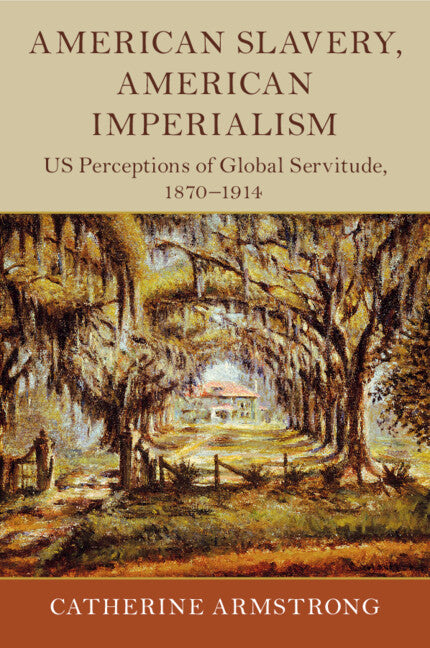
American Slavery, American Imperialism
US Perceptions of Global Servitude, 1870–1914
Details how Americans' perceptions of the institution of slavery changed between the end of the Civil War and the onset of World War I.
Catherine Armstrong (Author)
9781108701914, Cambridge University Press
Paperback / softback, published 22 June 2023
297 pages
22.9 x 15.2 x 1.7 cm, 0.486 kg
'Drawing astutely on recent scholarship, Armstrong illumines how, from Reconstruction to WWI, Americans manipulated their depictions of slavery, including its perpetrators and victims, to reinforce either a conservative or progressive racial, imperial, or gendered agenda … Recommended.' J. D. Smith, Choice
Slavery casts a long shadow over American history; despite the cataclysmic changes of the Civil War and emancipation, the United States carried antebellum notions of slavery into its imperial expansion at the turn of the twentieth-century. African American, Chinese and other immigrant labourers were exploited in the name of domestic economic development, and overseas, local populations were made into colonial subjects of America. How did the U.S. deal with the paradox of presenting itself as a global power which abhorred slavery, while at the same time failing to deal with forced labour at home? Catherine Armstrong argues that this was done with rhetorical manoeuvres around the definition of slavery. Drawing primarily on representations of slavery in American print culture, this study charts how definitions and depictions of slavery both changed and stayed the same as the nation became a prominent actor on the world stage. In doing so, Armstrong challenges the idea that slavery is a merely historical problem, and shows its relevance in the contemporary world.
List of figures
Acknowledgements
Introduction
1. A rhetorical continuum? How representations of antebellum slavery endure in post-war culture
2. Global contexts: how external factors drive US perceptions of slavery
3. Othering the slave owner
4. Othering the enslaved
5. Gender and the rhetoric of slavery
6. Resistance and the slavery counter-narrative
Conclusion
Bibliography
Index.
Subject Areas: Slavery & abolition of slavery [HBTS], Social & cultural history [HBTB], History of the Americas [HBJK]