Freshly Printed - allow 10 days lead
Couldn't load pickup availability
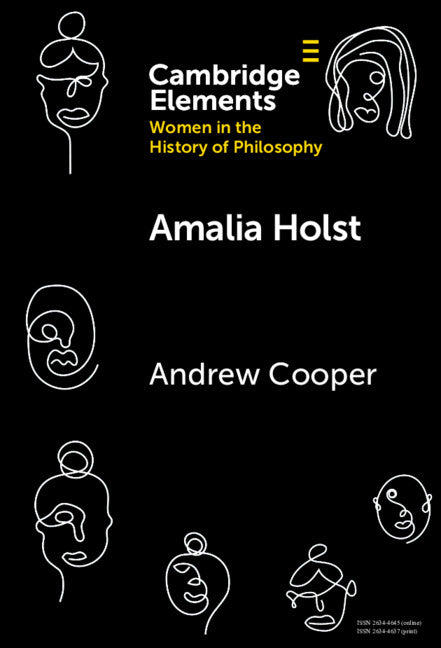
Amalia Holst
This Element shows the inequalities in Enlightenment and offers a reminder of the social conditions required for equality.
Andrew Cooper (Author)
9781009532679, Cambridge University Press
Hardback, published 19 December 2024
84 pages
22.9 x 15.2 x 0.6 cm, 0.259 kg
Amalia Holst's trailblazing book On the Vocation of Woman to Higher Intellectual Education (1802) dropped a bomb on the German speaking states-a bomb that failed to detonate. In one of the first works of philosophy in German published under a woman's name, Holst declares that it is time a member of the female sex spoke out about the plight of women in Germany. Despite her bold attempt to ignite a new movement of women's education, her book was harshly reviewed by male critics and thrust into obscurity. This Element presents the first comprehensive study of Holst's writings, unearthing their striking contribution to philosophy's growing awareness of the social conditions of human freedom. The force of her argument, and the difficulties she encountered, reveal the ambiguous character of the German Enlightenment and prompt us to reconsider what can be salvaged from it.
1. Introduction
2. Amalia Holst, née von Justi
3. An unnamed critic of modern education
4. Enlightened femininity, contested
5. Before the judgment seat of reason
6. Conclusion
References.
Subject Areas: History of Western philosophy [HPC]