Freshly Printed - allow 7 days lead
Couldn't load pickup availability
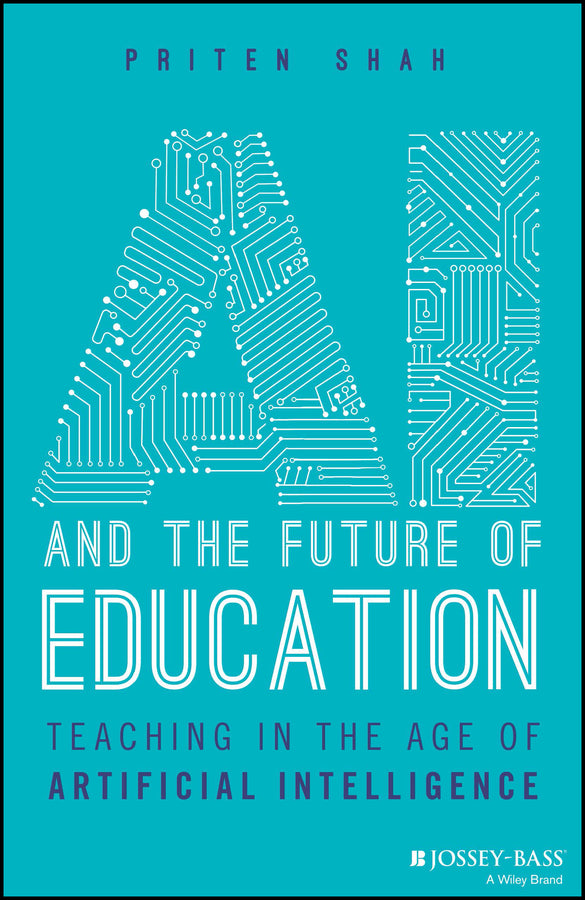
AI and the Future of Education
Teaching in the Age of Artificial Intelligence
“This book makes a strong case that generative AI models are more than obstacles for educators to work around, and that if used thoughtfully and creatively, they can help teachers and administrators prepare their students to thrive in a rapidly changing technological environment. Shah understands that using AI in our classrooms won't come naturally to most of us and offers concrete suggestions throughout, ranging from useful tips for modifying traditional assignments all the way to insightful recommendations for reimagining what the aims of formal education ought to be in the first place.” “Shah provides a step-by-step guide that implores educators to eschew their worst impulses to over-manage or hide from AI, and to instead, turn their focus to what schools, on behalf of students, must do: adapt and innovate. His book is the first step in re-envisioning the academic process and preparing the next generation of learners.” “Priten Shah’s knowledge, experience, and spirit of public service in the fields of AI and education make this book essential reading for educators at all levels. He offers a must-read for teachers, administrators, parents, and policy makers on the voyage to best practices for using AI in classrooms.” “While teaching in the age of artificial intelligence may be intimidating for some, Shah’s cogent and concise book is a great asset for educators, administrators, and school boards. AI and the Future of Education can especially help teachers better understand and incorporate the possibilities of AI as they continue to keep students at the center of all they do.”
—Jeff Behrends, Senior Research Scholar, Department of Philosophy, Harvard University
—Joseph Carver, Chief Innovation Officer, The Meadows School
—Anne L'Hommedieu-Sanderson, Executive Director, ThinkerAnalytix and Associate of the Department of Philosophy, Harvard University
—Ajay Nair, Ph.D., President, Arcadia University
Priten Shah (Author)
9781394219247, Wiley
Paperback / softback, published 6 September 2023
256 pages
21.3 x 14 x 1.5 cm, 0.249 kg
Clear away the fog surrounding AI in education—and regain your peace of mind Among teachers, there is a cloud of rumors, confusion, and fear surrounding the rise of artificial intelligence. AI and the Future of Education is a timely response to this general state of panic, showing you that AI is a tool to leverage, not a threat to teaching and learning. By understanding what AI is, what it does, and how it can be used to enhance education, you can let go of anxiety and uncertainty, and learn to embrace artificial intelligence. It's true that, along with tremendous opportunities, AI presents some challenges for the field of education. In this book, Priten Shah, a Harvard M.Ed. with a robust background in educational innovation, helps you face these challenges head on, so you can gain the knowledge and skills you need to use AI effectively in your classroom. Thanks to this thorough consideration of ethical considerations and practical approaches, you can develop your own strategy for leveraging AI in administrative tasks, lesson design, professional development, and beyond. For K-12 educators, as well as leaders and policymakers who want to understand the role of technology in education, AI and the Future of Education is a valuable resource that can change AI from an unknown entity to an indispensable tool.
Preface xi 1 Embracing AI in Education 1 Opportunities and Challenges: AI in the Classroom 3 Sustainable AI Integration Strategies 7 Conclusion 13 2 Defining AI 15 Fundamentals of AI and Machine Learning 16 Exploring Generative AI 21 Effective Prompt Writing for Teachers 26 Conclusion 29 3 Reframing Education in the Age of AI 31 Preparing Students for the AI-Driven Workforce 33 Developing AI Literacy and Computational Thinking 39 Fostering a Growth Mindset and Lifelong Learning Culture 43 Cultivating Creativity and Innovation Skills in the AI Era 45 Conclusion 48 4 Adapting Pedagogy for AI Integration 51 Learning Theories in the AI Era: Constructivist, Behaviorist, and Sociocultural Approaches 53 Active Learning and AI: Transforming the Classroom Experience 61 Problem-and Project-Based Learning Strategies with AI 64 Bloom's Taxonomy and Critical Thinking Skills in the AI-Enhanced Classroom 69 Differentiated Instruction: AI-Generated Customized Activities 76 Fostering Collaboration and Relationship-Building through AI Integration 81 Inquiry-Based Learning and AI: Encouraging Student-Centered Exploration 84 Conclusion 88 5 Using AI in Curriculum Development 90 Lesson Planning and Curricular Design 91 Creating Learning Assets 108 Formative Activities: Generated Worksheets, Games, and More 115 Summative Assessments: Quizzes, Rubrics, and Performance Tasks 120 Implications for Special Education, ELL, and Inclusive Classrooms 128 Distance and Remote Education 132 Conclusion 134 6 Automating Administrative Tasks 136 Streamlining Communication and Scheduling 137 AI-Enhanced Feedback and Grading 148 Optimizing Paperwork and Recordkeeping Tasks 153 Conclusion 158 7 Boosting Engagement and Motivation 159 Intelligent Tutoring Systems 160 Personalized Learning Pathways 165 Gamification and Learning Experiences 169 Debates and Discussions 172 Executive Functioning and Social-Emotional Learning 176 Conclusion 180 8 Teaching Students about AI 181 Responsible and Ethical Use of AI 182 Digital Citizenship in the AI Era 187 Refining and Iterating on AI-Generated Content 190 Addressing AI-Related Misinformation and Bias 193 Conclusion 196 9 Ethical Considerations for AI in Education 198 Reducing, Not Expanding, the Achievement Gap 200 Addressing the Digital Divide and Ensuring Access 204 Protecting Student Privacy and Data Security 206 Conclusion 208 10 Teacher Professional Development in the AI Era 210 The Importance of Continued Adaptation and Growth 211 Essential AI Competencies for Educators 213 Leveraging AI for Personal and Professional Development 214 Conclusion 216 11 Adapting and Growing with AI in Education 218 Acknowledgments 223 About the Author 225 Index 227
Subject Areas: Education [JN]