Special Order - allow 2+ weeks lead
Couldn't load pickup availability
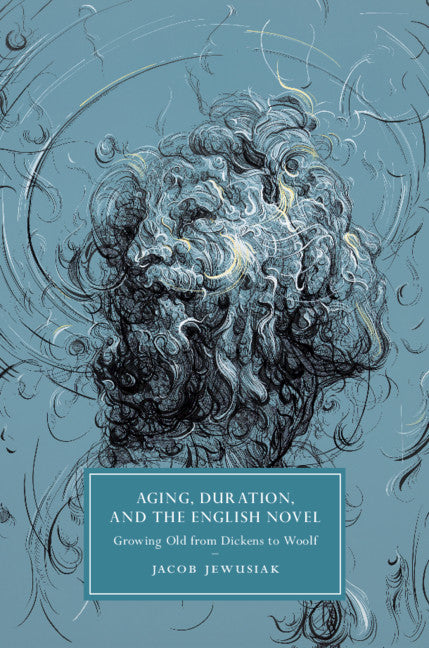
Aging, Duration, and the English Novel
Growing Old from Dickens to Woolf
Argues that novelists graft aging onto narrative duration and reveals the politics of senescence in nineteenth and early-twentieth century plots.
Jacob Jewusiak (Author)
9781108713221, Cambridge University Press
Paperback / softback, published 14 October 2021
224 pages
23 x 15 x 1.3 cm, 0.33 kg
'… offers compelling new approaches to the study of age and aging in nineteenth-century literature.' David McAllister, Victorian Studies
The rapid onset of dementia after an illness, the development of gray hair after a traumatic loss, the sudden appearance of a wrinkle in the brow of a spurned lover. The realist novel uses these conventions to accelerate the process of aging into a descriptive moment, writing the passage of years on the body all at once. Aging, Duration, and the English Novel argues that the formal disappearance of aging from the novel parallels the ideological pressure to identify as being young by repressing the process of growing old. The construction of aging as a shameful event that should be hidden - to improve one's chances on the job market or secure a successful marriage - corresponds to the rise of the long novel, which draws upon the temporality of the body to map progress and decline onto the plots of nineteenth-century British modernity.
1. Aging theory
2. No plots for old men
3. Life after the marriage plot
4. A wrinkle in time
5. The technology age
6. Gray modernism.
Subject Areas: Literary studies: fiction, novelists & prose writers [DSK], Literary studies: c 1800 to c 1900 [DSBF], Literary studies: general [DSB]