Freshly Printed - allow 10 days lead
Couldn't load pickup availability
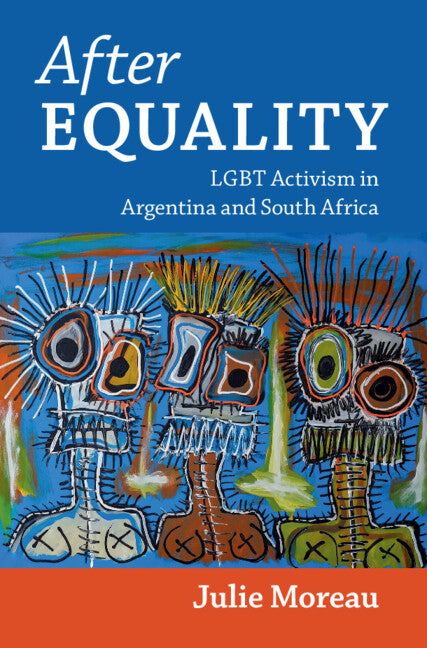
After Equality
LGBT Activism in Argentina and South Africa
This book examines how LGBT organizations strategize multiple identities to make legal rights a lived reality.
Julie Moreau (Author)
9781009593007, Cambridge University Press
Hardback, published 3 July 2025
252 pages
22.9 x 15.2 x 1.8 cm, 0.479 kg
'In After Equality, Julie Moreau unpacks one of the most pressing challenges for LGBTQ movements: ensuring that legal victories translate into lived equality. Focusing on the experiences of activists in Argentina and South Africa, Moreau's comparative ethnography reveals how social movements navigate the limitations of formal inclusion by deploying intersectional strategies that address the intertwined effects of sexuality, race, and class. This book is a powerful contribution to understanding the evolving dynamics of LGBTQ rights in the global South. Moreover, it offers political science's limited focus on LGBTQ movements a fresh and essential perspective, by centering those led by women.' Phillip Ayoub, University College London
After Equality tackles one of the biggest challenges facing LGBT activists in many parts of the world: how to move beyond inclusive legislation to ensure LGBT people can exercise their newly acquired rights. Drawing from in-depth interviews and ethnographic observation with two lesbian organizations in Buenos Aires, Argentina and Cape Town, South Africa, Julie Moreau explores the ways that organizations use identity to make rights useful. Engaging interdisciplinary scholarship and intersectional theory, Moreau develops a novel approach to identity strategizing that explains how activists engage multiple identities to challenge the relationships between identity categories and address the ways interlocking systems of power affect their constituents. By analyzing sexual identity as always constructed through race, class and gender, the book transforms how scholars understand the role of identity in the strategic repertoires of social movement organizations and illuminates dimensions of identity politics that surface in the aftermath of legal inclusion.
1. Introduction
2. Intersectionality and the strategic use of identity in social movements
3. Identity in context: situating lesbian activism in Argentina and South Africa
4. Making identity work: comparing identity strategies of commensurability and visibility
5. Dilemmas of success: identity strategies and state engagement
6. In the flesh: embodying rights in the public sphere
7. Intersectionality, identity strategizing, and the future of LGBT inclusion.
Subject Areas: Comparative politics [JPB]