Special Order - allow 2+ weeks lead
Couldn't load pickup availability
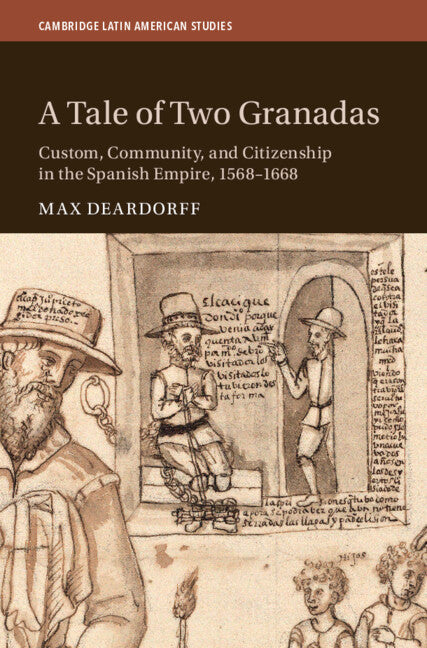
A Tale of Two Granadas
Custom, Community, and Citizenship in the Spanish Empire, 1568–1668
This book examines how race, ethnicity, and religious difference affected the concession of citizenship in the Spanish Empire's territories.
Max Deardorff (Author)
9781009335409, Cambridge University Press
Hardback, published 10 August 2023
394 pages
23.5 x 15.9 x 2.9 cm, 0.72 kg
'This absorbing, erudite, and highly original book … gives its readers a window through which to see the political configurations of the Spanish Empire and its imprints within the broader context of Catholic reform and growing Atlantic connections. The book's appearance will not only benefit scholars of colonial Spanish America but also those working on the religious and political changes unfolding during the first century that followed the integration of the Americas into the contours of global history.' James V. Torres, American Historical Review
In 1570's New Kingdom of Granada (modern Colombia), a new generation of mestizo (half-Spanish, half-indigenous) men sought positions of increasing power in the colony's two largest cities. In response, Spanish nativist factions zealously attacked them as unequal and unqualified, unleashing an intense political battle that lasted almost two decades. At stake was whether membership in the small colonial community and thus access to its most lucrative professions should depend on limpieza de sangre (blood purity) or values-based integration (Christian citizenship). A Tale of Two Granadas examines the vast, trans-Atlantic transformation of political ideas about subjecthood that ultimately allowed some colonial mestizos and indios ladinos (acculturated natives) to establish urban citizenship alongside Spaniards in colonial Santafé de Bogotá and Tunja. In a spirit of comparison, it illustrates how some of the descendants of Spain's last Muslims appealed to the same new conceptions of citizenship to avoid disenfranchisement in the face of growing prejudice.
List of figures
List of tables
Acknowledgments
Introduction
1. Iberian antecedents
2. Politics, reform, and the emergence of Christian citizenship
3. Moriscos, Arabic Old Christians, and Spanish jurisprudence (1492–1614)
4. Cultivating the Christian republic: the New Kingdom of Granada and the Archbishop Zapata de Cárdenas
5. Life in the city: the casa poblada and urban citizenship
6. The roots of the mestizo controversy in the New Kingdom of Granada
7. The mestizo priesthood
8. Mestizo officials in the Christian republic
9. Urban Indians in Santafé and Tunja, 1568–1668
Epilogue
Bibliography
Index.
Subject Areas: History of the Americas [HBJK]