Freshly Printed - allow 10 days lead
Couldn't load pickup availability
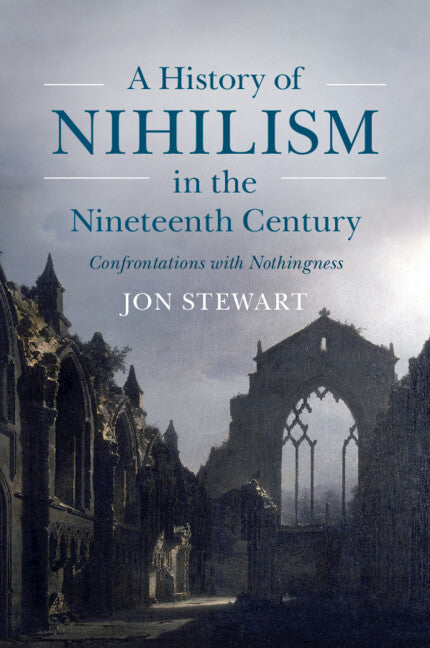
A History of Nihilism in the Nineteenth Century
Confrontations with Nothingness
A rich, expansive book reaching beyond philosophy to literature and the history of ideas with strong appeal to diverse readers.
Jon Stewart (Author)
9781009266710, Cambridge University Press
Paperback / softback, published 5 June 2025
334 pages
22.9 x 15.2 x 1.8 cm, 0.487 kg
'… the book's clarity and its didascalic slant make this volume an ideal companion for a course on nineteenth-century perspectives on nihilism.' Davide Marino, Religious Studies Review
Nihilism – the belief that life is meaningless – is frequently associated with twentieth-century movements such as existentialism, postmodernism and Dadaism, and thought to result from the shocking experiences of the two World Wars and the Holocaust. In his rich and expansive new book, Jon Stewart shows that nihilism's beginnings in fact go back much further to the first half of the nineteenth century. He argues that the true origin of modern nihilism was the rapid development of Enlightenment science, which established a secular worldview. This radically diminished the importance of human beings so that, in the vastness of space and time, individuals now seemed completely insignificant within the universe. The author's panoramic exploration of how nihilism developed – not only in philosophy, but also in religion, poetry and literature – shows what an urgent topic it was for thinkers of all kinds, and how it has continued powerfully to shape intellectual debates ever since.
Introduction
1. Jean Paul's Vision of Nihilism and Plea for the Doctrine of Immortality
2. Klingemann and the Absurdity of Nothingness in The Nightwatches
3. Nihilism in English Romanticism: Byron and Shelley
4. Schopenhauer's Theory of Human Suffering and Lack of Meaning
5. Büchner's Account of the Reign of Terror as a Mirror of Human Existence
6. Poul Martin Møller's Criticism of Hegelianism and the Danish Discussion of Nihilism
7. Kierkegaard and the Indefinability and Inexplicability of Death
8. Turgenev's Portrait of a Nihilist
9. Nietzsche's Vision of the Past and the Future of Nihilism
10. The Importance of Nihilism in the Nineteenth Century.
Subject Areas: Western philosophy: c 1600 to c 1900 [HPCD]