Freshly Printed - allow 7 days lead
Couldn't load pickup availability
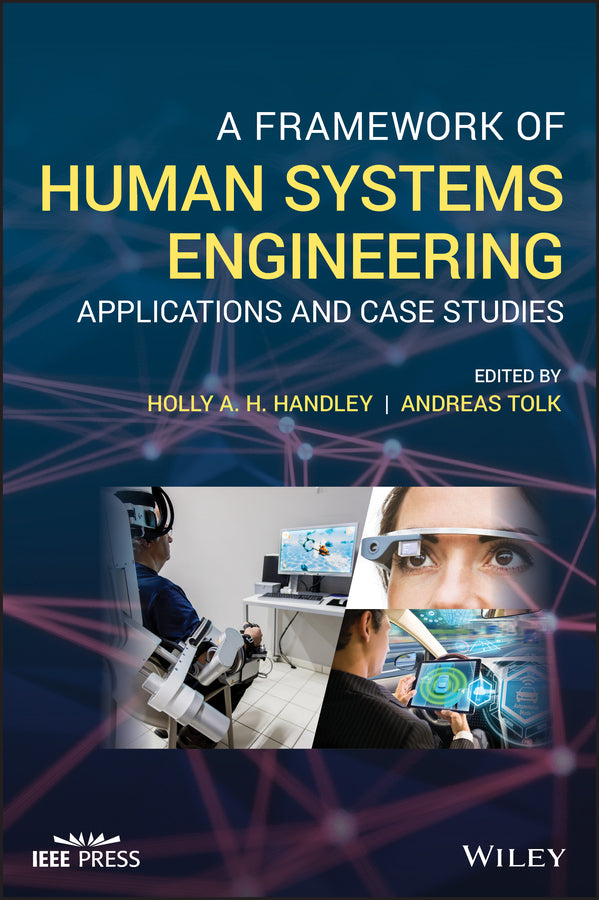
A Framework of Human Systems Engineering
Applications and Case Studies
Holly A. H. Handley (Edited by), Andreas Tolk (Edited by)
9781119698753, Wiley
Hardback, published 30 March 2021
304 pages
1 x 1 x 1 cm, 0.454 kg
Explores the breadth and versatility of Human Systems Engineering (HSE) practices and illustrates its value in system development A Framework of Human Systems Engineering: Applications and Case Studies offers a guide to identifying and improving methods to integrate human concerns into the conceptualization and design of systems. With contributions from a panel of noted experts on the topic, the book presents a series of Human Systems Engineering (HSE) applications on a wide range of topics: interface design, training requirements, personnel capabilities and limitations, and human task allocation. Each of the book's chapters present a case study of the application of HSE from different dimensions of socio-technical systems. The examples are organized using a socio-technical system framework to reference the applications across multiple system types and domains. These case studies are based in real-world examples and highlight the value of applying HSE to the broader engineering community. This important book: Written for systems engineers, human factors engineers, and HSI practitioners, A Framework of Human Systems Engineering: Applications and Case Studies provides the information needed for the better integration of human and systems and early resolution of issues based on human constraints and limitations.
Biographies xv Contributors List xvii Foreword xxi Preface xxiii Section 1 Sociotechnical System Types 1 1 Introduction to the Human Systems Engineering Framework 3 1.1 Introduction 3 1.2 Human-Centered Disciplines 3 1.3 Human Systems Engineering 4 1.4 Development of the HSE Framework 5 1.5 HSE Applications 7 1.6 Conclusion 9 References 9 2 Human Interface Considerations for Situational Awareness 11 2.1 Introduction 11 2.2 Situational Awareness: A Global Challenge 12 2.3 Putting Situational Awareness in Context: First Responders 13 2.4 Deep Dive on Human Interface Considerations 14 2.5 Putting Human Interface Considerations in Context: Safe Cities 15 2.6 Human Interface Considerations for Privacy-Aware SA 16 Reference 17 3 Utilizing Artificial Intelligence to Make Systems Engineering More Human 19 3.1 Introduction 19 3.2 Changing Business Needs Drive Changes in Systems Engineering 20 3.3 Epoch 4: Delivering Capabilities in the Sociotechnical Ecosystem 21 3.3.1 A Conceptual Architecture for Epoch 4 22 3.3.2 Temporal Sociotechnical Measures 22 3.3.3 Systems Engineering Frameworks 23 3.3.3.1 Sociotechnical Network Models 23 3.3.3.2 Digital Twins 23 3.4 The Artificial Intelligence Opportunity for Building Sociotechnical Systems 24 3.5 Using AI to Track and Interpret Temporal Sociotechnical Measures 25 3.6 AI in Systems Engineering Frameworks 25 3.7 AI in Sociotechnical Network Models 26 3.8 AI-Based Digital Twins 27 3.9 Discussion 27 3.10 Case Study 30 3.11 Systems Engineering Sociotechnical Modeling Approach 31 3.11.1 Modeling the Project 33 3.12 Results 36 3.13 Summary 38 References 39 4 Life Learning of Smart Autonomous Systems for Meaningful Human-Autonomy Teaming 43 4.1 Introduction 43 4.2 Trust in Successful Teaming 45 4.3 Meaningful Human-Autonomy Teaming 46 4.4 Systematic Taxonomy for Iterative Through-Life Learning of SAS 47 4.5 Ensuring Successful SAS 51 4.6 Developing Case Study: Airborne Shepherding SAS 53 4.7 Conclusion 57 Acknowledgment 58 References 58 Section 2 Domain Deep Dives 63 5 Modeling the Evolution of Organizational Systems for the Digital Transformation of Heavy Rail 65 5.1 Introduction 65 5.2 Organizational System Evolution 66 5.2.1 Characteristics of Organizational Systems 66 5.2.2 The Organization in Flux 67 5.2.3 Introducing New Technologies 68 5.3 Model-Based Systems Engineering 70 5.4 Modeling Approach for the Development of OCMM 71 5.4.1 Technology Specification 72 5.4.2 Capture System Change 73 5.4.3 Capture Organizational Changes 73 5.4.4 Manage Organization Change 73 5.4.5 Analyze Emergent System 73 5.5 Implementation 74 5.5.1 User Portals 75 5.5.2 OCMM Metamodel 75 5.6 Case Study: Digital Transformation in the Rail Industry 78 5.6.1 Technology Specification 79 5.6.2 Capture System Change 79 5.6.3 Capture Organization Changes 80 5.6.4 Organization Change Management 84 5.6.5 Analyze Emergent System 85 5.6.5.1 Situation Awareness 85 5.6.5.2 Workload Analysis 90 5.7 OCMM Reception 91 5.8 Summary and Conclusions 94 References 94 6 Human Systems Integration in the Space Exploration Systems Engineering Life Cycle 97 6.1 Introduction 97 6.2 Spacecraft History 98 6.2.1 Mercury/Gemini/Apollo 98 6.2.2 Space Shuttle 100 6.2.3 International Space Station 101 6.2.4 Orion Spacecraft 101 6.3 Human Systems Integration in the NASA Systems Engineering Process 103 6.3.1 NASA Systems Engineering Process and HSI 103 6.4 Mission Challenges 108 6.4.1 Innovation and Future Vehicle Designs Challenge 108 6.4.2 Operations Challenges 109 6.4.3 Maintainability and Supportability Challenges 110 6.4.4 Habitability and Environment Challenges 110 6.4.5 Safety Challenges 110 6.4.6 Training Challenges 111 6.5 Conclusions 111 References 112 7 Aerospace Human Systems Integration: Evolution over the Last 40 Years 113 7.1 Introduction 113 7.2 Evolution of Aviation: A Human Systems Integration Perspective 114 7.3 Evolution with Respect to Models, Human Roles, and Disciplines 116 7.3.1 From Single-Agent Interaction to Multi-agent Integration 116 7.3.2 Systems Management and Authority Sharing 117 7.3.3 Human-Centered Disciplines Involved 118 7.3.4 From Automation Issues to Tangibility Issues 119 7.4 From Rigid Automation to Flexible Autonomy 120 7.5 How Software Took the Lead on Hardware 122 7.6 Toward a Human-Centered Systemic Framework 123 7.6.1 System of Systems, Physical and Cognitive Structures and Functions 123 7.6.2 Emergent Behaviors and Properties 125 7.6.3 System of Systems Properties 126 7.7 Conclusion and Perspectives 126 References 127 Section 3 Focus on Training and Skill Sets 129 8 Building a Socio-cognitive Evaluation Framework to Develop Enhanced Aviation Training Concepts for Gen Y and Gen Z Pilot Trainees 131 8.1 Introduction 131 8.1.1 Gamification Coupled with Cognitive Neuroscience and Data Analysis 132 8.1.2 Generational Differences in Learning 133 8.2 Virtual Technologies in Aviation 134 8.2.1 Potential Approaches for Incorporating Virtual Technologies 135 8.3 Human Systems Engineering Challenges 136 8.4 Potential Applications Beyond Aviation Training 137 8.5 Looking Forward 137 Acknowledgement 137 References 138 9 Improving Enterprise Resilience by Evaluating Training System Architecture: Method Selection for Australian Defense 143 9.1 Introduction 143 9.2 Defense Training System 144 9.2.1 DTS Conceptualization 144 9.2.2 DTS as an Extended Enterprise Systems 144 9.2.3 Example: Navy Training System 145 9.2.3.1 Navy Training System as a Part of DTS 145 9.2.3.2 Navy Training System as a Part of DoD 145 9.3 Concept of Resilience in the Academic Literature 147 9.3.1 Definition of Resilience: A Multidisciplinary and Historical View 147 9.3.2 Definition of Resilience: Key Aspects 147 9.3.2.1 What? (Resilience Is and Is Not) 147 9.3.2.2 Why? (Resilience Triggers) 159 9.3.2.3 How? (Resilience Mechanisms and Measures) 160 9.4 DTS Case Study Methodology 169 9.4.1 DTS Resilience Measurement Methodology 169 9.4.2 DTS Architecture 169 9.4.3 DTS Resilience Survey 172 9.4.3.1 DTS Resilience Survey Design 172 9.4.3.2 DTS Resilience Survey Conduct 172 9.5 Research Findings and Future Directions 176 References 177 10 Integrating New Technology into the Complex System of Air Combat Training 185 10.1 Introduction 185 10.2 Method 187 10.2.1 Data Collection 187 10.2.2 Data Analysis 188 10.3 Results and Discussion 190 10.3.1 Unseen Aircraft Within Visual Range 191 10.3.2 Unexpected Virtual and Constructive Aircraft Behavior 193 10.3.3 Complacency and Increased Risk Taking 194 10.3.4 Human–Machine Interaction 195 10.3.5 Exercise Management 196 10.3.6 Big Picture Awareness 197 10.3.7 Negative Transfer of Training to the Operational Environment 198 10.4 Conclusion 199 Acknowledgments 202 References 202 Section 4 Considering Human Characteristics 205 11 Engineering a Trustworthy Private Blockchain for Operational Risk Management: A Rapid Human Data Engineering Approach Based on Human Systems Engineering 207 11.1 Introduction 207 11.2 Human Systems Engineering and Human Data Engineering 207 11.3 Human-Centered System Design 208 11.4 Practical Issues Leading to Large Complex Blockchain System Development 208 11.4.1 Human-Centered Operational Risk Management 208 11.4.2 Issues Leading to Risk Management Innovation Through Blockchain 209 11.4.3 Issues in Engineering Trustworthy Private Blockchain 209 11.5 Framework for Rapid Human Systems–Human Data Engineering 210 11.6 Human Systems Engineering for Trustworthy Blockchain 210 11.6.1 Engineering Trustworthy Blockchain 210 11.6.2 Issues and Challenges in Trustworthy Private Blockchain 212 11.6.3 Concepts Used in Trustworthy Private Blockchain 213 11.6.4 Prototype Scenario for Trusted Blockchain Network 214 11.6.5 Systems Engineering of the Chain of Trust 214 11.6.6 Design Public Key Infrastructure (PKI) for Trust 215 11.6.6.1 Design of Certificate Authority (CA) 215 11.6.6.2 Design the Trusted Gateways 216 11.6.6.3 Involving Trusted Peers and Orderers 217 11.6.6.4 Facilitate Trust Through Channels 217 11.7 From Human System Interaction to Human Data Interaction 219 11.8 Future Work for Trust in Human Systems Engineering 219 11.8.1 Software Engineering of Trust for Large Engineered Complex Systems 219 11.8.2 Human-Centered AI for the Future Engineering of Intelligent Systems 220 11.8.3 Trust in the Private Blockchain for Big Complex Data Systems in the Future 220 11.9 Conclusion 221 Acknowledgment 222 References 222 12 Light’s Properties and Power in Facilitating Organizational Change 225 12.1 Introduction 225 12.2 Implicit Properties and a Mathematical Model of Light 226 12.3 Materialization of Light 230 12.3.1 The Electromagnetic Spectrum 231 12.3.2 Quantum Particles 232 12.3.3 The Periodic Table and Atoms 233 12.3.4 A Living Cell 235 12.3.5 Fundamental Capacities of Self 237 12.4 Leveraging Light to Bring About Organizational Change 239 12.5 Summary and Conclusion 243 References 243 Section 5 From the Field 245 13 Observations of Real-Time Control Room Simulation 247 13.1 Introduction 247 13.1.1 What Is a “Real-Time Control Room Simulator”? 247 13.1.2 What Is It Used For? 247 13.1.3 What Does It Look Like? 248 13.1.4 How Will They Develop? 249 13.2 Future General-Purpose Simulators 249 13.2.1 Future On-Site Simulators 250 13.3 Operators 251 13.4 Data 252 13.5 Measurement 252 13.5.1 Objective Measures 253 13.5.1.1 Recommended 253 13.5.1.2 Not Recommended 253 13.5.2 Subjective Measures 254 13.5.2.1 Recommended 255 13.5.2.2 Not Recommended 255 13.6 Conclusion 257 Disclaimer 257 References 257 14 A Research Agenda for Human Systems Engineering 259 14.1 The State of Human Systems Engineering 259 14.2 Recommendations from the Chapter Contributions 260 14.2.1 Data and Visualization Challenges 260 14.2.2 Next-Generation Computing 261 14.2.3 Advanced Methods and Tools 262 14.2.4 Increased Integration of Social Components into System Artifacts 263 14.3 Uniting the Human Systems Engineering Stakeholders 263 14.3.1 Transdisciplinary Approach 264 14.3.2 Common Formalisms 265 14.3.3 Common Metrics 266 14.4 Summary 266 Disclaimer 267 References 267 Index 271
Holly A. H. Handley
Christian G. W. Schnedler and Michael Joy
Philip S. Barry and Steve Doskey
Kate J. Yaxley, Keith F. Joiner, Jean Bogais, and Hussein A. Abbass
Grace A. L. Kennedy, William R. Scott, Farid Shirvani, and A. Peter Campbell
George Salazar and Maria Natalia Russi-Vigoya
Guy André Boy
Alliya Anderson, Samuel F. Feng, Fabrizio Interlandi, Michael Melkonian, Vladimir Parezanović, M. Lynn Woolsey, Claudine Habak, and Nelson King
Victoria Jnitova, Mahmoud Efatmaneshnik, Keith F. Joiner, and Elizabeth Chang
Sarah M. Sherwood, Kelly J. Neville, Angus L. M. T. McLean, III, Melissa M. Walwanis, and Amy E. Bolton
Marius Becherer, Michael Zipperle, Stuart Green, Florian Gottwalt, Thien Bui-Nguyen, and Elizabeth Chang
Pravir Malik
Hugh David with an editor introduction by Holly A. H. Handley
Andreas Tolk
Subject Areas: Electronics & communications engineering [TJ]